

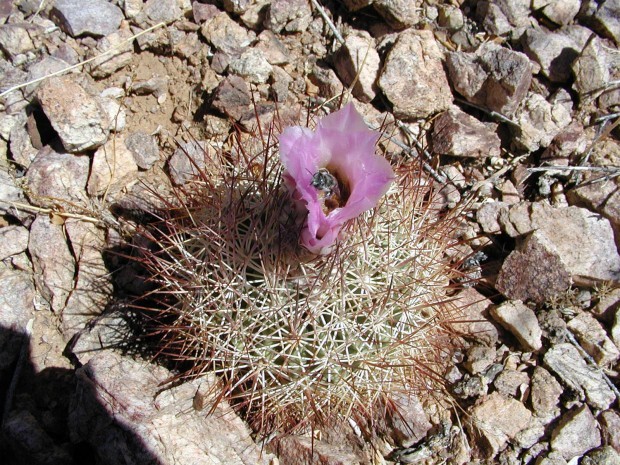
A small, little-known cactus found in Organ Pipe National Monument west of Tucson faces a "high and immediate" threat of extinction, says the U.S. Fish and Wildlife Service in proposing to protect it as an endangered species.
The Acuña cactus, topping out at about a foot high, is declining fast, having dropped in numbers by more than 50 percent since 1981, the service said.
It's threatened by drought and climate change. It also could be harmed by illegal immigration and border enforcement efforts, said the service in its listing proposal.
Legally, the service must decide whether to list a species a year after it proposes to list it.
The service also proposes to designate 53,720 acres, including 29,500 acres of federal land and 14,266 acres of state land, as critical habitat for the Acuña cactus. The Endangered Species Act prohibits destruction or "adverse modification" by humans of critical habitat.
People are also reading…
The Acuña's decline is typical of that of many small cacti at the national monument, where small chollas, hedgehog cacti and fishhook pincushion cacti have declined since the late 1990s, said Sue Rutman, an Organ Pipe plant ecologist.
"Smaller cacti are drought tolerant, but they can't store much water, and they've really declined during the past drought," Rutman said.
The Acuña's decline should be a wake-up call about the risks posed by global warming, said Tierra Curry, a conservation biologist for the Center for Biological Diversity.
The group petitioned the service a decade ago to get this cactus protected.
"If a cactus can't survive in the desert, things are really bad," Curry said.
At Organ Pipe, some individual Acuñas have reportedly shrunk from one year to the next due to drought stress, the service said.
The cactus is also at risk from insects and small mammals such as ground squirrels and packrats, who have uprooted, eaten away at, tunneled into it and taken away its seeds with increasing frequency in the last several decades.
Warming weather probably helps insect populations, and plants stressed by drought are more susceptible to insect attacks and disease, the wildlife service said.
Increased numbers of insects in the cactus, in turn, may attract other predators such as mammals and birds.
Also, nearly 80 percent of all Acuña cacti live within 10 1/4 miles of the U.S.-Mexican border (including some in Sonoran Desert areas outside of Organ Pipe). With the cacti typically spaced about 10 feet apart, vehicles driven by immigrants or their federal pursuers could potentially hurt the Acuñas.
The cactus is one of nearly 800 species whose status is being considered by the wildlife service due to an agreement it reached last year with two environmental groups: the Center for Biological Diversity and Wild Earth Guardians.
The plants sat on the service's candidate list for years, deemed worthy of protection but not in as much trouble as others with higher priorities.
The two groups sued to get the cactus out of what they saw as a state of legal limbo.
For almost any plant, if its situation becomes dire enough, the service looks at things such as captive breeding to try to restore it, said the wildlife service's Arizona field supervisor Steve Spangle, adding, "We're a long ways from concluding that this plant is irreversibly headed to extinction."
The service's long-standing position is it will not impose regulations to try to crack down on climate change because it believes the Endangered Species Act is not the best vehicle to tackle climate change.
At Organ Pipe, officials already are thinking about trying to grow Acuña cacti in their nursery or to create Acuña beds in their native habitat, if budget cuts don't preclude that, Rutman said.
"At this point, we're concerned that there are so few of them, so few reproductive ones, it won't be able to come back on its own," she said.
On a positive note, she said Organ Pipe reaped "amazing, spectacularly above average rainfall" during the just-ended summer that may trigger growth of new Acuña seedlings.
"If a cactus can't survive in the desert, things are really bad."
Tierra Curry, Center for Biological Diversity biologist
some quick facts
The Acuña has pink, purple and lavender flowers.
Leafcutter bee and cactus bee are thought to be its primary pollinators.
Some individual Acuñas at Organ Pipe National Monument are known to have lived since at least 1977.
Lives in valleys, on small knolls and gravel ridges in typical Sonoran Desert scrub.
Today's estimated total Acuña population is about 3,390.
Contact reporter Tony Davis at tdavis@azstarnet.com or 806-7746.


