
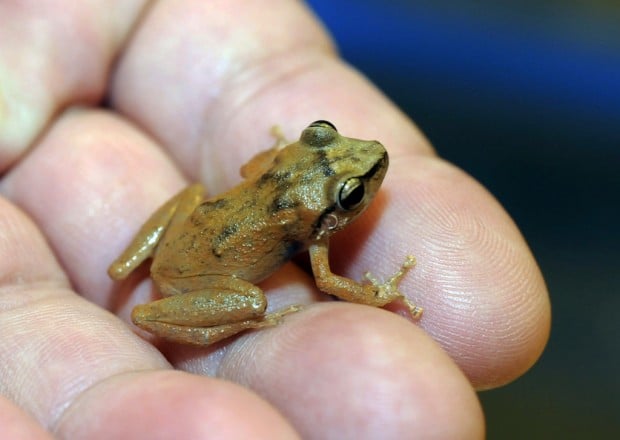
HONOLULU - The coqui is a tiny, coin-sized frog whose distinctive nightly mating calls are a beloved sound in Puerto Rico and other Caribbean islands. But people in Hawaii don't share the same sentiment.
The frogs have been growing in population in the state in recent years and are now starting to show up in larger numbers on Oahu - home to most of the state's population. The frogs already have a strong foothold on the less-populated Big Island, and people there complain of being kept awake at night with a thunderous roar of chirps as thousands of male coqui simultaneously summon partners - a mating chorus some say can be as loud as a jet airplane.
The frogs are also preventing the state's plant nurseries from exporting to some markets, and depressing some Big Island property values. The frogs aren't stopping tourists from visiting, but there's a fear they could if they spread further.
People are also reading…
There have been just as many reports of coqui on Oahu in 2011 as the seven prior years combined, said Derek Arakaki, who helps hunt coqui frogs for the state Department of Agriculture. Before, Arakaki and two others on the coqui-eradication team would head out to capture the frogs on Oahu once a month or maybe twice a month. This year, there have been times when they've had to go coqui hunting twice a week.
The frogs are a significant problem in their non-native Hawaii because the state has no natural predators to stop their advance. As a result, they have spread quickly through the lush forests and yards near Hilo since they were accidentally introduced to the Big Island in the 1990s. They have been making a steady advance into the more heavily populated Oahu in recent years, sneaking onto the island on plants and stowing away in cars, piles of lumber, cargo pallets and whatever else that's being sent to Honolulu.
"Compared to the amount that's on the Big Island, very few are actually getting through," said Carol Okada, an Agriculture Department plant quarantine manager who heads the state's efforts to control invasive species.
Coqui, which get their name because of their "ko-kee" chirps, are showing up in diverse places. The International Marketplace outdoor bazaar in the heart of Waikiki, the state's tourist mecca. Near a banyan tree in front of a multiplex theater. Seven coqui were found in a home in the upscale Diamond Head neighborhood.