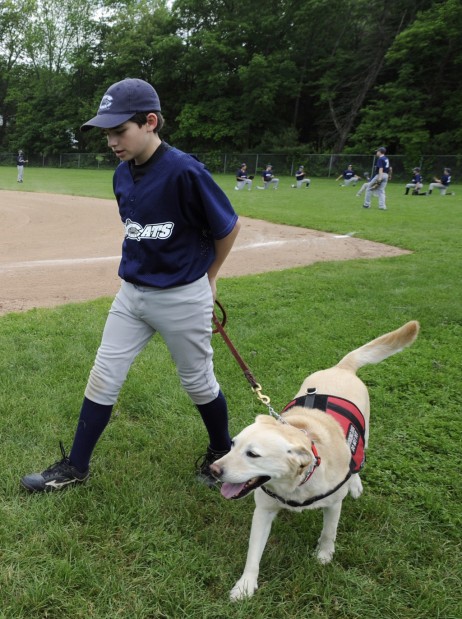
NORTH HAVEN, Conn. - Boo and Riley are more than affectionate, protective family pets. To their owners, the specially trained dogs are a furry layer of security to sniff out peanut products and other life-threatening allergens.
The dogs' Connecticut owners are among many people nationwide turning to allergy-sniffing service dogs, who accompany their handlers to detect allergens and their residue at school, during social events and in other everyday activities.
As their popularity grows, though, some owners are having mixed success in convincing businesses, schools and those in charge of other public venues that the dogs must be accepted as service animals, just as dogs whose handlers' disabilities are more readily apparent.
They're already specifically recognized as medical service dogs in recent updates to the federal Americans With Disabilities Act, but some parents are taking it a step further by lobbying their local and state officials to update their regulations, too.
People are also reading…
"The dog is just one way we can help our daughter have a more normal life," said Pam Minicucci of North Haven, whose 7-year-old daughter, Gianna, is constantly accompanied by her allergy-sniffing Saint Bernard named Boo.
State and federal agencies do not track the number of allergy-specific service dogs in the nation, but handlers and trainers say they're fielding more inquiries and orders in recent years. They attribute it to a growing awareness about the allergy-sniffing dogs and an increase in peanut allergies among many of today's children.
The federal Centers for Disease Control and Prevention estimates four of every 100 children have a food allergy, and says rates are highest among preschool-age children. It's also growing quickly: From 1997 to 2007, food allergies increased 18 percent among American children under 18 years old, though researchers haven't conclusively determined why.
In some cases, though, the dogs have been welcomed.
In Ansonia, Conn., school officials have been so accommodating of 13-year-old Jeff Glazer's dog, Riley, that they installed special HEPA filters to the schools' air-circulation systems to ensure the yellow Labrador's presence wouldn't cause problems for children allergic to dogs.
Though Jeff's mother says they encounter some people who have concerns about the dog, they say others are supportive.
"Now that I have Riley, I can go to restaurants and movies and my friends' houses and not have to worry about it," Jeff said on a recent sunny afternoon, getting ready to stretch before a game with his traveling baseball team on a Middlebury sports field.