


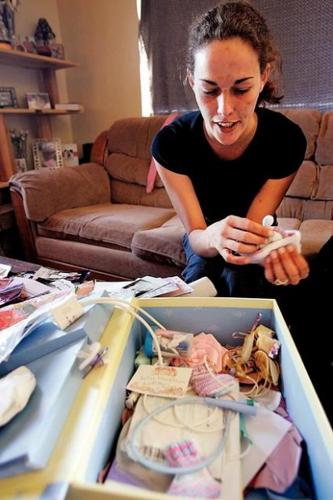
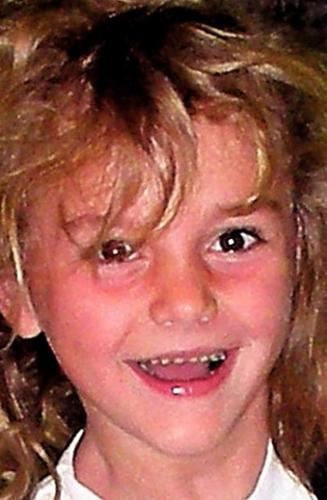
A young family and the Tucson Medical Center staff are grieving after the unexpected death of a little girl who had, until this time, always beaten the odds.
Rian Kelly Setler, whose goal in life had always been to be a surgeon like the ones who treated her, was 8 years old when she died on the operating table Feb. 20. Not only was her death a shock but it was a second tragedy for her family, who in 2002 lost Rian's dad when he slipped at Chivo Falls and fell to his death.
"God gave her to me for eight years, and now her dad gets to have her," Rian's mother, Debra Setler, said last week.
Rian, a tiny, perpetually smiling public advocate for the hospital's Children's Miracle Network and a friend to dozens of hospital staff members, had endured a lot of treatment in her eight short years. She'd been born with a condition called gastroschisis — her small intestine was outside her abdominal wall and she spent the first year of her life in the hospital.
People are also reading…
When she was 8 months old and facing a major surgery doctors feared she wouldn't survive, Mary Verplank, a nurse at Tucson Medical Center, took Rian outside the hospital for the first time. They went to the Reid Park Zoo before public hours.
"Her hands were gripped on her stroller. I was worried I was making her too tired, that she'd get a fever. But when she saw children lined up at the fence, waiting to go in — she'd never seen children outside like that," Verplank said.
"She was so fascinated and reached out to them. She sat up in her crib the rest of the day, her eyes as wide open as they could possibly be, holding a little stuffed monkey."
By the time she was 2, she'd had at least 15 surgeries, recalled her mother. Time and again, doctors told Debra and Rian's dad, Walter "Geno" Setler, that she wasn't going to make it.
"The doctors did not expect her to do well at all," Verplank said. "But she just kept surviving all the things she had to get herself through. No doubt she was very uncomfortable at times, but I don't think she knew anything different."
Verplank said Rian's dad was one of the biggest believers in her ability to survive so many surgeries.
"His belief kind of transcended some of the medical advice that we take so seriously," Verplank said. Transcendence is a word that described Rian well.
"She found a different level to live on and found a way to get so much more out of life," Verplank said. "Maybe because she knew her life wasn't going to be that long."
But for years, her family and friends at the hospital thought everything would be OK. Not long after her dad died, Rian's health improved. At the age of 2 she began walking, though her family says it was always more like a run. Aside from having tummy scars and no bellybutton — a fact she enjoyed pointing out to people — she lived a normal life, her mother said.
Her return visits to the hospital were more frequently for socializing with the TMC staff she'd grown to love.
"She loved anyone in scrubs. Even if we were in a grocery store and she saw someone in scrubs, she was drawn to them," her mother said.
A third-grader at Centennial Elementary School in the Flowing Wells School District, Rian was in many ways a typical 8-year-old girl. She had a fierce love for Hannah Montana, a fact displayed by her choice of T-shirts, bedding and her most recent Halloween costume. Her DVDs included "Ratatouille," "Strawberry Shortcake," "Cat in the Hat," and "The Princess Bride."
The fearless girl loved to swim, play soccer and tetherball. She rode ATVs with her little brother, Jamie, and "second dad" Rusty Rhynard, a 30-year-old student and engineering-firm employee whom Debra married two years ago. At any sign of snow in the mountains, Rian insisted on going up to Mount Lemmon to play.
"I remember seeing her one time at the Fourth Avenue Street Fair. She was eating cotton candy and had stuff all over her face, and I just thought, 'You go, Rian,' " Verplank said. "She had jumped the hurdle. We all thought it would never be a problem again."
Rian also had a more mature side — religiously watching the Food Network with her mother and offering comments like, "This needs more thyme," when eating spaghetti. Rachael Ray was one of her favorites. The night before she died, Rian helped her mother make chicken enchiladas with green beans, carrots, chives and cilantro.
Debra was just 17 when she gave birth to Rian on July 25, 2000. Now 25, she says her daughter has been her best teacher. Though Debra dropped out of high school, she later obtained her GED. Her daughter's determination to become a surgeon — a life goal she developed when she could barely speak, inspired Debra to go to Pima Community College, where she is now studying nursing. She hopes to work in a neonatal unit.
"She was so much smarter than us," her mother said. "She grew up around doctors and nurses."
Rian woke up her parents at about 4 a.m. on the day she died. Her stomach hurt, and when Debra felt it, it was rock-hard. Debra didn't know it at the time, but Rian's intestine had already died, and other organs in her body had lost blood supply. It's possible that her intestine twisted as a result of scar tissue from the gastroschisis.
One piece of dead intestine in the abdominal cavity can set up a chain reaction, and blood flow can diminish to the rest of the intestine.
It was the worst day that Jolene Eggert says she has ever had in her 10 years of working at TMC. Eggert, a child-life specialist whose job is to promote normalcy for kids going through traumatic experiences, had known Rian since she was born.
"Her death was felt by all of us," Eggert said.
Adding to the pain of Rian's death, it's extremely rare for a child to die in the operating room. Dr. Jonathan I. Greenfeld, who has done 8,000 to10,000 operations on children as an attending pediatric surgeon at TMC and University Medical Center, said he can't remember the last time it happened.
It's also rare for a child of 8 to die from gastroschisis, Greenfeld said. Usually the riskiest time is when they are infants.
Rian's mother, recalling the day she died, said: "I lay down with her at the hospital, and when we took the sheets back her legs were purple. They took her into surgery right away. … They prepared me for the worst, like they'd done before.
"It's just that she'd beaten the odds before."
On StarNet: Find a slideshow of photos to accompany this story at azstarnet.com/slideshows
About gastroschisis
It's a defect in the abdominal wall, usually 1 to 2 inches in diameter, that occurs in some babies. Usually most of the intestines are outside the abdominal wall, sometimes other organs as well. Since intestine is outside the abdominal wall, it is exposed to amniotic fluid during pregnancy, which can cause it to become thickened and damaged. Sometimes, segments of the intestine are missing.
Incidence: The rate of gastroschisis appears to be on the rise but its incidence is unclear. Current estimates that it occurs in one of every 5,000 live births are probably conservative.
Causes: There is no scientifically proven cause, but younger mothers are at higher risk of having babies with gastroschisis, as are Hispanic mothers. While it is not common, at any given time there are two or three babies with gastroschisis in Tucson neonatal intensive-care units.
Treatment: Doctors attempt to push the intestine back into the abdominal cavity, yet often the intestine is so thick and the abdominal cavity is so small that it's not possible. In that case, the intestine is placed in a plastic bag called a silo and slowly squeezed into the baby's abdominal cavity, not unlike squeezing a toothpaste tube. That process is usually done over five to seven days.
Mortality: Many medical experts believe it's at least 10 percent. Putting the intestine into the abdominal cavity can lead to damage, including damage to the intestine itself, though that is rare. Usually the damage to the intestine is pre-existing from exposure to amniotic fluid. Damage to the intestine can lead to absorption problems and create difficulties ensuring that babies get the nutrition they need.
The riskiest time for babies with gastroschisis is at the early stages of their lives. Most who get past the early stages do well for the rest of their lives.
Source: Dr. Jonathan I. Greenfeld, an attending pediatric surgeon at Tucson Medical Center and an associate professor of surgery at the University of Arizona's College of Medicine.


