

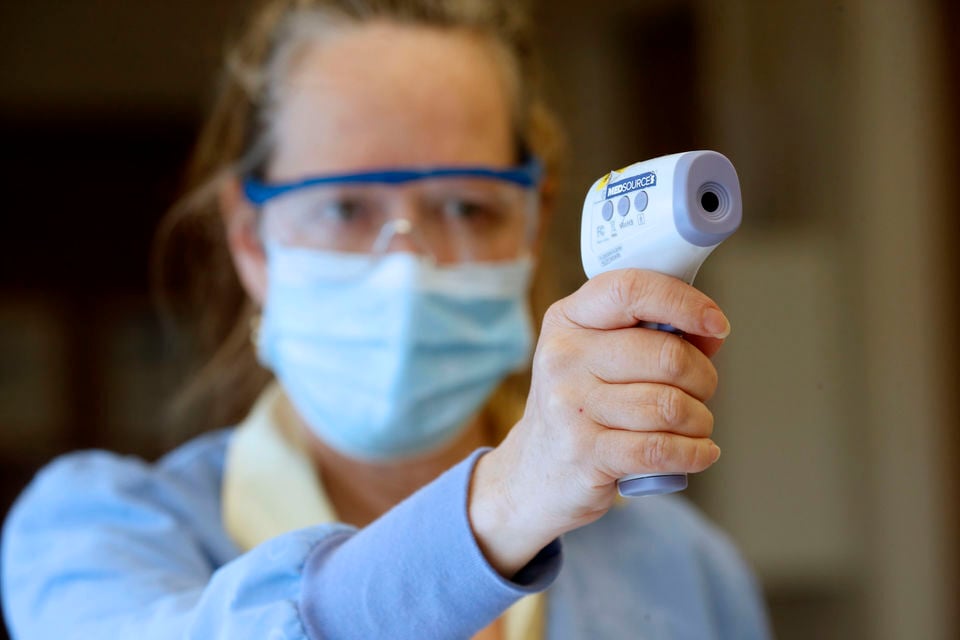
Iris Purks slammed the Covid-19 response at a Town of Tonawanda nursing home she has worked at for 26 years Monday as state lawmakers sought insights into how the pandemic impacted long-term care facilities.
“We lacked PPE and training on how to use it,” said Purks, a certified nursing assistant at Safire Rehabilitation of Northtowns.
One of her co-workers contracted the novel coronavirus and brought it home to her husband, Purks said.
“They both ended up in the hospital. He died. She just returned to work six months later. She still carries the guilt,” said Purks, a member of the 1199SEIU union.
She was one of more than 40 speakers scheduled to testify Tuesday at a second virtual hearing as state legislators investigate the response by Gov. Andrew M. Cuomo's administration to the more than 6,400 Covid-19 deaths at nursing homes.
People are also reading…
A representative of the owners of Safire Rehabilitation of Northtowns previously disputed the 1199SEIU's contention that workers were not given adequate protective equipment.
But Purks said it took Safire Northtowns weeks before it provided workers with proper personal protective equipment and training in how to use it.
And like other nursing home workers, she objected to a State Health Department study that determined employees brought the deadly virus into nursing homes. She said she believes she contracted the virus from a resident.
“No one in my family had it,” Purks said
Addressing the widespread for-profit model for nursing homes, Democratic Assemblyman Richard N. Gottfried, chairman of the Assembly Health Committee, raised the question of whether legislation was needed to “clamp down” on the practice of nursing homes doing business with related companies as a means of “siphoning money” out of the facilities.
Presenting a contrasting picture, representatives from long-term care industry groups said many facilities are struggling to make ends meet.
If the federal government does not provide additional Medicaid funding, nursing homes in the state will start to go out of business because of the financial pressures caused, in part, by Covid-19, one of the industry officials told lawmakers.
“Forty-seven percent of nursing homes in New York are in the red right now,” said Stephen Hanse, president of New York State Health Facilities Association industry group that represents more than 400 long-term care facilities in the state.
Hanse did not predict how many nursing homes would close if Medicaid funding is cut by 20 percent – as Cuomo predicted it might be if the federal government does not provide more aid.
Nursing home industry officials testified that Covid-19 impacted nursing homes in the state so severely because of previous cuts to the Medicaid reimbursement rate, struggles to secure adequate amounts of personal protective equipment, an early lack of testing for the virus, and nursing home staffing shortages that predated the pandemic.
Lawmakers, including State Sen. Patrick M. Gallivan, R-Elma, repeatedly expressed concern that state Health Commissioner Howard Zucker had declined to attend the second hearing to answer additional questions.
“I think he left us with many more questions than answers,” Gallivan said of Zucker’s appearance at last Monday’s hearing, at which the commissioner was criticized for how the state counted virus deaths at nursing homes.
Some lawmakers believe that the Health Department’s decision not to include deaths of virus-infected residents who were transferred to hospitals where they died resulted in an undercounting of deaths from the coronavirus in nursing homes.
Democratic Assemblyman Charles Barron, who survived Covid-19, and other lawmakers also wanted to know if nursing homes were prepared for a possible second wave of Covid-19 this fall.
James Clyne, president of Leading Age New York, which represent more than 200 nonprofit and government-run nursing homes, said a mandate requiring long-term care facilities to have a 60-day supply of personal protective equipment continues to present a challenge.
“There are spot shortages,” Clyne said of N95 masks and other equipment.
Neither Clyne nor Hanse offered any outright criticisms of the Health Department when asked by lawmakers whether the state sufficiently helped nursing homes contain the virus in the spring.
Clyne conceded his members were “frustrated” over the lack of personal protective equipment and testing availability, but added, “I don’t know if that was beyond the Health Department’s control.”
In early April, Clyne said, nursing homes were using 12 million pieces of personal protective equipment weekly.
Zucker, in his testimony, had said the Health Department had provided a total of 14 million pieces of protective equipment to nursing homes.
Democratic State Sen. James Skoufis asked Hanse and Clyne if any nursing homes had their licenses suspended or were placed in receivership during the pandemic. The industry officials said they were not aware of any such actions.
“Many of these nursing homes had many, many violations in the last couple years leading up to pandemic,” Skoufis said, while asking whether the Health Department merely imposed “slaps on the wrist.”
“I don’t feel it’s lax,” Clyne said of enforcement. “If anything, they go too far.”
Lindsay Heckler, the supervising attorney at the Center for Elder Law & Justice in Buffalo, who was scheduled to address the hearing later Monday, submitted extensive written suggestions to improve nursing home operations.
“Before the Covid-19 pandemic we saw the challenges our clients faced living in long-term care settings, short-staffing, abuse, neglect, indignities, lax infection control practices, insufficient enforcement actions, and enabling substandard care to continue through the certificate of need process,” Heckler wrote. “The pandemic has exacerbated these issues and long-term care residents and their families are sick of excuses. “
She offered support for a law that would require greater accountability on how taxpayer funds are spent. The law, she said, would “ensure public Medicaid dollars are not wasted on administrative costs, profits, and other expenses that do not support the recruitment, retention, and training of staff.”


