Editor's note: This story is part of 'ESA at 50,' a series that examines the past, present and future of the Endangered Species Act. Often called the "pit bull of environmental laws," the ESA has provided federal protection to nearly 2,000 animals and plants. On its 50th anniversary, it grapples with political uncertainty and unforeseen ecological challenges.
Wolverines are so hard to find, even expert biologists have a hard time counting them.
Does that make them just rare, or at risk?
And which wolverines are we talking about?
On November 29, the U.S. Fish and Wildlife Service made the wolverine the 724th animal to join the federal Endangered Species Act list of protected animals, just weeks before the law’s 50th anniversary. Another 939 plants appear on a separate list of threatened and endangered species.
People are also reading…
Since it was signed by President Richard Nixon in December 28, 1973, the Endangered Species Act has become one of the Earth’s most far-reaching laws. It passed Congress with only 12 dissenting votes across both the House and Senate. Of the 1,663 animals and plants placed on its list since then, about 100 have gone extinct. Another 54 have been declared recovered and delisted. A few exist in other countries but get included in the U.S. list through treaties or transnational habitat programs.
Critics of the ESA point to that “delisted” number and say recovering only 3% of the total in half a century is a failure. Proponents see that in reverse: Nearly all the species protected by the law have remained on the landscape.

Explore which species in your state have made the endangered species list.
“Most of them would have gone extinct had they not been protected,” said Lowell Baier, whose 2023 published history of the Endangered Species Act weighs six and a half pounds. “You’d have 2,000 species less in the United States. We have had about 600 proposed changes to the law presented in Congress that have not passed to undermine, repeal or weaken it so it’s no longer effective. In the House right now, there are 37 or 38 bills right now to repeal or dumb it down. The fact that it’s survived 50 years under all those attacks says it all. The American public love that act and love what it’s done.”
Baier is a former president of the Boone and Crockett Club, founded by Theodore Roosevelt and fellow 19th-century conservationists to protect North America’s wildlife populations (and now headquartered in Missoula). In recognition of the ESA’s golden anniversary, his two-volume "Codex of The Endangered Species Act" compiles more than a thousand pages of legal history and commentary on the law.
“The publishers have asked for a third volume, tentatively titled ‘Earth’s Emergency Room,” Baier said in a recent interview. “I’ve spent seven years on this. I knew personally all the people who wrote the act. Somebody needed to record that complete history.”

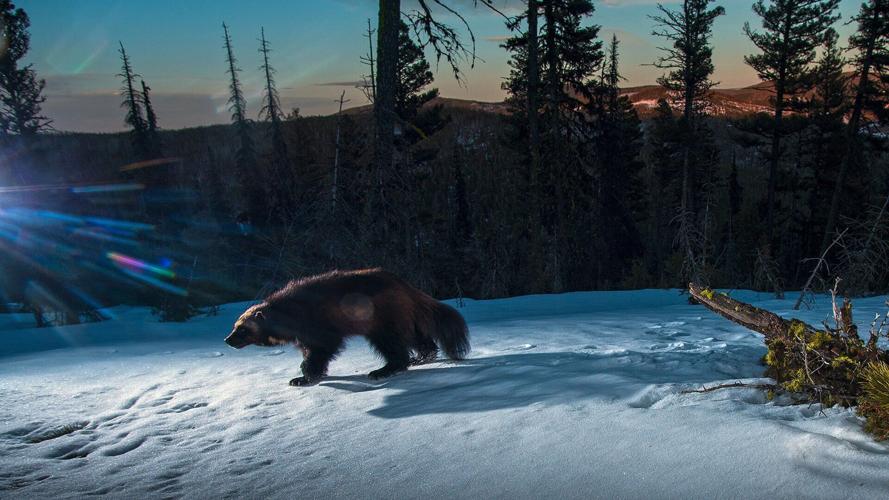
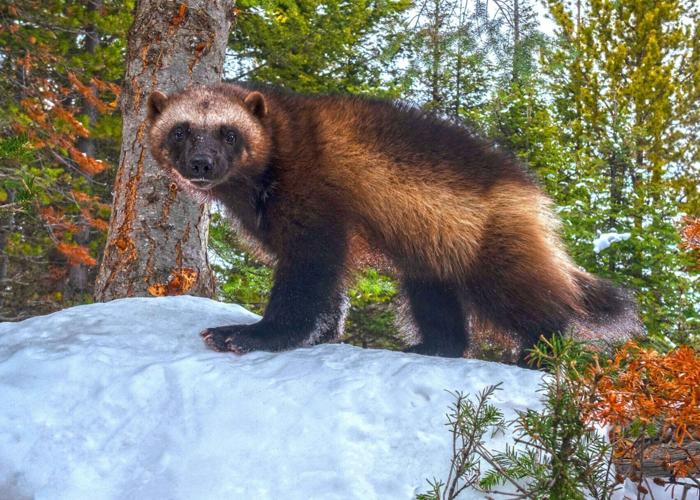
An estimated 300 wolverines prowl the snowy elevations of the Rocky Mountains in Montana, Idaho, Wyoming and parts of Washington, Utah and Colorado. Their hard-to-find nature has challenged the ability of biologists to confirm wolverines' population in the Lower 48 states.
Does the tool still work?
That history includes triumphs, like the recovery of the bald eagle, and ongoing controversy, like the fate of grizzly bears in the Rocky Mountain West.
The mid-20th century saw passage of 67 environmental and consumer protection laws, from the Clean Air Act of 1963 to the National Environmental Policy Act of 1970 and beyond. But the scope of those problems may have eluded even those who pushed them. Nixon, in a special message to Congress declaring his environmental goals in 1972, said “we have expanded our concern over the extinction of these animals to include the present list of over 100 (endangered species).” That was an underestimate by an order of magnitude.
And at the time, most people assumed we had the tools to fix the problem. For example, eliminating the pesticide DDT helped recover the bald eagle.
But the greatest threat to wolverine populations may be lack of snow. The weasel family’s largest member is known for fighting grizzly bears for food-scavenging rights. It also depends on deep, persistent snowfields where females build dens to give birth, raise their kits and cache food. A trend of warmer winters and shifting weather patterns has made those snowbanks rare. Laws and policies might alleviate other wolverine stressors, such as trapping, winter recreation disturbance, and habitat connectivity. But the wolverine can't claw more snow out of the sky.
An estimated 300 wolverines inhabit the Lower 48 states, particularly Montana, Idaho, and bits of Washington, Wyoming and Colorado. Thousands more live in Canada and Alaska (although FWS noted “unsustainable trapping levels in southern Canada appear to have depressed the wolverine population in a portion of southern British Columbia and Alberta” – which U.S. wildlife managers count on to boost Lower-48 wolverine stocks).
The Republican members of Montana’s congressional delegation, Rep.s Matt Rosendale and Ryan Zinke along with Sen. Steve Daines, argued those reasons weren’t enough to justify putting wolverines under the ESA.
“Basing this determination on climate modeling and projections that have been consistently inaccurate over decades does not meet the standard of ‘likely’ or even probable at this stage,” the three wrote to Interior Secretary Deb Haaland days before the wolverine’s ESA listing was announced. “The North American population of wolverines shares genetic roots with the first wolverines that crossed the Bering Strait — wolverines have demonstrated remarkable resilience surviving and adapting to various climate fluctuations, including the ice age and other periods of extreme climate change. This longstanding presence in North America underscores the wolverine’s ability to endure and adapt.”
The congressmen objected to the wolverine’s listing because “we cannot afford to restrict the activities and recreation of citizens of Montana based on projections and models that may not materialize(.)” However, the plain language of the ESA points otherwise.

From left to right: Rep. Matt Rosendale, Sen. Steve Daines and Rep. Ryan Zinke.
Going to war for wildlife
“The men who wrote the act were all hardened World War II veterans or spent a lot of time in the military,” Baier said. “There was a ‘government is right/command and control’ mentality that underlined that act. That’s the way everybody thought back then.”
That shows in two main ways. The wording of the Endangered Species Act clearly says the plants and animals it protects have priority. As U.S. District Judge Donald Molloy quoted from the Supreme Court in a November ruling protecting grizzly bears from getting injured in wolf traps, “Congress’ express intent in enacting the ESA was ‘to halt and reverse the trend toward species extinction – whatever the cost.’”
The second impact is the relation of the states to the federal government. Baier recalled the debate over whether states would get to concur on species recovery plans, or just consult. Consultation meant states had a seat at the table, but concurrence would give them veto power. States only got consultation.

Attorney and former Boone and Crockett Club president Lowell Baier spent seven years compiling the "Codex of the Endangered Species Act," reviewing its 50 years of impact.
To critics of the law, like Tate Watkins of the Property and Environment Research Center, that makes the ESA “nearly all stick and no carrot.”
“Punitive policies turn would-be partners in recovery into enemies of rare species,” Tate wrote in the December 2023 issue of Reason. “It’s why a popular colloquial stance toward endangered species has long been called ‘the three S’s’ – shoot, shovel and shut up.”
Aside from winking at a strategy of deliberately disobeying a federal law passed with near-unanimous bipartisan support, Tate’s concern also touches on the ESA’s public perception: “Virtually everyone envisioned the law protecting bald eagles and manatees, not halting infrastructure builds or slowing economic development in the name of slimy invertebrates or obscure fish.”
That assumes virtually everyone didn’t read the actual law, which reads “various species of fish, wildlife and plants in the United States have been rendered extinct as a consequence of economic growth and development untampered by adequate concern and conservation (and) the United States has pledged itself … to conserve to the extent practical the various species of fish or wildlife or plants facing extinction.”
It also assumes the general public only wanted to protect charismatic megafauna like bald eagles. But as recently noted in FWS recovery research, the slimy, invertebrate, and ESA- protected western Glacier stonefly makes up as much as a quarter of the food web for obscure fish that feed the popular trout populations of Glacier National Park.
However, that raises a 50th birthday problem of another kind. The Western Glacier Stonefly habitat extends from the bottom tips of Glacier Park glaciers to about 500 feet of elevation below that, where the water is cold enough for them to thrive. Like the wolverine, it depends on snow. Glacier Park’s glaciers are rapidly melting due to steadily warmer summer temperatures and decreasing winter snowfall. What University of Texas ESA law expert Melinda Taylor referred to as "the so-called pit bull of environmental statutes" has not shown much ability to stop that kind of climatic threat.
Can the ESA evolve?
Meanwhile, U.S. government trends also forecast little comprehensive help for ESA subjects. Congress’ deep partisan divide has made even routine legislation nearly unpassable. Something as complex as a nuanced rewording of the Endangered Species Act isn’t likely to get negotiated amid rolling federal budget crises. The Supreme Court appears poised to undo longstanding tools of federal administrative power, through the “major questions doctrine” (allowing judges to find “major questions” in challenged laws that Congress must specifically resolve with a new law) and the expected fall of the “Chevron deference” precedent that gave federal agencies priority when weighing evidence and research in court.
That leaves presidents and their agency leaders to do what they can, while they can. The result is an election-cycle scramble to undo what the previous administration did. The Trump administration rolled back or reversed more than 130 ESA rules imposed by the Obama administration. The Biden administration did an equally thorough flip of Trump’s ESA policies.
The result is what UC Berkeley School of Law Professor Holly Doremus calls “policy whiplash.”
“The regulations won’t last court challenges, or the next administration will kill them,” Doremus said. “I’m quite pessimistic about any real changes to either the statute or implementing regulations in the near future.”
However, Doremus does see potential in a different direction.
“Rather than identify specific species to save, what I have in mind is more a new framework for how to look at whether we should let species go,” Doremus said. “How do we set priorities when there’s never enough funding? What do we mean about recovery? What cannot survive in a climate-changing world even with all the help we can give them?”

University of California-Berkeley law professor Holly Doremus
Doremus outlines both a philosophical and practical path forward. A more useful way of thinking about endangered species would copy emergency room triage, she said. Some things will get better without help, some won’t survive no matter what help we provide, so let’s identify and focus on those that would benefit from the help we have to give.
“I would like to see a multi-disciplinary academic conversation — How much do we want to garden the earth or push evolution in directions we think are helpful?” Doremus said. Having that debate among professors and researchers would open space for new ideas to appear before political forces shout down the proposal. It would also be a forum dedicated to one topic, without having to contend with wars, taxes, Social Security, and everything else that clogs a congressperson’s daily to-do list.
Such an academic reconnaissance has worked before, with deep Montana roots. In 1970 the University of Montana School of Forestry released the Bolle Report, which spotlighted the industry-dominated failure of the U.S. Forest Service to protect the nation’s forests. The result was a top-to-bottom reassessment of the Forest Service’s timber policies, pushed in part by its lack of consideration of Endangered Species Act responsibilities.

University of Montana natural resources law professor Sandra Zellmer analyzed the ESA's current state and added another option: Improving the "delisting" process of the law.
"Conservation is all about recovery, and recovery (in most cases) necessitates strong, enforceable recovery plans," Zellmer said. But the FWS has a "spotty litigation record when it comes to assessing the adequacy of regulatory mechanisms and deploying them as a substitute for ESA protections, she wrote in a 2020 Harvard Environmental Law Review article.

Montana Untamed: Often called “the pit-bull of environmental statutes,” the ESA has given federal protection to nearly 2,000 animals and plants.
A big problem, as Montana officials found when the U.S. 9th Circuit Court of Appeals rejected a plan to delist grizzly bears in the Greater Yellowstone Ecosystem, was that courts won't let the federal government rely on states to preserve at-risk animals through local regulations. And the threat of re-listing a troublesome creature like the grizzly won't work, because the process takes so long that the species might disappear before new protections could be put in place.
Instead, Zellmer and her legal colleagues proposed a "soft release" concept where federal supervision remains in place with an automatic and immediate return to full ESA protection if the species slips back into threatened condition. That would build on successful projects like the collaborative effort keeping sharp-tailed grouse off the ESA in the first place because state, local and private stakeholders have worked hard to protect it.

All that still presumes public officials can respond to ecological problems faster than economic development or climate change can impose them.
“People need to start asking what’s happening out there,” Baier warned. “Why are all the fireflies gone? Why are bees in a state of collapse? The ESA is struggling to deal with that. But the broader discussion is the biodiversity crisis, that’s really magnified and exacerbated by climate change and global warming. The Endangered Species Act sits right in the middle of that.”

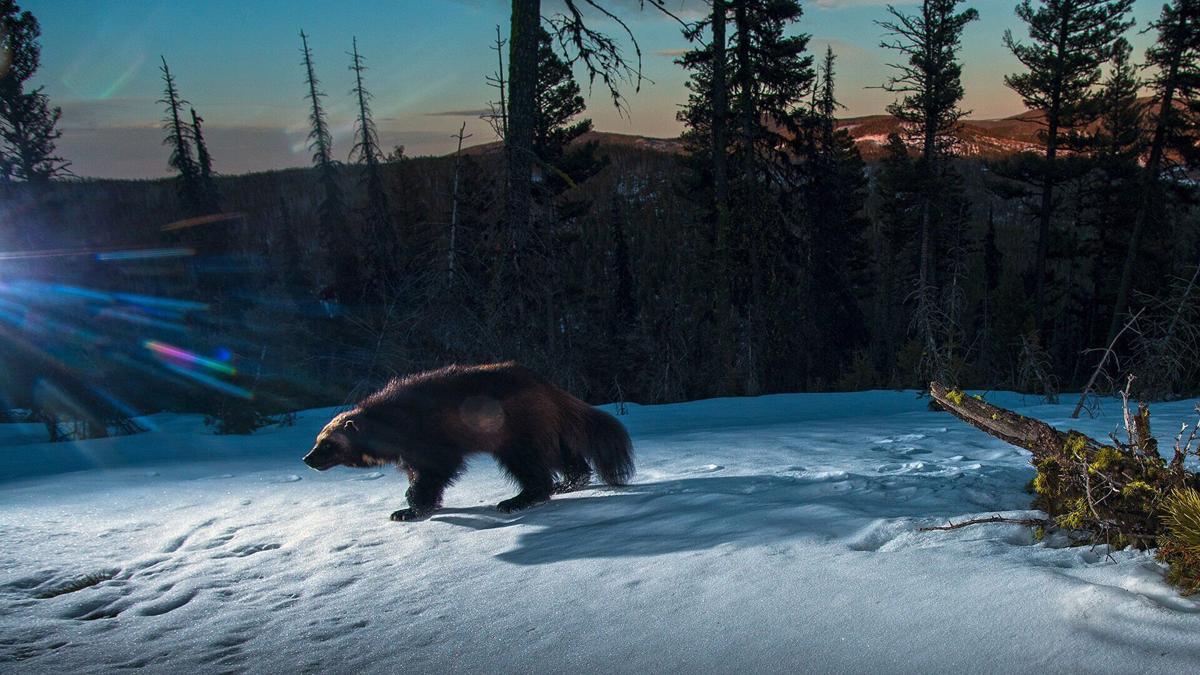
A wolverine triggers a remote camera in the Helena National Forest. The elusive carnivore depends on deep snow for breeding and scavenging food. Climate change and habitat fragmentation have made it a candidate for listing under the Endangered Species Act on its 50th anniversary.
50 years of the ESA: Explore this series, in photos

Erin Fenger, conflict prevention specialist for Montana Fish, Wildlife and Park, throws old cattle bones into a dump trailer on a ranch outside Valier, Mont. in Sept. 2023. Montana FWP’s prairie bear team routinely picks up bone pits and carcasses from ranches to prevent grizzly bear attraction to the operations.

Henry Becker, pets Zia, an anatolian shepherd, on the Stickleg Ranch outside Conrad, Mont. in Sept. 2023.

Range rider Sigrid Olson rides her horse Jake on public land in search of cattle outside Potomac, Mont. in Oct. 2023.

Range rider Sigrid Olson rides her horse Jake on public land in search of cattle outside Potomac, Mont., in October 2023.

Range rider Sigrid Olson rides her horse Jake on public land in search of cattle outside Potomac, Mont. in Oct. 2023.

A major aspect of Sigrid Olson’s job as a range riding is documenting the condition of cattle on the range and signs of predators in the area. She produces a report from her notes that she shares with producers and wildlife agencies.

Range rider Sigrid Olson poses for a portrait after a day of range riding outside Potomac, Mont. in Oct. 2023.

Range rider Sigrid Olson loosens the saddle on her horse Jake after a day of range riding outside Potomac, Mont. in Oct. 2023.

Kristina Harkins of the Montana Department of Fish, Wildlife & Parks walks down a hillside near Ambrose Creek northeast of Stevensville after using a radio receiver to locate sharp-tailed grouse on Nov. 16. Harkins is a field coordinator for FWP's effort to reintroduce the species west of the Continental Divide, where they haven't been seen for decades.

Harkins uses a handheld radio antenna to listen for collared sharp-tailed grouse near the MPG Ranch in the northern Bitterroot Valley on Nov. 16.

Kristina Harkins, in the driver seat of an FWP truck near the MPG Ranch Nov. 16, listens for signals from radio-collared sharp-tailed grouse using an omnidirectional antenna mounted atop the truck cab.

Male sharp-tailed grouse dance on a lek in early morning light in spring 2023.
An estimated 300 wolverines prowl the snowy elevations of the Rocky Mountains in Montana, Idaho, Wyoming and parts of Washington, Utah and Colorado. Their hard-to-find nature has challenged the ability of biologists to confirm wolverines' population in the Lower 48 states.
A wolverine triggers a remote camera in the Helena National Forest. The elusive carnivore depends on deep snow for breeding and scavenging food. Climate change and habitat fragmentation have made it a candidate for listing under the Endangered Species Act on its 50th anniversary.

Staff from the Montana Department of Fish, Wildlife & Parks re-introduced Arctic grayling in French Creek in the Mount Haggin Wildlife Management Area in early October 2023. The fish have genetic ties to river-dwelling Arctic grayling in the Big Hole River. French Creek is a tributary to the river.

Fish, Wildlife and Parks Fisheries Biologist Jim Olsen, right, and Region Three Supervisor Marina Yoshioka hold buckets for transporting Arctic grayling during a repopulation project on French Creek on Oct. 2 in the Mount Haggin Wildlife Management Area.

Fish, Wildlife & Parks fisheries technician Lance Breen releases Arctic grayling into French Creek during a repopulation project in the fall of 2023 in the Mount Haggin Wildlife Management Area near Anaconda.

Fluvial Arctic Grayling

Fluvial Arctic Grayling

It's unusual to see Park Service personnel, or anyone, in Yellowstone National Park carrying a weapon. But this summer a crew used an air rifle to shoot darts to collect DNA samples from bison. The sampling is a small part of the work being conducted as the animals are considered for protection under the Endangered Species Act.

Bison close up in a snow storm in Yellowstone National Park.

Bison herd with calves in Lamar Valley of Yellowstone National Park.

A herd of bison in Yellowstone National Park.

A bison cow and calf walk in the road in Yellowstone National Park.

A herd of bison move through the Lamar Valley in Yellowstone National Park.

Cow and calf run through the sage in Lamar Valley in Yellowstone National Park.

The ancient bison, Bison antiquus, was taller, had longer horns, and was 25% more massive than living American bison (Bison bison). It was roughly 7.5 feet tall and 15 feet long, weighing approximately 3,500 pounds. Bison had bone horn cores on their skull that served as a base for a longer horn made of keratin, the protein that makes up our fingernails. The span of the horns of Bison antiquus was approximately 3 feet.
Attorney and former Boone and Crockett Club president Lowell Baier spent seven years compiling the "Codex of the Endangered Species Act," reviewing its 50 years of impact.

Wesley Sarmento, prairie bear specialist for Montana Fish, Wildlife and Parks, left, talks with Jennie and Seth Becker on the Stickleg Ranch outside Conrad, Mont. in Sept. 2023.