

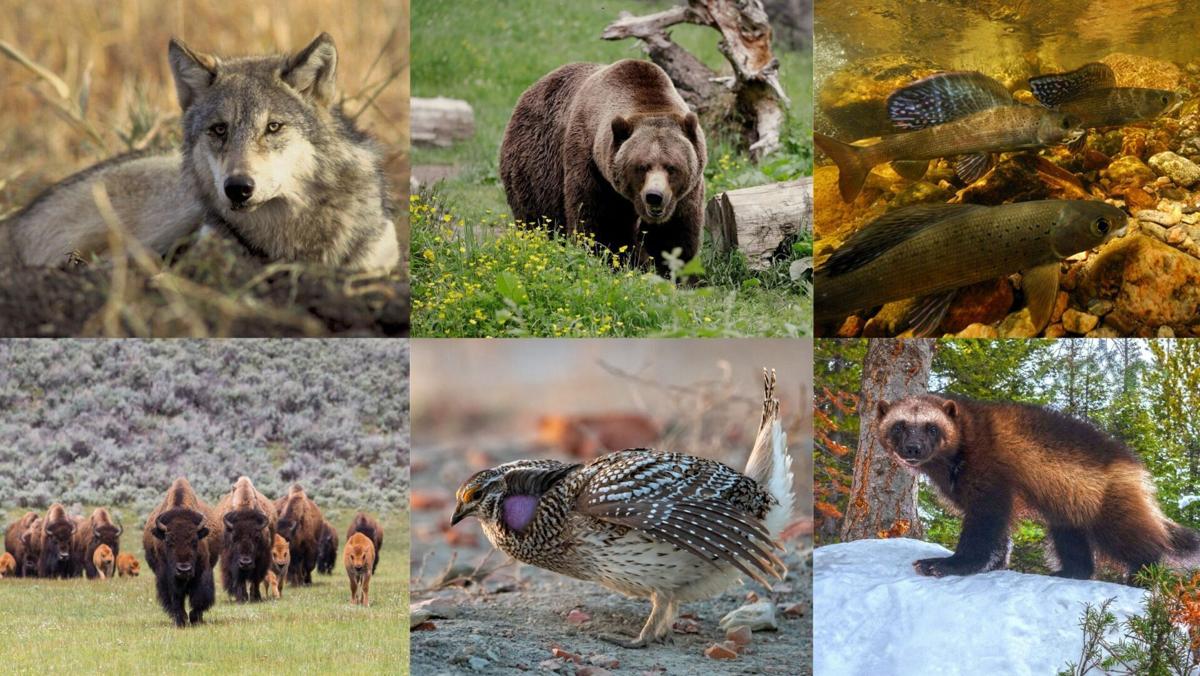

The Endangered Species Act turns 50 this December. Often called “the pit bull of environmental statutes,” the ESA has given federal protection to nearly 2,000 animals and plants.
It has also drawn critics who claim it takes away property rights and hurts economic development.
After half a century of recovery efforts, only a few hundred species have got delisted. On the other hand, the whole world faces a biodiversity crisis, with more than 44,000 species threatened with extinction. And the ESA has been the international model law for how to save what the world has left.
Some of the ESA’s biggest struggles have happened in Montana, including fights over gray wolves, grizzly bears, bull trout and sage grouse. As the law reaches its 50-year anniversary, a group of Lee Montana reporters scanned the state to see how it’s working and what its future holds.
People are also reading…
Explore the series:

Since it was signed by President Richard Nixon on December 28, 1973, the ESA has protected more than 2,000 animals and plants, becoming one of Earth’s most far-reaching laws.
About this story: The Endangered Species Act has become one of the Earth’s most far-reaching laws. It passed Congress with only 12 dissenting votes across both the House and Senate. Of the 1,663 animals and plants placed on its list since then, about 100 have gone extinct. Another 54 have been declared recovered and delisted. Critics of the ESA point to that “delisted” number and say recovering only 3% of the total in half a century is a failure. Proponents see that in reverse: Nearly all the species protected by the law have remained on the landscape.

A century ago, we stocked non-native trout throughout national parks. Now native species like cutthroat trout must be transplanted in experimental habitats if they're to survive through this decade.
About this story: In a new tactic to help recover threatened and endangered species, the U.S. Fish and Wildlife Service has authorized expanded use of experimental populations to recover animals protected under the Endangered Species Act. The rule, published in the Federal Register earlier this summer, allows at-risk animals to be transplanted in suitable habitats where they didn’t exist before. Such a project is underway at Glacier National Park's Gunsight Lake, where biologists have started the long process of transforming the waterbody into a refuge for future cutthroat and bull trout.

“The Endangered Species Act only protects that relatively small number of species that are right on the precipice of disappearing."
About this story: A critical difference between federal species conservation and state-led efforts is that the ESA was designed to yank an imperiled species back from the brink before it disappears entirely from its historic range — at least in all or part of the U.S. But state-led efforts like Montana’s grouse reintroduction are meant to make sure a species gets what it needs while it's still around. If Montana has its way, sharp-tailed grouse will never approach that brink.

Guard dogs and range riders have protected people against bears for millennia. They may offer solutions for co-existing with grizzlies as the recovered trouble-maker of the West nears ESA delisting.
About this story: Grizzly bears gained federal protection in 1975 shortly after the ESA was ratified in 1973. A half-century later, the bears are widely considered to be recovered in the Lower 48 states. But they remain listed under the ESA, while leaders in Montana, Idaho and Wyoming have demanded the bears be turned over to state management. Learning how to co-exist may be key, and some of the most efficient tools used today to keep predators away from livestock, grain and humans are the same ones that have been utilized for thousands of years – dogs and shepherds.

Would Arctic grayling in the Big Hole River benefit from federal protections afforded by being listed as an endangered or threatened species under the ESA? Some stakeholders don't think so.
About this story: Legal quests for listing the Arctic grayling began more than 30 years ago. They have proceeded in fits and starts, like a grayling struggling to migrate upstream when flow in Montana's Big Hole River drops toward a trickle. The Fish and Wildlife Service has rejected several attempts to list the fish, only to be reversed in court. Stakeholders have long butted heads over whether the river-dwelling population of Arctic grayling in the Big Hole River would truly benefit from federal protections.

Getting Yellowstone National Park bison protected under the ESA might break "the stranglehold Montana has placed on recovering wild bison." But those aren't the only bison.
About this story: The restoration of bison in North America is largely hailed as a conservation success story. Now, the Fish and Wildlife Service’s review of Yellowstone bison for possible listing under the ESA is being undertaken as Yellowstone National Park considers an overhaul of its bison management plan. The National Park Service has offered three alternatives, the most aggressive of which calls for keeping the population between 3,500 to 5,000 animals using hunting and culling as well as live bison transfers to cap the population.

Montana Untamed: Often called “the pit-bull of environmental statutes,” the ESA has given federal protection to nearly 2,000 animals and plants.
Listen to our podcast: Montana Untamed is created in partnership across five Montana newsrooms — the Billings Gazette, Helena Independent Record, Missoulian, Montana Standard and Ravalli Republic. On this episode, host Thom Bridge and project lead Rob Chaney unpack the Endangered Species Act and why reporters chose to pursue the series. What has the law accomplished over the past 50 years, how has it played out in Montana and what can the world expect in the decades to come?


Meet the reporters behind ESA at 50

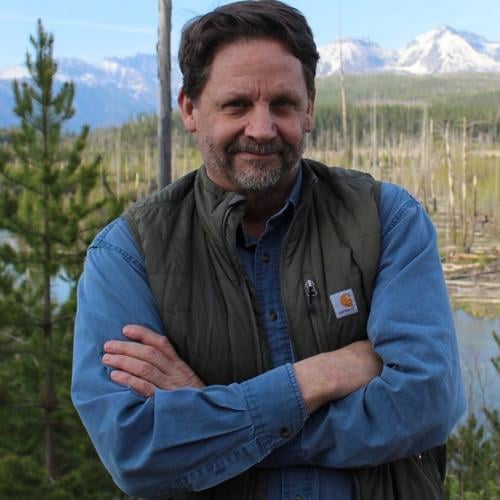
Brett French has been covering natural resource issues in Montana for 30 years. A Bozeman native and graduate of the University of Montana, he worked his way around the Northwest before settling in Billings where he’s been the outdoor editor for 10 years. His beat includes covering Yellowstone National Park and its grizzly bears and wolves, issues facing hunters and anglers and the state and federal land management agencies that oversee recreation. When not covering outdoor issues, Brett is rafting, backpacking, hunting and skiing in Montana’s wild spaces with his family and friends.
50 years of the ESA: Explore this series, in photos

Erin Fenger, conflict prevention specialist for Montana Fish, Wildlife and Park, throws old cattle bones into a dump trailer on a ranch outside Valier, Mont. in Sept. 2023. Montana FWP’s prairie bear team routinely picks up bone pits and carcasses from ranches to prevent grizzly bear attraction to the operations.

Henry Becker, pets Zia, an anatolian shepherd, on the Stickleg Ranch outside Conrad, Mont. in Sept. 2023.

Range rider Sigrid Olson rides her horse Jake on public land in search of cattle outside Potomac, Mont. in Oct. 2023.

Range rider Sigrid Olson rides her horse Jake on public land in search of cattle outside Potomac, Mont., in October 2023.

Range rider Sigrid Olson rides her horse Jake on public land in search of cattle outside Potomac, Mont. in Oct. 2023.

A major aspect of Sigrid Olson’s job as a range riding is documenting the condition of cattle on the range and signs of predators in the area. She produces a report from her notes that she shares with producers and wildlife agencies.

Range rider Sigrid Olson poses for a portrait after a day of range riding outside Potomac, Mont. in Oct. 2023.

Range rider Sigrid Olson loosens the saddle on her horse Jake after a day of range riding outside Potomac, Mont. in Oct. 2023.

Kristina Harkins of the Montana Department of Fish, Wildlife & Parks walks down a hillside near Ambrose Creek northeast of Stevensville after using a radio receiver to locate sharp-tailed grouse on Nov. 16. Harkins is a field coordinator for FWP's effort to reintroduce the species west of the Continental Divide, where they haven't been seen for decades.

Harkins uses a handheld radio antenna to listen for collared sharp-tailed grouse near the MPG Ranch in the northern Bitterroot Valley on Nov. 16.

Kristina Harkins, in the driver seat of an FWP truck near the MPG Ranch Nov. 16, listens for signals from radio-collared sharp-tailed grouse using an omnidirectional antenna mounted atop the truck cab.

Male sharp-tailed grouse dance on a lek in early morning light in spring 2023.

An estimated 300 wolverines prowl the snowy elevations of the Rocky Mountains in Montana, Idaho, Wyoming and parts of Washington, Utah and Colorado. Their hard-to-find nature has challenged the ability of biologists to confirm wolverines' population in the Lower 48 states.

A wolverine triggers a remote camera in the Helena National Forest. The elusive carnivore depends on deep snow for breeding and scavenging food. Climate change and habitat fragmentation have made it a candidate for listing under the Endangered Species Act on its 50th anniversary.

Staff from the Montana Department of Fish, Wildlife & Parks re-introduced Arctic grayling in French Creek in the Mount Haggin Wildlife Management Area in early October 2023. The fish have genetic ties to river-dwelling Arctic grayling in the Big Hole River. French Creek is a tributary to the river.

Fish, Wildlife and Parks Fisheries Biologist Jim Olsen, right, and Region Three Supervisor Marina Yoshioka hold buckets for transporting Arctic grayling during a repopulation project on French Creek on Oct. 2 in the Mount Haggin Wildlife Management Area.

Fish, Wildlife & Parks fisheries technician Lance Breen releases Arctic grayling into French Creek during a repopulation project in the fall of 2023 in the Mount Haggin Wildlife Management Area near Anaconda.

Fluvial Arctic Grayling

Fluvial Arctic Grayling

It's unusual to see Park Service personnel, or anyone, in Yellowstone National Park carrying a weapon. But this summer a crew used an air rifle to shoot darts to collect DNA samples from bison. The sampling is a small part of the work being conducted as the animals are considered for protection under the Endangered Species Act.

Bison close up in a snow storm in Yellowstone National Park.

Bison herd with calves in Lamar Valley of Yellowstone National Park.

A herd of bison in Yellowstone National Park.

A bison cow and calf walk in the road in Yellowstone National Park.

A herd of bison move through the Lamar Valley in Yellowstone National Park.

Cow and calf run through the sage in Lamar Valley in Yellowstone National Park.

The ancient bison, Bison antiquus, was taller, had longer horns, and was 25% more massive than living American bison (Bison bison). It was roughly 7.5 feet tall and 15 feet long, weighing approximately 3,500 pounds. Bison had bone horn cores on their skull that served as a base for a longer horn made of keratin, the protein that makes up our fingernails. The span of the horns of Bison antiquus was approximately 3 feet.

Attorney and former Boone and Crockett Club president Lowell Baier spent seven years compiling the "Codex of the Endangered Species Act," reviewing its 50 years of impact.

Wesley Sarmento, prairie bear specialist for Montana Fish, Wildlife and Parks, left, talks with Jennie and Seth Becker on the Stickleg Ranch outside Conrad, Mont. in Sept. 2023.


