

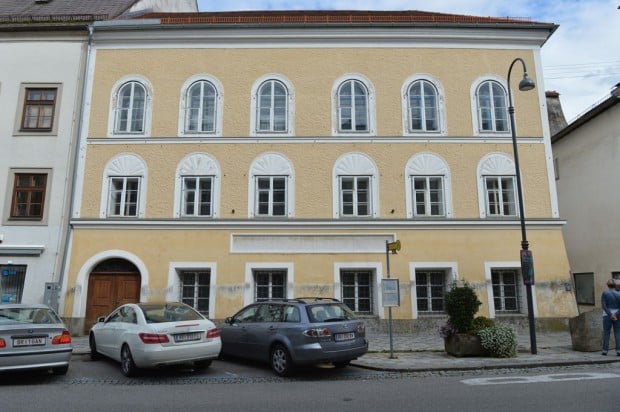
BRAUNAU, Austria - Living space in Braunau is scarce, but an imposing Renaissance-era building stands empty in this post-card-pretty Austrian town because of the sinister shadow cast by a former tenant: Adolf Hitler.
With its thick walls, huge arched doorway and deep-set windows, the 500-year-old house near the town square would normally be prime property. Because Hitler was born here, it has become a huge headache for town fathers forced into deciding what to do with a landmark so intimately linked to evil.
The building was most recently used as a workshop for the mentally handicapped, which some saw as atonement for the murders of tens of thousands of disabled people by the Nazi regime. But that tenant moved out last year for more modern quarters.
The departure reignited debate on what to do with the house that burst from the town hall chamber into the public domain last week after the mayor declared that he preferred creating apartments over turning the building into an anti-Nazi memorial.
People are also reading…
"We are already stigmatized," Johannes Waidbacher told the Austrian daily Der Standard. "We, as the town of Braunau, are not ready to assume responsibility for the outbreak of World War II."
That sparked a storm of criticism, with Waidbacher accused of trying to bury memories of the Nazi past.
The comments were particularly ill-received due to the fact that Braunau's town council withdrew honorary citizenship from Hitler only last year, 78 years after the Nazi dictator was given the accolade - as did nearly a dozen other towns and cities after checking their archives.
Stung by the criticism, Waidbacher has since stepped back, saying he can conceive of "all possible uses" for the building.
On Thursday, Waidbacher expressed surprise at the vehement reaction his comments caused, saying he did not mean to make light of the significance of the house.
"Our town has definitely done its homework as far as its past is concerned," he told The Associated Press.
Nonetheless, concerns about the building's fate continue to reverberate on the ancient cobblestoned streets of this town of 16,600.
One major fear: The house could fill up with Hitler worshippers if converted into living space.
"These are certainly people we don't want here," said town council member Harry Buchmayr, noting that most visitors are not normal tourists but neo-Nazis paying homage to Hitler, though he spent only the first few months of his life in the building.
"We are already stigmatized. We, as the town of Braunau, are not ready to assume responsibility for the outbreak of World War II."
Johannes Waidbacher


