

I am at the age now where there is much more past than future, so I have naturally become interested in ways to extend that possible future a bit further. I turned to that source of infinite knowledge — the internet — and began looking at what the “experts” say about living longer.
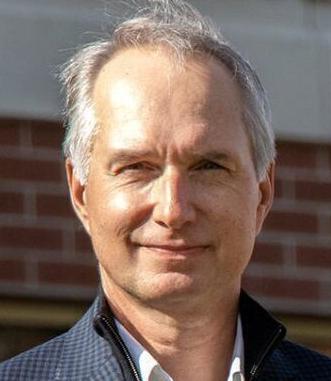
Richard Kyte is director of the D.B. Reinhart Institute for Ethics in Leadership at Viterbo University in La Crosse, Wis., and co-host of "The Ethical Life" podcast.
Everything that follows comes from someone with bona fide credentials that should classify them as someone who knows what they are talking about.
Here is a brief summary of my findings: adopt a Mediterranean diet, adopt a caveman diet, adopt a vegan diet, eliminate carbs, eat more whole grains, eat more protein, eat less, eat more nuts, eat more seeds, eat more beans, eliminate lectins, eat 30 grams of fiber every day, eat 2 kiwis every day, eat 1.5 cups of blueberries every day, don’t eat fruit exposed to pesticides (especially blueberries), fast one day a week, eliminate dairy, eat more yogurt, eat more garlic, eliminate sugar, eliminate artificial sweeteners, drink coffee every day, drink green tea, drink black tea, walk every day, run every day, do interval training, do resistance training, take more rest days, don’t sit at work, don’t retire early, have more adventures, socialize more, don’t drink alcohol, join a club, take up a hobby, use sunscreen, get more sun exposure, spend more time in nature, don’t get bitten by a tick or a mosquito, and finally, my favorite, don’t spend too much time online.
People are also reading…
It is easy to see what the problem is. We have too many experts, they don’t always agree with one another and it is nearly impossible for the ordinary person to determine who to listen to.
It’s no wonder that trust is declining. We not only trust experts less, but we also have less trust in our institutions and in our neighbors. According to one recent survey, there is just a single category that has seen an increase in trust over the past decade: people tend to trust themselves more.
The reason is easy to explain. Trust is formed through relationships in which we get to know someone and see that they are both caring and competent. That is why trust grows among close friends or family members who spend a great deal of time together, why tight-knit communities are high in trust, and why employees trust leaders who take an interest in their lives. In other words, trust is a function of the quality of our relationships.
We are living in a world today that seems designed to undermine trust. Every advance in technology gives us more power and more freedom, greater ability to live independently. The result is that each generation is more individualistic than the previous generation. We grow up in smaller families, we have smaller circles of acquaintance, we have fewer close friends, we even speak fewer words every year.
The trend of declining trust has been happening gradually over a long period of time, but it has been accelerating rapidly over the past 30 years, roughly since personal computers became fixtures in our homes and workplaces. During that time, we have seen a sharp rise in cognitive distortions, i.e. patterns of illogical thinking. Along with that has come an increase in conspiracy theories, fear, anger, depression and loneliness.
Artificial intelligence is just the latest technological development making these trends worse. It’s not that AI is causing new problems; it is just accelerating the social fragmentation that has been taking place over many decades.
Tech companies are promising that generative AI will enable us to answer many more questions than ever before, to solve problems that were previously unsolvable, like finding cures for cancer, new sources of energy, improved modes of production.
That could all be true. But AI won’t change human nature. And this is the key.
The more powerful AI becomes, the less we will trust it, and the less we will trust the people who are using it. And without trust, we will not be able to agree on which solutions to pursue. We will become more suspicious of those around us, more fearful, angrier and ultimately more violent.
The answer to the problem of declining trust is not to marshal even more evidence for our preferred solutions to whatever problem we are facing. The answer is to commit ourselves even more deliberately to getting to know one another.
We need to spend less money building data centers and more money building community centers. We need to spend less time online and more time talking to real people.
These solutions may not lead to a longer life, but they will lead to a much better life.
Believe me. I’m an expert. I know what I’m talking about.
Richard Kyte is the director of the D.B. Reinhart Institute for Ethics in Leadership at Viterbo University in La Crosse, Wisconsin. His new book, “Finding Your Third Place: Building Happier Communities (and Making Great Friends Along the Way),” is available from Fulcrum Books. He also cohosts “The Ethical Life” podcast.


