

Shortly after I arrived at the university where I now teach, I was asked to join a task force to explore the creation of a new graduate program in servant leadership. At the time, I had several concerns.
First, I had never heard of servant leadership, so I had quite a bit of reading to do. Second, my academic training was in philosophy — specifically, ethics — not leadership theory. Third, there were no existing academic programs in servant leadership, so there was nothing to model it after.
And last, what were we thinking, attempting to start a new program, named after a concept few people had heard of, at a university with little name recognition outside the region?
Despite my reservations and those of several others on the task force, we went ahead because it fit our institutional mission; it also seemed to be something people and organizations needed.
People are also reading…
That was 25 years ago, shortly after the collapse of Enron and several other high-profile companies had seriously eroded public confidence in corporate leadership. Bill Clinton’s misbehavior in the White House had a similar effect on trust in government leadership.
In looking into the history of servant leadership, I learned that Robert K. Greenleaf founded the Center for Applied Ethics in 1964. Over the next several years, during the social upheaval of the Civil Rights movement, the Vietnam War, riots in cities, campus sit-ins, and the Watergate scandal, he penned a series of essays focused on renewing organizations from within. The essay that really captured attention was titled “The Servant as Leader.”
In that essay, he writes: “The servant-leader is servant first. It begins with the natural feeling that one wants to serve, to serve first. Then conscious choice brings one to aspire to lead. He is sharply different from the person who is leader first, perhaps because of the need to assuage an unusual power drive or to acquire material possessions.”
Much of what Greenleaf wrote about in the 1960s and 70s is still relevant today. We are once again undergoing serious social upheaval, but while the crisis played out on the evening news 50 years ago, today it is quieter and perhaps deeper.
Social trust has declined nearly 50% since 1970. In other words, it’s not just that we have less confidence in institutions; we have less confidence in everybody. Loneliness, anxiety and depression are at all-time highs. And when it comes to the workplace, we are in the midst of what social scientists are calling “the Great Detachment.”
According to Gallup, the percentage of those who are “extremely satisfied” in their jobs has fallen to 18% and over half of U.S. employees are watching for or actively seeking new jobs.
Across the nation, there is a steadily increasing number of people who are lonely, depressed, emotionally fragile and dealing with crisis. For employers, that means a shrinking pool of people who are confident, reliable, self-motivated and able to handle conflicts on their own.
This makes it more important than ever for those in leadership roles to focus on building a strong culture, because that’s where their organizations are most vulnerable. And nobody was more insightful about building organizational culture than Greenleaf.
As I reflect on the lessons I have learned after 25 years of discussing leadership with hundreds of professionals in roles ranging from bank presidents to healthcare executives to manufacturing supervisors to small business owners, I’ve categorized the most important into four buckets.
The first is that good leaders know themselves. This is harder than it sounds. Self-deception is the greatest failing of those who obtain power and authority, and the more power and authority one has, the harder it is to know the truth about oneself. Everybody wants something from you or wants to be in your good graces. Praise is seductive. Surrounding yourself with people who will question and challenge you is critical.
The second is that good leaders know their team. That is why Greenleaf always emphasized the importance of listening. If you don’t regularly ask your team what they think and take their voices seriously, pretty soon they stop showing up. Even worse, they might show up, but they have checked out. You are getting 50% of their potential, and you might not even know it until you really need them.
The third is that good leaders cultivate their team. It’s a matter of planting and weeding: hiring and promoting those who not only can do their jobs, but also build the capacity of those around them, and making sure those who are limiting the capacity of other team members find somewhere else to do their damage. Nothing destroys culture faster than ignoring the harm that team members can do to one another. Whatever you tolerate, you endorse.
The fourth is that good leaders care for their team members. Caring doesn’t mean just being nice to people, though there are plenty of times when kindness is what really lifts a person’s spirit. Caring means providing for another's legitimate needs. When team members have a leader who ensures they have what they need to do their job well, it signals to them that they are valued and respected. It is the key to building trust over the long haul.
Organizational culture comes down to two things: engagement and trust. When you look at Fortune Magazine’s annual list of the best companies to work for, you find that they all have extremely high levels of employee engagement, and they trust their leaders.
That does not come by accident. It takes leaders who know themselves, know their team, cultivate their team, and care for their team. In other words, it takes servant leaders.
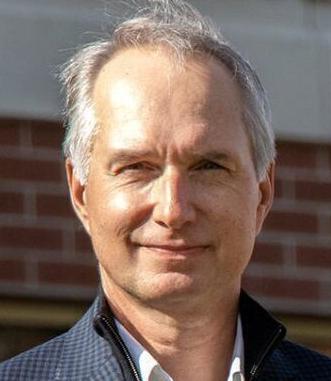
Richard Kyte is director of the D.B. Reinhart Institute for Ethics in Leadership at Viterbo University in La Crosse, Wis., and co-host of "The Ethical Life" podcast.
The 2026 Conference on Servant Leadership will be held at Viterbo University.
Richard Kyte is the director of the D.B. Reinhart Institute for Ethics in Leadership at Viterbo University in La Crosse, Wisconsin. His new book, “Finding Your Third Place: Building Happier Communities (and Making Great Friends Along the Way),” is available from Fulcrum Books. He also cohosts “The Ethical Life” podcast.
