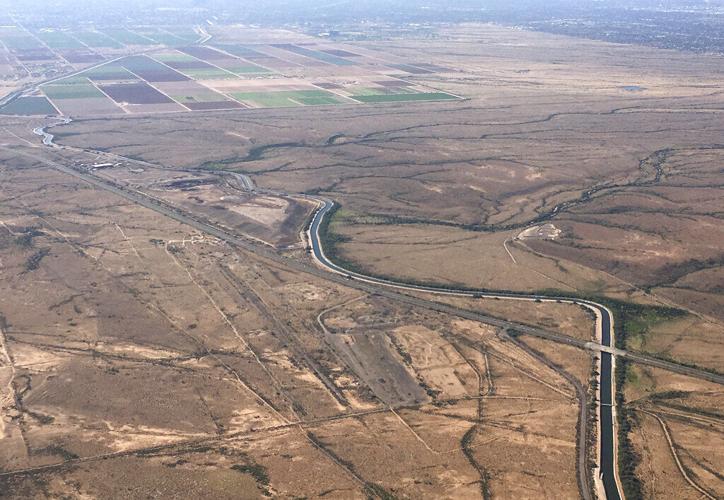

The Central Arizona Project canal carrying Colorado River water runs through rural desert near Phoenix. The 336-mile-long canal delivers water supplies to Tucson and Phoenix that are now threatened by the cuts proposed in many of a new federal report.

The following is the opinion and analysis of the writer:
The Colorado River is the lifeline of the American Southwest, supplying drinking water to more than 40 million people, irrigating millions of acres of farmland, powering communities, sustaining Tribal nations and supporting ecosystems and economies that stretch across seven U.S. states and into Mexico (USGS, n.d.). Without urgent action, the future of this river and our region's environmental and economic future hang in the balance. Arizona, California and Nevada have sent a proposal to the U.S. Interior Department with plans to stabilize the river through 2028, but will officials accept the proposal, and even if they do, will it be enough to secure the future of the Colorado River?
For decades, the Colorado River Basin has relied on outdated water agreements created during wetter conditions that no longer reflect today’s climate reality (Slosson, 2024). Rising temperatures, prolonged drought and increasing water demand have pushed reservoirs such as Lake Mead and Lake Powell to dangerously low levels (Bass et al., 2024). The new proposal from Arizona, California and Nevada is significant because it shows regional cooperation during a growing water crisis, but short-term conservation efforts may not be enough to secure the river’s future (Bass et al., 2024). Without stronger long-term solutions, Arizona communities could face higher water costs, reduced agricultural production and increased strain on rural and Tribal populations (Bass et al., 2024; Drugova et al., 2023). The proposal may help stabilize the river through 2028, but it does not guarantee long-term sustainability.
People are also reading…
Water insecurity is not only an environmental issue, but a growing public health issue that will disproportionately affect vulnerable populations across Arizona. Rural communities, Tribal nations, low-income households and agricultural workers are likely to experience the greatest impacts as water shortages intensify. Reduced water access can threaten food production and increase utility costs for families already struggling financially. It can also worsen heat-related illness in a state that continues to experience extreme temperatures and prolonged drought. The inclusion of Tribal water pools is an important step toward addressing long-standing inequities in water access and recognizing the needs of Tribal communities. However, policymakers must move beyond temporary conservation agreements and focus on long-term solutions that reflect today’s climate realities. Long-term solutions for the Colorado River should focus on reducing water overuse at the personal and corporate level, funding to expand water recycling and conservation programs, and protecting Tribal water rights as climate conditions continue to worsen.
Long-term stability of the Colorado River will also depend on stronger collaboration between the Upper Basin states (Utah, Colorado, Wyoming and New Mexico) and the Lower Basin states (California, Arizona and Nevada). For years, tensions between the two regions have intensified as water shortages worsen and states debate who should bear the responsibility for conservation cuts. The Lower Basin has historically consumed more water due to large urban populations, agricultural industries and harsher environmental conditions (USGS, n.d.). However, Upper Basin states have refused attempts at forced water deliveries outlined in the Colorado River Compact despite urgent need in Lower Basin states (Hite et al., 2025). Despite these disagreements, the river’s future cannot be secured through competition and exclusion. Climate change affects the entire basin, and meaningful progress will require coordinated policies that balance conservation responsibilities fairly across all seven states. Long-term collaboration should include shared investments in drought resilience programs, improved data sharing, and water monitoring agreements that encourage conservation across state lines, and federal support for innovative water management strategies. Without cooperation between both basin regions, short-term political disputes may continue to delay the large-scale action necessary to protect the Colorado River for future generations.
Ultimately, the future of the Colorado River depends on whether policymakers are willing to move beyond temporary agreements and commit to sustainable solutions. While the current proposal from Arizona, California and Nevada shows progress through regional cooperation, the ongoing impact of climate change, population growth and water overuse continue to threaten the river’s stability. Protecting the Colorado River will require stronger conservation efforts, cooperation between states and long-term water management solutions to ensure future generations continue to have reliable access to water.
Follow these steps to easily submit a letter to the editor or guest opinion to the Arizona Daily Star.
Kennedy Claud, Liv Hall, OJ Tumechub, and Alexia Macias are students at the University of Arizona, Mel & Enid Zuckerman College of Public Health.