The following is the opinion and analysis of the writer:

Lee Stanfield
In the past few years, solar panels and battery energy storage systems have become more efficient at managing the fluctuations in demand than gas peakers. They also cost roughly the same or less to implement, and are far less costly to operate and maintain. So, the RepSol project — a massive solar farm proposal 25 miles southwest of Tucson — makes good sense.
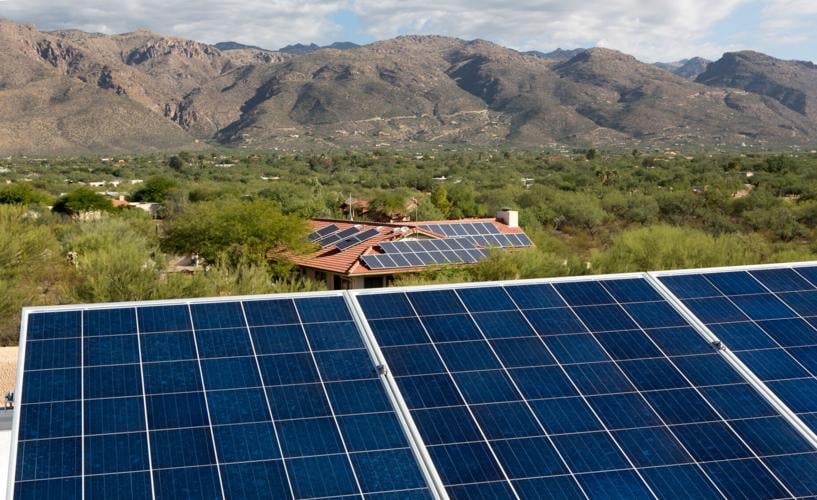
However, I definitely agree with Pima County Supervisor Jen Allen, who says expanding large-scale renewable energy shouldn’t come at the expense of rural communities. This could be done by installing solar panels on rooftops, buildings and parking lots, and to shade gardens, agri-crops and pasture/grazing land.
People are also reading…
All of these are very doable and are less expensive than costly gas and other fossil fuel infrastructure and operation. Also, as Allen said, generating electricity close to the point of demand is the most efficient way. And individual storage systems could be consolidated and located at neighborhood substations to create multiple neighborhood microgrids.
All that would be great! However, I question whether Tucson Electric Power's investor-owned monopoly structure provides sufficient incentive to pursue it.
TEP reported $283 million in net income in 2025 and is now seeking another rate increase. That raises an important question: Are Arizona's electricity regulations encouraging the most cost-effective, environmentally responsible energy solutions, or are they placing too much emphasis on investments that generate returns for utility shareholders?
So, it seems that for now, we are faced with the lesser of two evils. We can go with large-scale projects like RepSol, or let TEP continue to consume (by its own records) 4.6 to 4.7 billion gallons of water annually in 2022 and 2023 , which they get by drilling directly into our aquifer, thus avoiding paying Tucson Water or anyone else for water to cool their generators that burn methane and other fossil fuels. These generators also pump several million metric tons of greenhouse gases into our atmosphere. Not to mention the BTUs of heat that are emitted directly into our desert area.
By comparison, solar panels use no water and emit no greenhouse gases , and actually provide shade that is compatible with growing crops or grazing animals beneath them, in addition to the shade for residences, businesses, other buildings, cars and humans.
In any case, we really need TEP to massively and rapidly increase the percentage of TEP's electricity generated by solar. Tucson is among the sunniest cities in the U.S. (depending on how you define sunny). Yet, local privately owned solar accounts for only about 9% of TEP’s energy portfolio.

Rooftops, parking lots and agricultural land could all generate solar electricity. Why isn't Tucson doing more to take advantage of its sunshine?
I am involved with local groups that are trying very hard to find ways to get rid of monopoly electric utilities entirely, but until that can happen, we really must at least force these utilities to make solar a much larger percentage of their portfolio. We are running out of time! Mother Nature is not waiting around!
So, while RepSol is not the ideal solution, this project really needs to be implemented — somewhere fairly near Tucson, as soon as possible. We are facing an existential threat that is more imminent for us than most other regions of the U.S. because we are located in one of the hottest and driest parts of the U.S., and now we have the double whammy of rapidly increasing heat and rapidly decreasing water replacement.
So, I would very much like to know which land Pima County Supervisor Allen would rather have the RepSol solar project built on.
In addition, data centers are the main drivers increasing power demands, and will create a huge increase in TEP's already-enormous water use. So, permitting requirements should require all data centers to provide all their own power via on-site, exclusively solar generation, and use the most efficient electronics available.
If we continue allowing TEP and data centers to do whatever they want, Tucson could fairly rapidly become just another Arizona ghost town.
Follow these steps to easily submit a letter to the editor or guest opinion to the Arizona Daily Star.
Lee Stanfield moved to Tucson in 1976. Now retired, she has long advocated for labor/union rights, the environment, universal healthcare, and people over profit.