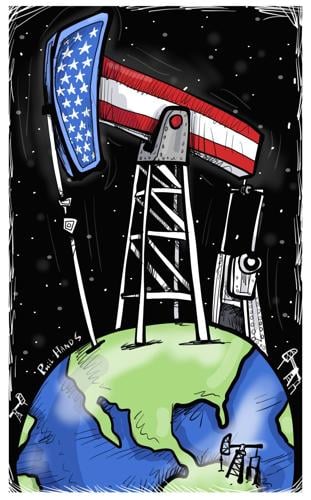
America’s oil and natural gas producers are innovating to produce more than ever. We're also easing emissions and bringing reliable, affordable energy to Americans and our global allies.
In its latest short-term energy outlook, the Energy Information Administration estimated that U.S. crude oil production reached “an all-time high in December of more than 13.3 million barrels per day.”

Jeff Eshelman
That production helps stabilize prices for consumers. Oil and natural gas are sold on global markets, and prices can be affected by events or decisions (often by bad actors) on the other side of the world. But having strong U.S. output helps reduce the shock of those actions for Americans.
Our record energy production does face threats from the U.S. government, whose leaders have sought to shut down oil and gas producers. But the industry pushes forward.
People are also reading…
After becoming a net energy exporter in 2019, the United States has emerged as a behemoth in the global energy market, hitting prolific levels of oil and natural gas production and exports in the past year. U.S. liquified natural gas had a tremendous 2023, with the United States becoming the top LNG exporter in the world.
The tremendous production has not come at the expense of Americans, as some claim. Our industry has been able to meet domestic and international demand, providing crucial energy security at home and abroad.
The American oil and natural gas industry also continues to prioritize environmental progress. Data from the Environmental Protection Agency showed stunning drops in total methane emissions across in basins that produce oil and natural gas.
The Arkoma Basin in Arkansas and Oklahoma had a 77% decrease over the last five years. Anadarko in Oklahoma, Texas and Kansas had a 44% decrease. The Permian in Texas and New Mexico had 32% less emissions. This shows U.S. operators continue to produce oil and gas responsibly.

Voluntary initiatives such as the Environmental Partnership, which represents most U.S. onshore oil and gas operations, showcases the industry’s commitment to responsible operations. In its 2023 report, the Environmental Partnership highlighted an additional 14% reduction in total flare volumes and a 2.4% reduction in flare intensity from the previous year — building on the work to cut flaring intensity nearly in half in 2022 — even as U.S. oil and gas production grew.
These accomplishments are even more impressive when considering the Biden administration’s actions against onshore and offshore leasing.
In the Gulf of Mexico, offshore production provides the lowest-carbon barrels of oil. It generates millions of dollars in funding for parks and recreation programs. It supports hundreds of thousands of jobs across every state.
Yet the administration released an offshore plan 450 days late that only offered three lease sales over the next five years.
Onshore, it’s a similar story. The administrative is limiting access for development despite disagreement from local groups, including tribes. The president and leaders who control the Senate want to add new taxes and increase federal regulations.
The exploration and production process — including identifying sites and seismic testing and development — can take up to 15 years. Many rounds of environmental analysis and permitting are required before a well starts producing. Policies that stall energy production through delayed permitting, infrastructure or regulatory barriers diminish producers’ ability to operate.
A thriving American oil and gas industry means increased energy and economic security as well as progress toward reducing global emissions. While this administration's regulatory hurdles add challenges, U.S. oil and natural gas producers continue to lead the way in producing responsible oil and natural gas.
Eshelman is the president and CEO of the Independent Petroleum Association of America. He wrote this for InsideSources.com.