

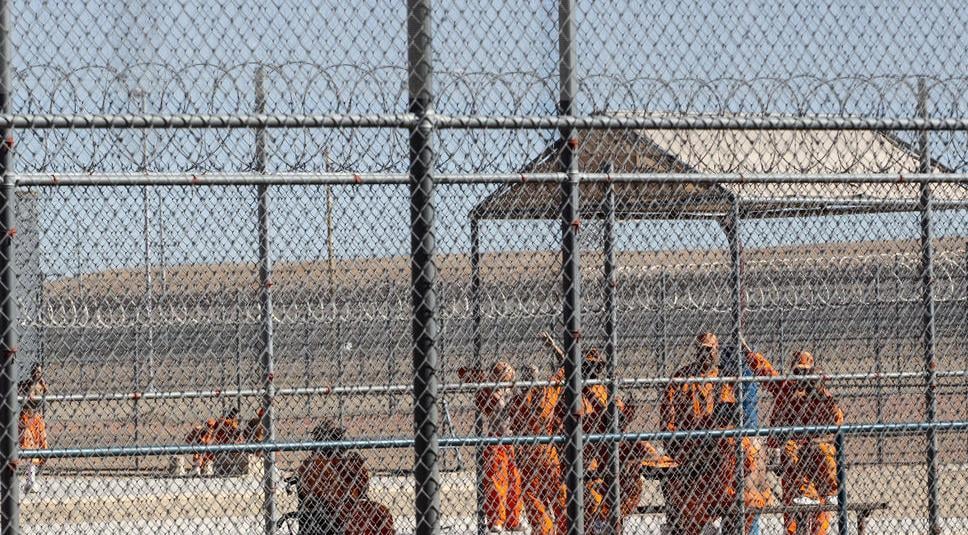
Recent discussion on the need to reform Arizona’s prison system is heartening — recognizing the problem is the first step toward change — but the talk hasn’t gone far enough. We need to thoroughly overhaul our criminal justice policies to ensure our society is safer and that we’re putting as few people in prison as possible.
Over the past 40 years, Arizona has more than tripled the rate at which we send people to prison, while also increasing the time they serve. We have one of the highest incarceration rates in the country. There are 42,000 people in state prisons and we spend $1 billion a year to keep them there.
At the same time, we’ve seen the rate of assault, robbery, and rape double — Arizona’s violent crime rate is the 12th highest in the nation, according to the FBI. Which requires us to ask: Is our corrections system doing enough to rehabilitate incarcerated individuals and keep us safe?
People are also reading…
Probably not. But too many are reluctant to make changes necessary to solve the problem.
Maricopa County Attorney Bill Montgomery recently claimed, “Since Arizona law permits probation for all but a handful of first-time felonies, you have to be committed to a life of crime to go to prison in Arizona.”
That, or suffering from mental-health issues or trapped in the personal hell of addiction.
More than half of state prisoners nationwide have a mental-health problem, and frequently that overlaps with addiction. Addicts often engage in illegal activity while under the influence or to get money to pay for their habit — dDrugs and alcohol are implicated in 80 percent of crimes leading to incarceration, according to the National Council on Alcoholism and Drug Dependence.
Addicts need treatment. And they aren’t getting it in Arizona’s prisons. More than three-quarters of state inmates have “significant substance abuse histories.” Fewer than 3 percent are receiving treatment and counseling.
Gov. Doug Ducey’s efforts to improve drug treatment at our prisons is admirable, but we need solutions that scale large enough to fix the scope of the problem, like reconsidering sending addicts and those with mental-health problems to prison.
We spend $588,655 per day to incarcerate people whose most serious charge is a non-violent drug offense, and our communities aren’t any safer because of it. We’re likely making them worse.
Putting vulnerable addicts or people with mental illness into a situation in which they fear physical and sexual assault while associating with criminals isn’t a system built to help reintegrate them successfully into society.
What’s more, when any prisoner is released — 95 percent of those currently incarcerated will be at some point — their criminal history makes it nearly impossible to successfully rejoin society because they can’t find a job. Many employers, including the government, are unwilling to provide former inmates with the second chance they need.
Occupational licensing, which requires would-be workers to obtain a government permission slip before pursuing a given profession, presents a significant hurdle for those with criminal records. According to the Institute for Justice, Arizona is the fourth-most broadly and onerously licensed state in the country. A considerable number of lower-income professions in the state require a license and most exclude anyone with a criminal background.
Ducey has taken important steps to reform licensing in Arizona, for which he should be applauded. But we can do more to open these jobs to individuals looking for a second chance.
Given the challenges government places on former inmates, it’s no wonder that around half of those released end up going back to prison, unable to break the cycle of violence and addiction. If we don’t take aggressive steps, we will continue to release prisoners who will commit more crimes, perpetuate more violence and needlessly produce more victims.
The human cost of incarceration for both victims and perpetrators is staggering — but they aren’t the only ones hurt by the broken system.
At any given time, nearly 100,000 kids in Arizona have at least one parent behind bars. Children whose parents are incarcerated are more likely to suffer emotional difficulties. They also have problems at school. What will this mean for their future? Will they be more likely to end up behind bars?
Our inability to end the cycle of violence costs more than the dollars allocated to our prisons.
Anyone who wants to live in a free, open, and safe society should be troubled by the status quo.
We want safe streets, we want our tax dollars to be invested in the next generation and grow the economy through education, and we want to respect the value of every life. These desires are not mutually exclusive.
With a bolder vision that goes beyond punishment, we can establish criminal justice policies that build stronger, healthier, and more prosperous communities.
There is a broad and diverse coalition working to achieve this vision, ranging from Americans for Prosperity to social conservatives to Quakers to the ACLU. And it is our hope that lawmakers, prosecutors and law enforcement will join us and lend their experienced voices to our effort.
Andrew Clark is the Arizona state director of Americans for Prosperity.