Would you look at that, The Salesman’s last move is walking out on his terms.
Leaving a blistered and broken college football postseason in his wake.
Make no mistake, Brett Yormark saved the Big 12. He took it from a battered shell of itself after Texas and Oklahoma left for the SEC, and found a way to make it work as its undeterred and unflinching salesman of a commissioner.
Yormark pushed the presidents and chancellors of the Big 12 to dream big, and steered them toward smart expansion and out-of-the-box marketing of teams, sports and games. They followed him down nearly every road.
Then pushed him down the road to postseason perdition.

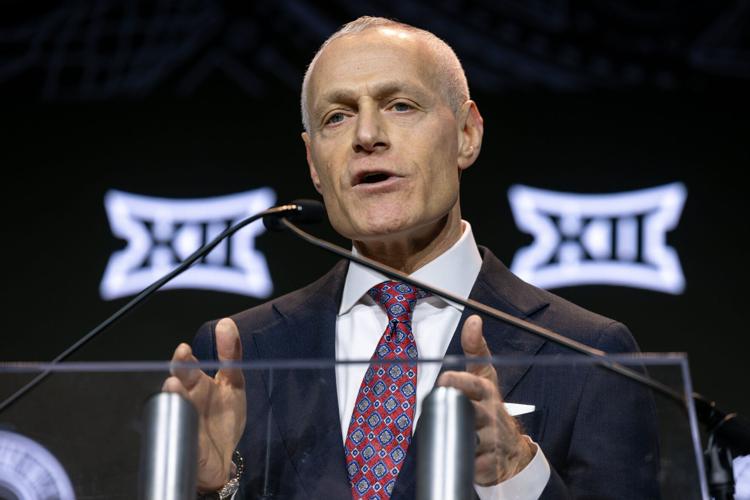
Oct 20, 2026; Kansas City, MO, USA; Big 12 commissioner Brett Yormark speaks during the Big 12 Media Days event at T-Mobile Center. Mandatory Credit: William Purnell-Imagn Images
Yormark and the Big 12 once stood firm with the SEC, ACC and Notre Dame against the lunacy of a 24-team College Football Playoff. They knew it was problematic and risky, and were not shy about telling anyone who would listen.
People are also reading…
Go look at all of those comments and all of those statements from Big 12 presidents, and chancellors and Yormark about the how a 16-team format works, and how a 24-team model pushes college football into a dangerous future.
In July of 2025, during Big 12 Media Days, Yormark declared he was “doubling down” on the 16-team model.
“We want to earn it on the field. We don’t need a professional model because we are not the NFL,” Yormark said. “We are college football and we must act like it.”

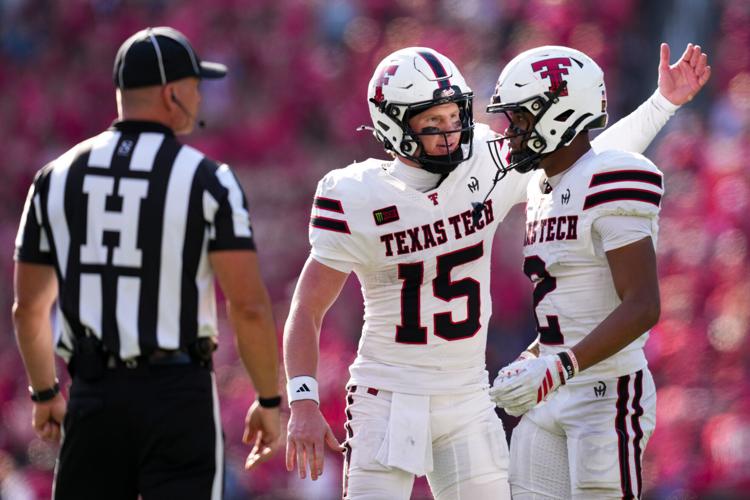
Texas Tech quarterback Will Hammond, center, greets wide receiver Kenny Johnson on the sideline during a Big 12 game against Cincinnati on Oct. 24 at Nippert Stadium in Cincinnati.
That doesn’t sound like a guy who less than eight months later executed a 180 degree turn, and joined the ACC and Notre Dame and their new friend, the Big Ten. That’s right, it’s 24 or nothing.
Yormark was all-in because the Big 12 presidents and chancellors wanted it. They wanted another run at the postseason ATM, another chance to see how much more money they could earn from television partners.
Just like the ACC presidents and chancellors, and just like Notre Dame.
Their coaches and athletic directors wanted it, too. As did their boosters. If you’re throwing around that kind of cash — for all involved — you want access to the playoff.

BYU quarterback Bear Bachmeier warms up prior to a Big 12 game against Iowa State on oct. 9 at LaVell Edwards Stadium in Provo, Utah.
And if you’re making that kind of money — as coaches and athletic directors are — you’ll agree to just about anything to keep those high-paying jobs.
But we advanced to the playoff, shouldn’t that mean something?
Soon enough, it won’t mean anything — unless it comes with a win or two. The bar will be raised, the losses will come and the firings will follow.
But hey, we’ve got a 24-team playoff. We’ve changed the guts of a bulletproof product, one that essentially prints money, with some inane idea that more postseason games will make the regular season more exciting and more relevant.

Houston quarterback Conner Weigman looks to pass during a Big 12 game against Utah at Rice-Eccles Stadium on Oct. 24 in Salt Lake City.
Four-loss Minnesota against four-loss South Carolina in the first round of a 24-team CFP, or two-loss Georgia against North Texas, does not make anything or anyone more relevant.
All the SEC needed was one Power conference to stay in its caucus, and this monstrosity of a postseason wouldn’t be within a whisker of being passed.
If only The Salesman could’ve closed that one final pitch to the presidents and chancellors of the Big 12.
And avoided the road to playoff perdition.

The SEC could’ve ended all discussion of this 24-team College Football Playoff abomination. Could’ve told everyone — ESPN, Fox, the Big Ten — to go scratch, we’re staying at 12.