Pat Murphy is not Craig Counsell.
Counsell departed the Milwaukee Brewers for a $40 million contract down I-94 with the more celebrated Chicago Cubs. The Brewers, once again feeling less than their bigger-market rivals down I-94, looked around and decided to promote Murphy, Counsell’s college coach whose rough edges ran counter to the new-age managers he’d call his peers.
Murphy is now a World Series champion.
Matt Arnold is not David Stearns.
Stearns jumped ship on the Brewers, even taking time off for his contract to expire before joining the New York Mets, who envisioned Stearns’ smarts combined with Steve Cohen’s hedge fund money to create Dodgers West. Arnold, Stearns’ top lieutenant, was summoned to replace him.
Arnold is now a World Series champion.
People are also reading…
Cooper Pratt is no Willy Adames.

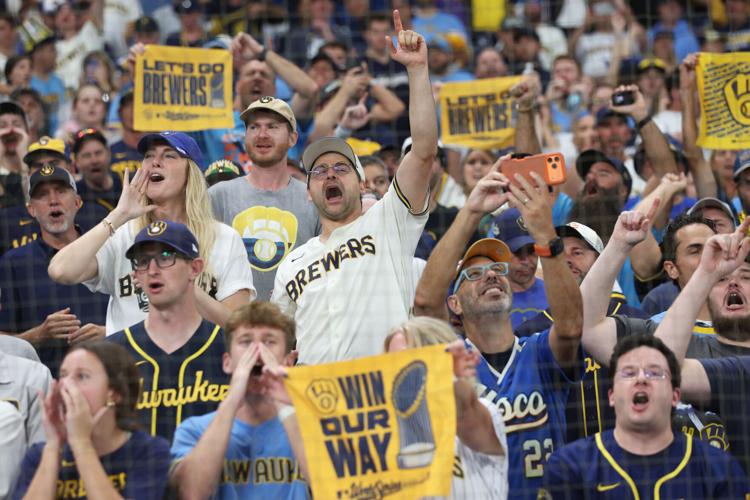
Fans cheer after the Milwaukee Brewers defeat the Tampa Bay Rays in five games to win the World Series on Oct. 28 at Tropicana Field in St. Petersburg, Fla.
Adames hit 107 homers and was a top 10 MVP finisher for the Brewers, a superstar shortstop who jumped at a $182 million free agent contract with the San Francisco Giants in 2025. Pratt was plucked out of a Mississippi high school two years earlier, agreed to sign a contract that could keep him in Milwaukee through 2034 and assumed the shortstop position in Milwaukee only in June.
Pratt is now a World Series champion.
Aaron Ashby is no Josh Hader.
Hader pitched his way to four All-Star Games as a Brewer, the franchise’s most dominant relief pitcher since Rollie Fingers was winning a Cy Young Award in 1981. But Hader would eventually command $95 million in free agency and has been replaced by a cadre of relievers over the years — with Ashby, another tall lefty, setting a postseason record with 18 consecutive scoreless innings in the most crucial of situations.
Ashby is now a World Series champion.

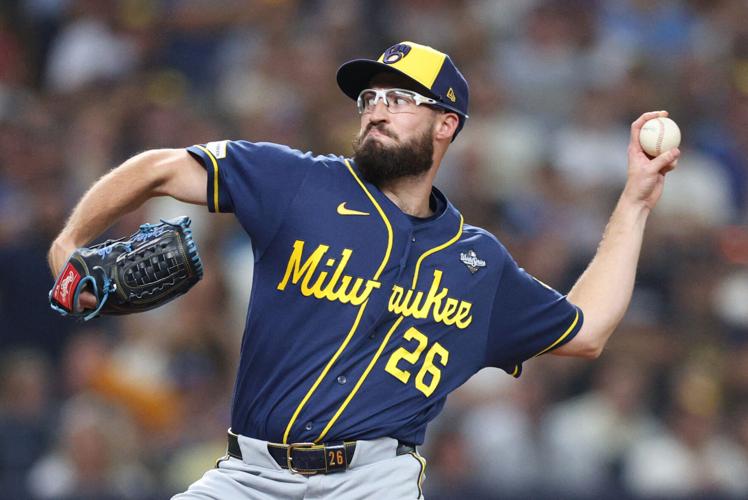
Brewers pitcher Aaron Ashby throws 2 1/3 scoreless innings in Game 4 against the Rays to set a record of 18 scoreless innings by a reliever in a single postseason.
They all earned their championship on Oct. 28 under the lights of Tropicana Field, a 4-1 Game 5 victory over the Tampa Bay Rays, clinching the first World Series title in the Brewers’ 57-year history.
Make no mistake: This was a dominant Brewers team.
They won 114 games, including playoffs, and rampaged through October on an 11-2 heater, a run that included dethroning the two-time defending World Series champion Los Angeles Dodgers, a squad whose $338 million roster earned more than double the $144 million Milwaukee’s players earned.
Yet for years, as the Brewers contended with high-profile departures on and off the field while exiting the playoffs in the early rounds, they were defined as much by who was gone as who they had.
Such was life in a lower-revenue town, said the conventional, external wisdom. Lose elite talent, try to backfill with leftovers.

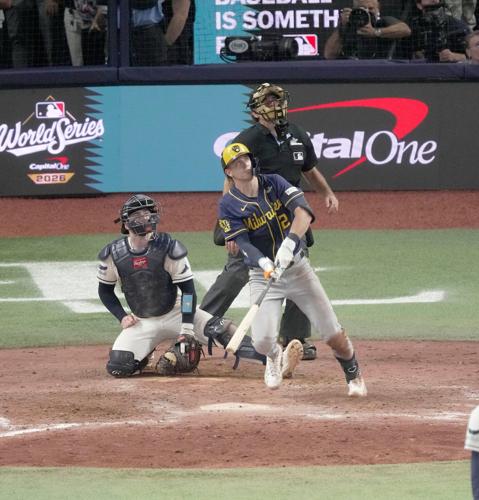
Brewers shortstop Cooper Pratt hits a go ahead solo homer off of Rays pitcher Ian Seymour during the twelfth inning in Game 4.
Yet these Brewers ultimately never bought into that.
Not Murphy, whose collegiate coaching chops resonated with a roster that always skewed younger, and responded strongly to his resolute culture of accountability.
Not Arnold, who toiled in the shadows of several brilliant executives before coming to Milwaukee and taking a number behind the ultimate Boy Genius, Stearns, who moved on to the Mets and their mega-bucks. But he didn’t take all the secrets and all the executive talent with him, and Arnold pushed Milwaukee from 92 to 93 to 97 to 103 wins the past four seasons, reaching heights Stearns never could.
Arnold’s administration spent a sixth-round pick on Pratt, gave him a well-above slot bonus to keep him away from Ole Miss and, three years later, signed him to a $95 million contract. This past June, he made his major league debut.
It was a leap of faith for player and franchise alike, and in Game 2, Pratt threw away the first ball he fielded, burying the Brewers in a four-run hole.

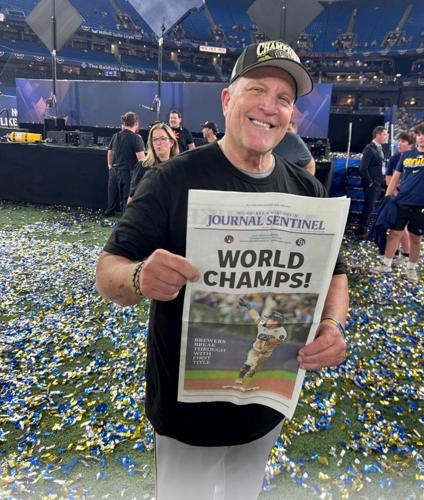
Brewers manager Pat Murphy holds up a “World Champs” newspaper while celebrating after beating the Rays in five games.
But Pratt stayed with it, like all Brewers do. He banged out six consecutive hits across Games 4 and 5, including a 12th-inning home run in Game 4 and a two-run single in Game 5. These guys learn quickly.
Arnold’s fingerprints were all over this club: A three-way trade to land indispensable catcher William Contreras, whose ABS wizardry, eight base hits and handling of a near-perfect pitching staff dominated this World Series.
Collecting NLCS MVP Jake Bauers and closer Trevor Megill off various scrap heaps and integrating them seamlessly into the mix.
To say nothing of the epic work by their international and domestic scouting departments through both regimes, a haul that netted Pratt, Ashby, Jackson Chourio (17 hits this postseason at age 22), Brice Turang, Garrett Mitchell and, of course, Jacob Misiorowski.
It was a late bit of due scouting diligence just before the 2022 draft that got Misiorowski into the fold. And phenomenal player development and work from pitching coach Chris Hook that turned him into baseball’s most dominant force.

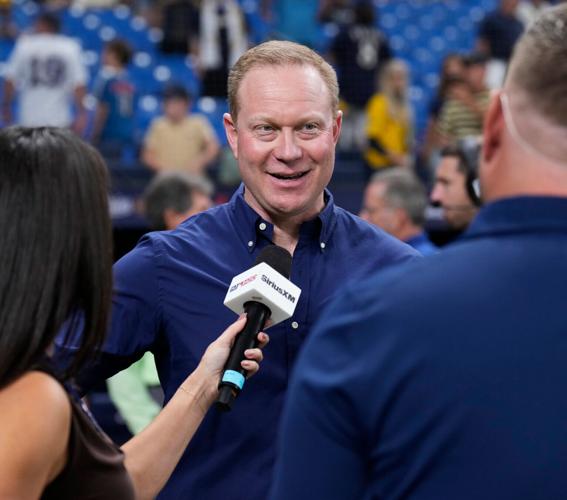
Brewers general manager Matt Arnold helped put together a young team that has dynasty potential.
They have seven regulars between the ages of 22 and 28. They will hit this offseason minus the body blows so many champions suffered in recent seasons, when they employed starting pitchers in high-impact relief situations, appearances that take their toll over time.
No, it’s too soon to call this a burgeoning dynasty. Yet as Counsell does his best with the 89-win Cubs, who finished 14 games behind Milwaukee, and Stearns aims for the perfect formula with the Mets, the Brewers don’t need to dwell on who’s gone.
No need. As the song says, the gang’s all here.

The Brewers and Rays are in the World Series, directly defying the narrative that small-market teams are bedraggled, woebegone, hopeless entities needing a white knight to save them.