

Q: Over the past four years or so, I have found baby scorpions in my house. One year, there were three and those were the most I’d seen in one year. They all have their length in common, less than an inch long. They are petite replicas of the household scorpion. I showed one to a former pest control man, and he questioned that they were babies. He felt they might be their own strain of scorpion. Is this a possibility?
A: Yes, it is possible you have more than one species of scorpion in your neighborhood. About 40 to 60 species occur in Arizona. The bark scorpion is the one most commonly found in houses and they are 1 to 3 inches in length. Most scorpions are solitary creatures although the bark scorpions can be found in groups of up to 20 to 30 during the winter when they seek shelter from the cold.
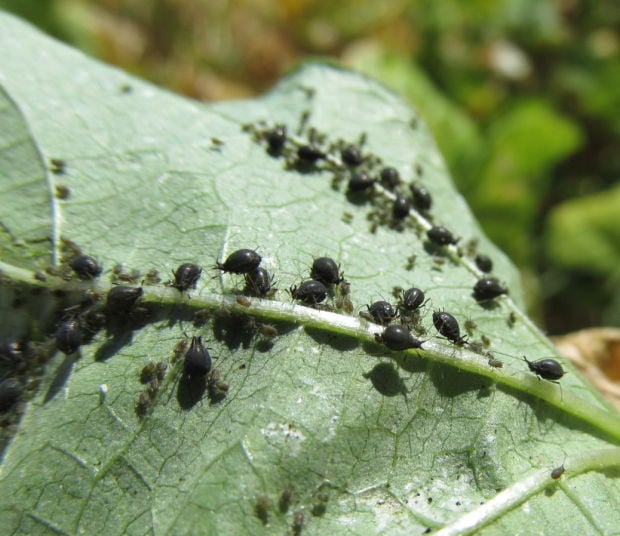
Q: Based on the attached photo, what type of new insect do I likely have taking over my bean plants? This unknown insect is dominant on the underside of the plant leaf and at the base of most bean stems at the soil line. Its presence became visible over the past seven days. Do you have any suggestions on the best way to remove this new garden visitor?
People are also reading…
A: You have aphids on your beans; note the two “tailpipes” on these insects. That is a sure sign of aphids. You can use insecticidal soap, horticultural oil, or a blast from your hose to knock them off. I also recommend some beneficial insects such as green lacewings to keep them under control. It is good that you are checking your plants every seven days so you can catch problems like this before they get out of hand.
Q: There is a really cool caterpillar that looks like bird excrement; it was on our orange tree, eating the leaves. Any idea what kind of caterpillar it is?
A: The caterpillar, sometimes called orange dog, is the larva of the giant swallowtail butterfly. These caterpillars will eat a few leaves but are not a problem unless you have a lot of them. If you like the butterflies, you should leave a few on the tree. Otherwise you can feed them to the birds.
Q: I am so concerned about our carob tree, raised from a seed picked up under a University of Arizona carob. The bark is peeling in big chunks, it looks dried out and bad. The tree is watered once a week, and 15 minutes fills up the bed then soaks in. Maybe it needs some slow deep soaks?
A: I agree with your speculation. The tree needs deeper watering and less often. We recommend a depth of 24 to 36 inches every two to three weeks. You might need a soil probe to measure the depth the water is reaching to help you determine how long to leave your irrigation running. Also remember that the absorbing roots are away from the tree, outside the drip line. You might need to use a drip irrigation setup that circles the tree widely.
Peter Warren is the urban horticulture agent for the Pima County Cooperative Extension at the University of Arizona. He works with landscape professionals, urban farmers and homeowners to promote integrated pest management and best management practices for desert horticulture in southern Arizona. Send questions to plwarren@cals.arizona.edu
