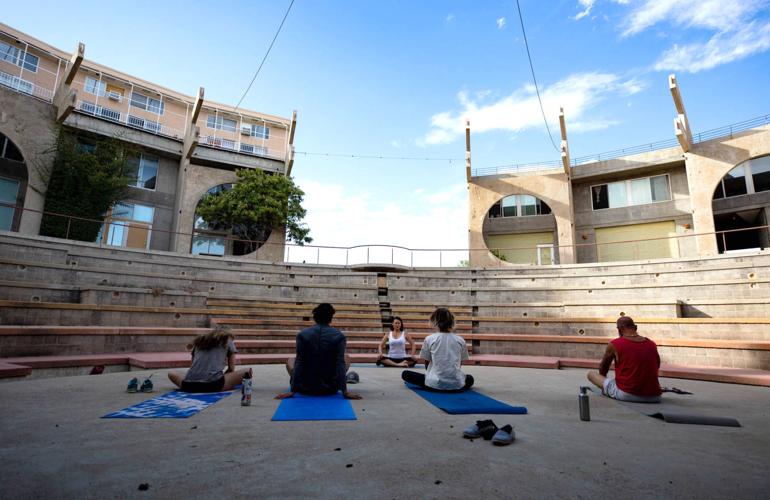
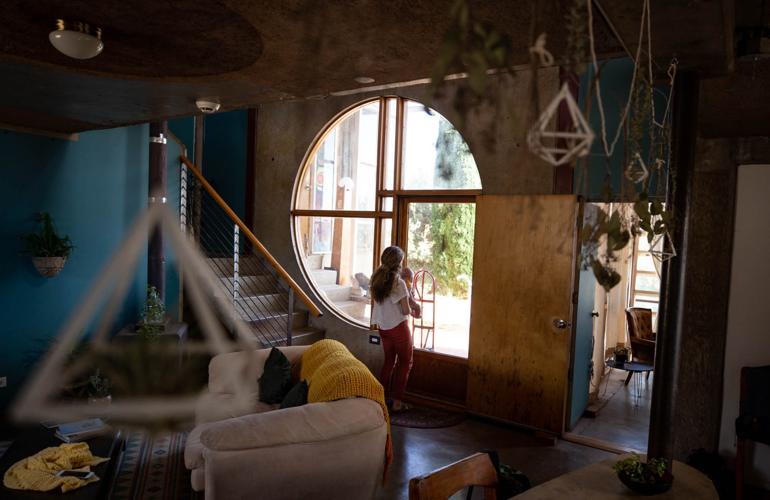
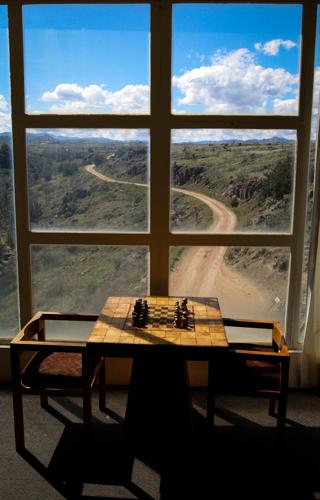
ARCOSANTI — At the end of a 2-mile dirt road in the Arizona desert lives a community of people longing to be a part of something bigger than themselves.
For nearly 50 years, Arcosanti has drawn innovators who wish to leave city life behind and experiment with an alternative, more sustainable lifestyle.
Some stay for a few months; some never leave.
One who never left is Mary Hoadley. She was 25 when she dropped out of graduate school in 1970, just as the project — the brainchild of architect and urban planner Paolo Soleri — was breaking ground. She was unsure what she wanted to do with her life.
It was her love for architecture that attracted her to help develop Arcosanti. She planned to stay a few weeks, but the weeks turned into months and the months into years. Now 75, Hoadley has devoted most of her life to Arcosanti.
People are also reading…
“I got captivated by the idea of going off into the desert to build a prototype alternative to sprawl,” Hoadley said. “It was as appealing 50 years ago as it is today, and as needed.”
Over the past half-century, Hoadley has been among a revolving cast of residents in making simple life changes to reduce their carbon footprint.
The idea of creating a community where sustainable living was an everyday experience was only the beginning for Soleri, who was born and trained in Italy.
Soleri recognized that the consumption Americans embraced would not be healthy for the planet, said Jeff Stein, a former resident who now serves as president of the Cosanti Foundation, created to support Arcosanti.
Soleri also realized that to criticize a particular lifestyle, he needed to provide a better alternative.
“The problem I am confronting is the present design of cities only a few stories high, stretching outward in unwieldy sprawl for miles,” Soleri said in 1977.
“As a result, they literally transform the Earth, turn farms into parking lots, wasting enormous amounts of time and energy transporting people, goods, and services over their expanses. My solution is urban implosion rather than explosion.”
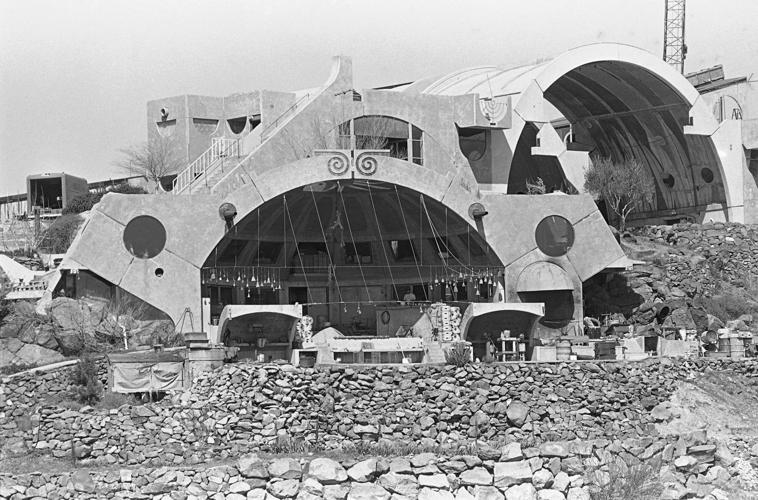
The revolutionary urban laboratory he created stands as a nearly 50-year experiment today in the rocky desert 65 miles north of Phoenix.
At the core of the idea is building communities that are vertical rather than sprawling across the desert.
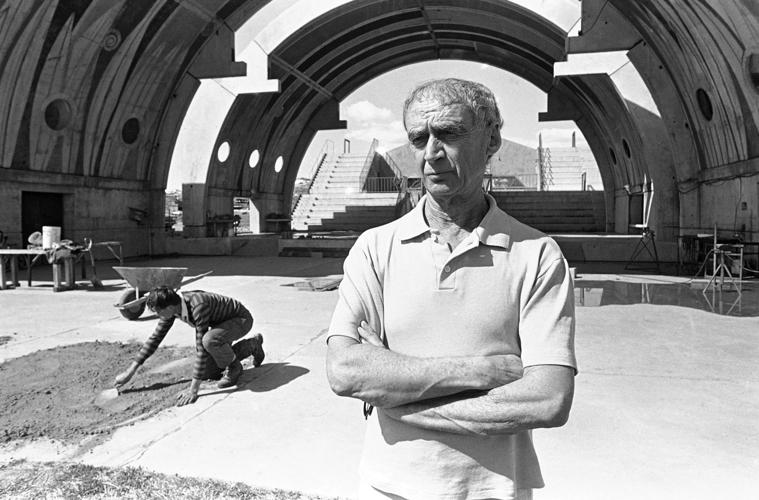
Soleri attracted people of all walks of life to help cultivate his urban ideas based on the concept of arcology, which merges architecture with ecology. In time, Arcosanti was supposed to hold up to 5,000 people.
The land for Arcosanti was bought with a loan. Money for the project was an issue from the beginning, said Tim Bell, director of communications .
“In the early days of construction, it was entirely volunteer labor out here,” Bell said.
Hoadley said Soleri “was definitely a kind of arrogant narcissist, but to work alongside him was a big lesson on how to do as much as you can with little things you had at hand.”
Stein was taking a break from architecture school in the 1970s when he stumbled upon the book that made Soleri famous, “Arcology: The City in the Image of Man.” Stein arrived in 1976 and stayed seven years.
Soleri’s idea for Arcosanti was not outlandish for its time, he said.
“All sorts of fantastic things were happening,” Stein said. “The end of the Vietnam War, the landing of a man on the moon, for heaven’s sake. The first Earth Day was 1970. It was a time when we thought that anything was possible.
“To reconfigure the entirety of Earth’s urban civilization in a way that might make sense seemed natural.”
Soleri began cultivating an environment that prioritized sustainable living and social interaction, but Arcosanti residents weren’t completely disconnected from the conveniences of modern-day living.
“People in Arcosanti own cars,” Stein said. “I owned a car. I owned a motorcycle. I almost never used them because all of the work was right there. I could walk to a cafe. I could walk to a foundry. I was connected to a greenhouse. I didn’t have a heating system in my apartment. Instead, I had a solar greenhouse so I could go out and pick food for my lunch.”
Today, a cafe serves breakfast, lunch and dinner . There are a dozen rooms for overnight guests, a place that can be rented through Airbnb and a venue for concerts and weddings.
A place to find purpose
Over the years, Stein said, about 8,000 people have participated in Arcosanti’s workshops, internships and residency programs. And thousands of visitors from all over the globe have stopped to explore Soleri’s grand experiment.
For the nearly 80 residents who live here, though, Arcosanti is their home.
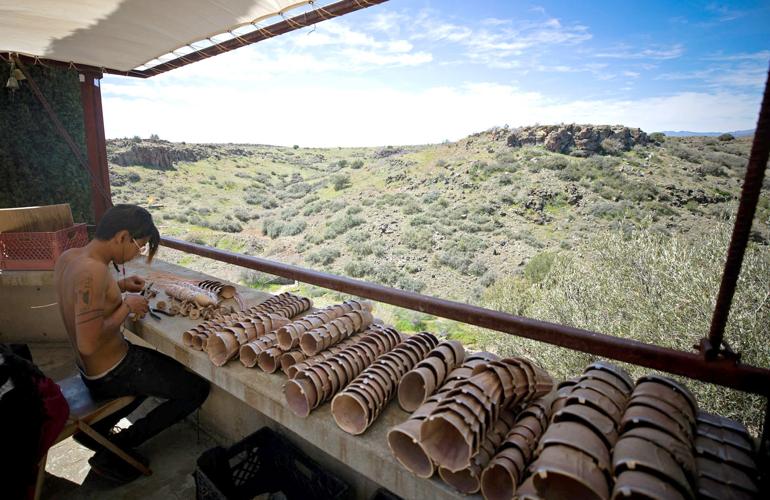
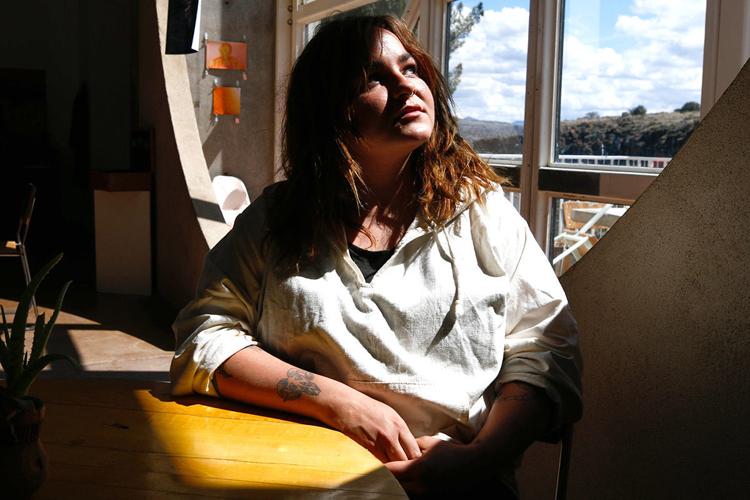
Madeline Visser, 30, was working in Salt Lake City when a friend told her about Arcosanti. When Visser tried a workshop, she worked in the cafe to pay for tuition. After a few months, she had fallen in love with the community and decided to stay. For the past six months, she has made clay bells in the ceramics shop.
“I never pictured myself living in Arizona with the open desert, but the sense of community that happens here is very beautiful,” Visser said.
“I just found a lot of potential in myself here. There’s such a wealth of knowledge here, too. There are so many well-educated people here; you can learn so many different crafts and skills.”
Bell, Arcosanti’s communications director, was living in Queens, New York, trying to become an actor, before moving to Arizona. Bell heard about Arcosanti from a bartender, and after exploring the place, opened his mind to an alternative to living in a city.
“I didn’t know that I was looking for an alternative, but when I came to experience it, I knew this was a really special place and I needed to find a way to live here,” said Bell, who has lived at Arcosanti for a year and a half.
The pushback
The Arcosanti experiment has received its fair share of criticism from architects and visitors.
Mark English, who owns an architecture firm in San Francisco, visited Arcosanti for the first time last spring. He had wanted to explore the community since his friends in college raved about serving internships at Arcosanti in the mid-1980s, but he found the project “shockingly disappointing.”
“When I pulled up, I thought, ‘What a sad place,’” English said.
English said his expectations were built on glowing descriptions of Arcosanti in books he had read and his friends’ enthusiasm, but he noticed flaws within minutes of exploring the property. The first was the sound of a hidden air-conditioning unit and the lack of natural shading in the design.
“Here in the middle of the desert we have a building that has no shade structures on any facade,” English said. “Its basic structure is such that it has to be air-conditioned. In its very form, it’s wrong. It’s falling apart. It’s irredeemable.”
English said Soleri failed to pay attention to the desert environment and instead made an architectural object statement rather than a revolutionary town.
The models of the overall project are fantastic, English said, but the execution was not properly funded or articulated.
“It’s a very sexy idea to create a new society in the middle of a desert,” but Soleri’s vision was faulty from the beginning, English said.
“It was an expression of one of those outlandish fantasies from a middle-aged white male about being a hero,” English said. “The laboratory could have been an expression of how to build in a harsh environment in a way that used very little energy.”
Arcosanti residents recognize the project is an experiment.
“I don’t think Soleri would have ever argued that it was the be-all, end-all of ideas,” Bell said. But for many, despite the challenges, they were proud to be a part of a possible solution.
“Arcosanti really just wants to be a walk- through demonstration that can inspire people to maybe make better choices,” Hoadley said.

Dillon Quibin works on the bronze bells while overlooking the desert. His co-worker, Steffan Phillips, says that between working and living together, the bond created with his Arcosanti peers is familial.
Challenges
Soleri believed in the work he was doing, but his project was not easy and progressed slowly.
“When he was still around,” said Hoadley, his former neighbor, “Soleri would sometimes say if he knew it was going to be such a slug and slow-going project, he didn’t know if he would’ve started.”
Hoadley also wishes people her age had done more: “I’m kind of disappointed in my generation.”
The generation that’s slowly taking over has noticed a few bumps.
“We don’t have the permits to do the things we’ve done in the past,” Visser said.
“Most of the construction was done within the first 10 years of being built, but I feel like the past 20 years has been a bit stagnant. It requires a lot of money to keep this project going.”
Soleri was 93 when he died April 9, 2013, at his home in Paradise Valley.
Many wondered whether the death of the man would mean the death of the vision, but Arcosanti residents knew there was still work to be done.
Bell said four longtime residents took up executive positions to take control of the site when Soleri died.
“That co-president system worked well as an interim system, but it was never a model for growth,” Bell said. Last year, the board of directors hired a CEO to help.
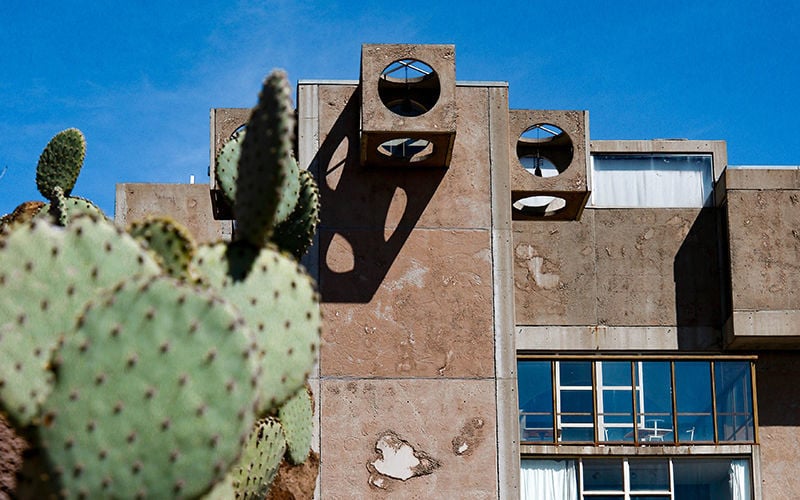
The permanent population of Arcosanti fluctuates between 70 and 80 people each year. The population grows in the winter and spring, but declines during summer, says Arcosanti’s Tim Bell.
Decades of lessons
After nearly 50 years of living on-site, Hoadley doesn’t regret her decision.
“Suburbia is essentially just a big hermitage where everybody’s in their four walls with their automobiles,” she said. “They don’t even interact even with their real environment, let alone their landscape environment. They don’t really interact with their neighbors. There’s no integrated sense of community.”
Residents said they don’t know whether Arcosanti is a good idea or if it’s working. But they’re certain the way the majority of Americans live cannot be sustained.
“If everyone on the planet lived in the same way we live in the developed Western world right now,” Bell said, “we’d need three and a half globes to sustain our current global population.”
Cronkite News reporter Kelsey Mo contributed to this story.