




So-called "canned air" makes cleaning computers and other electronics a blast.
But like other aerosols, such compressed-gas cleaners can pose hazards to users and the environment and lead to inhalant abuse - not to mention the long-term cost of emptying cans at about $3-$5 a pop.
A product invented and made in Tucson offers an alternative to disposable, eco-unfriendly canned air - and a veteran infomercial star is marketing it.
In March, Canless Air Inc. began selling its O2 Hurricane system, a high-speed, handheld blower in the shape of a can.
The $80 product is the brainchild of Tucsonan David Lyons Jr., a longtime businessman who worked for more than a decade to develop the patent-pending device.
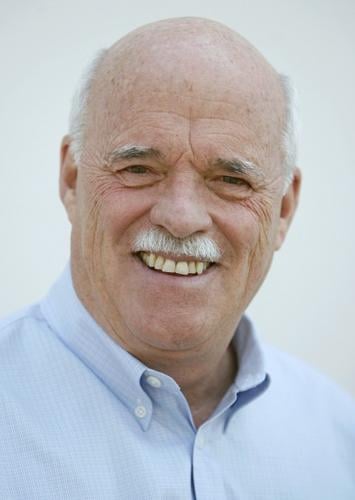
And the man behind Canless Air, a Scottsdale-based company set up to market the product, is a familiar face to many Americans as the "Video Professor."
People are also reading…
John Scherer sold 18 million computer-tutoring programs from the mid-1980s to 2010 as the founder and chief of Video Professor Inc., hawking the program on TV shopping channels and ubiquitous commercials ("Please, try my product").
Now, Scherer is pushing the O2 Hurricane as a safer, more cost-effective option for blow-cleaning than canned air, also known as gas dusters.
First off, Scherer notes that "canned air" is a misnomer - gas dusters may contain some air, but they generally work by vaporizing liquid chemicals known as hydrofluorocarbons.
Such chemicals, related to refrigerants, can be toxic or fatal if inhaled, and canned air is increasingly being abused as an inhalant like paint and other chemicals.
To address the problem of inhalant abuse, most major retailers have banned sales of gas dusters to minors, like sales of "vapor-releasing substances" such as spray paint that are restricted under law in Arizona and other states.
Concern over abuse of canned air for a cheap high - a practice known as "dusting" - also has prompted many manufacturers to add a bittering agent to the gas mix to discourage abuse.
While safe when used properly, gas dusters can explode if used improperly or stored in temperatures over 120 degrees. A Consumer Product Safety Commission database shows two separate incidents in 2009 in which gas dusters caused flash fires when sprayed into running paper shredders.
Though manufacturers have moved away from ozone-depleting chemicals, hydrofluorocarbons form potent greenhouse gases that contribute to global warming, experts say.
Cost is another major selling point of the 02 Hurricane system, Scherer said.
While the product's $79.99 price tag may seem steep, Scherer noted that the cost is quickly recouped in savings on canned air, particularly for users like large corporate computing departments.
With millions of units of canned air sold each year, the Hurricane could generate hundreds of millions of dollars in sales, Scherer said.
The Hurricane replaces more than 35 cans of canned gas on a single charge, and it can be recharged about 500 times, Scherer said.
With all those advantages, the canless air system falls into the "I can't believe nobody thought of this before" category, Scherer said.
Lyons did think of it, some 20 years ago.
While living in the Seattle area in the 1990s, the former real-estate developer was cleaning around his lit fireplace with a handheld vacuum when he noticed how the exhaust made the coals glow and burst to life.
Lyons - a self-described "tinkerer" - thought an electric fireplace bellows would be a good consumer product.
Around 1999, he started working on a prototype "Blower Buddy," a household blower that looked a little like a hair dryer.
By September 2001, Lyons said, he had lined up $8 million in venture-capital financing to produce 1,000 units. But the next day, the Sept. 11 attacks happened, and all bets were off, Lyons recalled.
After his attempts to advance the product failed, last year he corresponded with Scherer, who by then was offering his services as a product spokesman.
Lyons called and arranged an interview with Scherer at a Starbucks in Scottsdale, where Scherer lives.
"I had done a lot of homework, and John got it," Lyons said.
Scherer was impressed and agreed to help, with the requirement that the product be made in the U.S.. Lyons agreed.
"Just with the 'green' aspect, with the made in America aspect, there's been no option for people to canned air, none at all - now there is," Scherer said.
Later, Scherer said, he decided to form his own company to license and market the product, with Lyons on board to help with product development.
"I redesigned the product - he had this prototype that looked like a hair dryer," Scherer said. "It had to look like a can of air."
Scherer also pushed to amp up the product's airspeed, increasing it from about 45 mph to 200 mph, he said.
Determined to make the product in America, Scherer and Lyons cast around for companies to do the injection molding. After some out-of-state manufacturers didn't work out, Lyons found Omega Tool & Mold in Tucson to do the work.
The company later asked about adding final assembly, and Omega, owned by Jason and Jennifer Vincent, is now pumping out Hurricanes by the hundreds at its small plant on the city's south side.
"This is an enormous boost for us," said Tom Vincent, general manager of Omega, and Jason's father.
"It will probably by the end of the year take up 50 to 60 percent of our capacity," the veteran plastics maker said.
While the Hurricane is assembled in Tucson with mostly U.S.-sourced parts, the company is still looking for domestic suppliers for the high-speed motor and battery pack, which now come from China.
Canless Air represents the fulfillment of a dream for Lyons, and a new start for Scherer, who ran Video Professor for 23 years.
Scherer sold some 18 million video lessons through his infomercial - starting out with videotape Microsoft DOS lessons in the mid-1980s - but the company ended on a sour note.
After a financing arrangement failed as Scherer was looking to sell the company, Video Professor filed for bankruptcy and its assets were sold in 2010.
When it failed, Video Professor left behind hundreds of consumer complaints over its subscription sales practices and slow or missing refunds.
Scherer said he'd rather talk about his new venture, but he blamed his former company's woes on a dispute with a finance company that created problems including the inability to process credit-card refunds, leading to many of the complaints.
"God closes doors for us, and he opens doors for us, and there's a reason that door was slammed shut," Scherer said. "This is way bigger than Video Professor."
For more information
• Canless Air, www.canlessair.com
Contact Assistant Business Editor David Wichner at dwichner@azstarnet.com or 573-4181.