


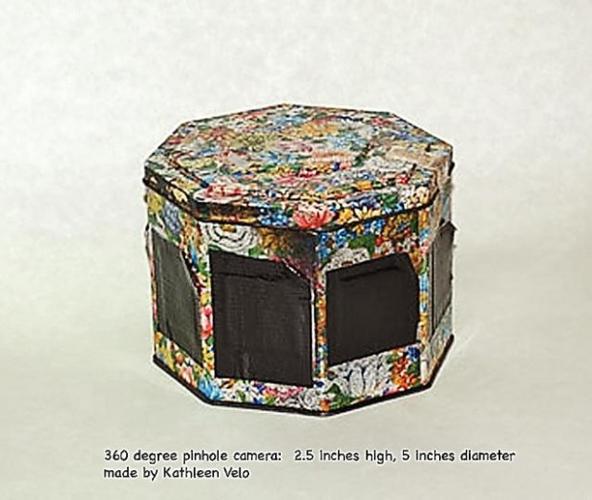
Kathleen Velo, a Tucson pinhole camera expert, offers this DIY guide:
Materials
• A light-tight container like a tin can (such as biscuit tins) or a sturdy cardboard box with fitted lids. (Light leaks can impact your negatives.)
• Black spray paint (matte finish) if using a tin can.
• Heavy-duty aluminum foil or brass sheet.
• Black electrical tape.
• 2-inch-by-2-inch dark paper (optional).
Tools
• A fine sewing needle.
• Hammer (for tapping needle through brass sheet).
• Drill (for metal cameras).
People are also reading…
• Coarse sand paper (for metal cameras).
• Box cutter (for cardboard cameras).
Crafting the camera
• Spray the inside of the tin can and the inside of the lid with the matte black paint and let dry thoroughly. This will eliminate light reflecting off shiny metal.
• Decide where your aperture (the pinhole) will be.
• If using a cardboard box, cut a one-inch square out of it with the box cutter.
• Make the pinhole in the piece of aluminum or brass, using the needle.
• Using the black electrical tape, tape the piece of aluminum or brass with the pinhole on the inside of your camera behind the square opening you have cut. Tip: Cover all four sides securely to eliminate light leaks.
• For the tin can, you can use a hammer to tap the needle through the can for the pinhole.
• Make a shutter out of dark paper to cover the pinhole opening on the outside of the camera.
• Load your film in complete darkness to avoid exposure. Tape the film or light-sensitive paper with the light sensitive side facing the pinhole onto the inside wall opposite the pinhole.
• Place the lid on your camera and cover the pinhole opening securely with a piece of dark paper and/or your hand.
• Shoot your picture by removing the shutter (or your hand) from the pinhole. Exposure times will vary depending on such variables as distance from your subject and light conditions. For the first few exposures it will be touch and go.
• Remove the film in the dark room and place it in a light-tight bag until you take it to a lab to process.
To learn more
• The Pinhole Resource www.pinholeresource.com
• Freestyle Photographics www.freestylephoto.biz
• Photographic Works www.photographicworks.com
• "Pinhole Photography: Rediscovering a Historic Technique" by Eric Renner.


