When you are No. 3, it is understandable if you try to do things differently in local news.
Some of third-place WKBW-TV’s (Channel 7) differences with WGRZ-TV (Channel 2) and WIVB-TV (Channel 4) have raised eyebrows.
The E.W. Scripps station seems to have diminished the importance of anchors, notably carrying a 5:30 p.m. newscast without an anchor after the first minute of headlines and sometimes right before the 6 p.m. weekday newscast starts with co-anchors Lia Lando and Jeff Russo.
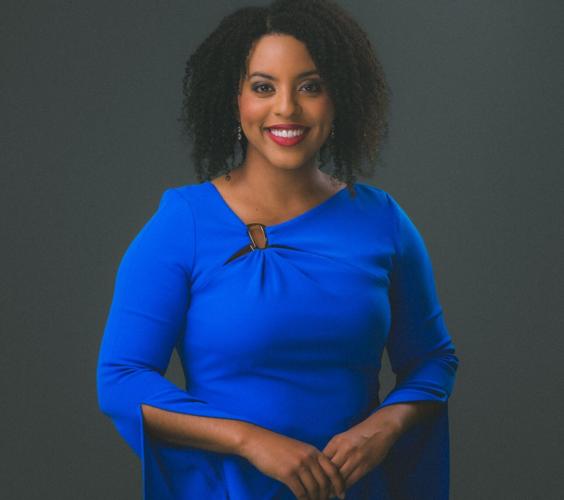
It also uses a different anchor at 11 p.m. I’ve been impressed with Pheben Kassahun as the primary 11 p.m. anchor. However, stations generally use the same anchor teams at 6 and 11 p.m. for consistency, unless a veteran anchor, such as WIVB’s Jacquie Walker, decides to work less.
The practice of not having a 5:30 p.m. anchor worked to WKBW’s benefit on Aug. 1, when WKBW was the only local broadcast station to carry its network’s extensive coverage led by ABC News anchor David Muir of former President Donald Trump’s latest indictment.
People are also reading…
The number of times the former president has been indicted has practically numbed the country to how important this story is about the state of our democracy. The historic moment deserved extensive coverage from every local station, rather than the multiple weather reports they carry in every 30-minute newscast when summer weather here is spectacular.

Pheben Kassahun has been impressive as the main 11 p.m. news anchor on WKBW-TV, Alan Pergament says.
Channel 7 was right to carry the ABC report.
However, it might have been an easier call for the station to make because it treats the 5:30 p.m. news differently than its competitors by not having an anchor.
The second half of WKBW’s hourlong noon newscast also doesn’t have an anchor.
I admit to not having watched Channel 7’s newscasts as much as its competitors until recently because it hasn’t been competitive, ratings-wise.
But over the last several weeks, I’ve devoted more time to watching WKBW news than its rivals. I’ve been impressed by some of its reporters, but that is a story for another time.
WKBW sends 6 p.m. anchors Lando and Russo in the field more often than rival stations send their anchors.
The use of its anchors isn’t the only one way that WKBW does things differently than its competitors.
To its credit, WKBW doesn’t focus on as many crime stories – which are easy to do and fill time, even if they often primarily impact only a few people – as its competitors. Instead, it gives lengthier reports on bigger issues.
WKBW doesn’t worry about story counts. The lengthier stories sometimes make its newscasts seem like a news magazine.
Last week, it topped one newscast with a lengthy story about how construction on Allen Street negatively impacted local businesses, and another newscast with a story about a proposal to allow students who are home-schooled to participate in their nearby high school sports teams.
On Monday, it topped its newscast with a report on the percentage of people in Western New York with Alzheimer’s.
The news philosophy is somewhat ironic, since Channel 7’s best days as Eyewitness News under the late legendary anchor Irv Weinstein suggested all of Buffalo was burning or infested with crime.
In another notable departure from tradition, Channel 7 has recently aired prerecorded newscasts at 11 p.m. Friday, rather than a live newscast.
One easy tell: when WKBW doesn’t have an announcer at the top of the newscasts saying it is “live,” as it does on most days.
I’m told that, for a couple of weeks, prerecording the newscast was partly due to having some off-the-air staff members out with medical issues.
News Director Aaron Mason explained that prerecording news has “never impacted the quality of journalism.”
“What it does do is allow us greater flexibility to get more people in the community, covering the community, finding the stories that need to be told,” Mason said. “That’s our priority.”
The danger is that WKBW will be running a recorded newscast when some important breaking news is happening. I am told it has the ability to adjust if important news happens.
The strategy was as eye-opening as another thing viewers noticed about Channel 7 that led some to incorrectly believe the station was interfering with “ABC’s World News Tonight with David Muir” at 6:30 p.m. to sell an extra 30-second commercial.
Channel 7 occasionally was in a commercial at the start of ABC’s national 6:30 p.m. news, when Muir gives a series of headlines of stories that are covered in the newscast.
That angered some suspicious viewers who wanted to watch the Muir telecast from the beginning and thought it was a money grab. That made no sense to me, because it would have been a public relations nightmare.
I wondered if WKBW was late to Muir’s newscast due to a technical issue concerning how the station received “World News Tonight.”
Sure enough, WKBW General Manager Marc Jaromin confirmed that was the problem.
“Nothing nefarious or revenue related, between the 6 p.m. local newscast and the 6:30 p.m. national show,” Jaromin explained. “Our local master control has to return network control to our regional hub. A format trigger had been reset to ‘manual’ when it should have been ‘clock’ for an automatic handoff. As soon as the format issue was pointed out, the master control formats were corrected, and all is as it should be.”
The suspicions might have occurred because WKBW starts its 11 p.m. newscast, then goes to commercial before starting its news at 11:01 p.m.
You may wonder how WKBW’s news philosophy has impacted ratings. The ratings services Nielsen and Comscore don’t agree on everything.
During the May sweeps, WIVB had stronger ratings in Nielsen and WGRZ had stronger ratings in Comscore, which measures more than six times the households that Nielsen does.
The ratings services agreed that WKBW is well behind in third place, so it is somewhat understandable that Scripps would prefer more attention focused on digital viewership than its broadcast ratings.
It also is understandable that it is looking for creative ways to emphasize how its newscasts are different as it focuses on the future of news.
The long-term digital strategy may appeal more to younger viewers but there is one problem. They are less likely to watch news on broadcast TV – or anywhere else for that matter.
As much as WKBW news can be admired for trying to rebuild its audience by doing things differently, you have to wonder if it is fighting as big an uphill battle as the Allen Street stores were dealing with construction.