

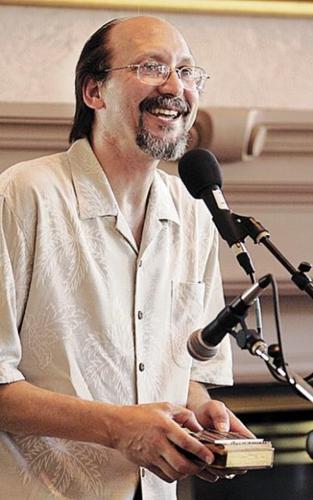

This summer, we profiled some of the Tucsonans who make the arts a reality. We conclude our series this week with kalimba aficionado Mark Holdaway.
It took Mark Holdaway 43 years to find that buying, selling and playing kalimbas was what he wanted to do with his life.
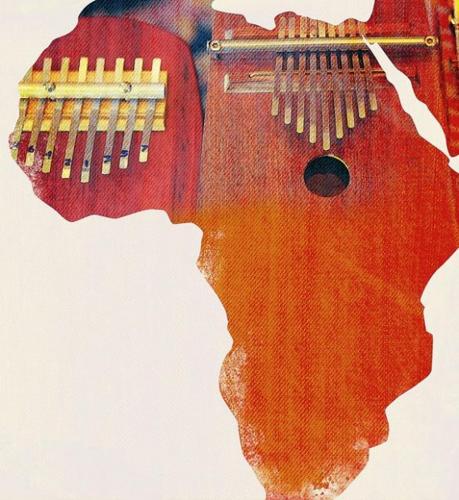
From 1989 until 2007, Holdaway was a radio astronomer working for the National Radio Astronomy Observatory on the Atacama Large Millimeter Array Project. He was a science and numbers man. Playing the kalimba — a variation of the traditional thumb piano found throughout Africa — was a longtime passion, but something that he did on the side.
When the NRAO announced it was going to eventually shut down its ALMA operations in Arizona, leaving Holdaway with the prospect of unemployment, he saw it as a sign. He took what he knew about the kalimba, the songs he had taught himself and written since picking up the wood-and-metal instrument in graduate school, and ran with it.
People are also reading…
"My job was ending," Holdaway said. "I had to move somewhere else. I saw my future flash before my eyes."
Holdaway accepted an offer extended to him by African Musical Instruments — the South African company that sold him his handmade kalimbas — in 2005 to be the point person to buy and sell its products in the U.S.
It took a couple of years to get started, but today Holdaway, 46, is the No. 1 seller of AMI-made Hugh Tracey Kalimbas in the world. In 2007, he sold 1,300 of the 3,500 thumb pianos made by the company. His Web site, kalimbamagic.com, a rich resource for kalimba materials, music samples and historical information, is one of the top-ranked Google sites on the topic, bringing in more than 20,000 hits a month.
"It's not like I'm selling plywood," he said. "My sales are limited to who knows the kalimba. This way, anyone who has any inkling of interest can find me very easily."
He has written seven instructional books and brought in more than $100,000 in gross profit in 2007, selling kalimbas from $33 to $242 to residents and stores across the United States and in 34 countries.
"He is our USA agent but also the most energetic and prolific of all our agents around the world," said Louise Sloman-Fuller, the administrator for AMI. "He has an amazing amount of energy and dedication that is working all the time in so many areas."
Holdaway works out of his home near Reid Park in Midtown. On a recent weekday afternoon, the eclectic musician zipped around in tattered jean shorts, black dress socks and a faded KXCI T-shirt between his studio in the front den, his kalimba storage area in the back room and his Toshiba laptop in the living room.
He still performs. Last Friday, Holdaway played for a group at the Mountain View Retirement Village on North La Cañada Drive. When he's not doing that, he can be found teaching kalimba as a form of musical therapy to victims of strokes and other debilitating conditions.
It was his passion for kalimba that prompted Holdaway and his new wife, Deborah Driskill-Holdaway, to celebrate their belated honeymoon in Grahamstown, South Africa, where his AMI kalimbas are made.
His goal was to meet company co-owners Christian Carver and Andrew Tracey, son of famed ethnomusicologist Hugh Tracey. He was eager to check out the factory and the International Library of African Music.
As a Quaker, Holdaway also wanted to make sure the seven AMI workers assigned to creating kalimbas were being treated fairly.
"I had to see what the lives of these people were like," he said. "Are these guys working in a sweatshop? The answer is no. Do they have a good standard of living? No they don't. I am working to do what I can to undo that."
In an effort to help AMI employees and other impoverished Africans, Holdaway said ,he and his wife are planning to set up a nonprofit, called "Giving Back to Africa," by 2010. The group would give a portion of the money made from kalimba sales to help cover medical bills for AMI workers as well as to organizations like the Grahamstown Hospice.
Holdaway said he'd like to get it started sooner, but he has yet to work out his own financial stability. Much of the money he makes goes right back into the business. Still, he tries. He recently sent a check for $400 to the African Great Lakes Initiative to help pay for its workshops aimed at easing relations between the Tutsi and Hutu ethnic groups.
Holdaway believes the trip was a positive experience for everybody.
"Now they know who I am," he said. "We are building this boat up and we are all in it together. That was my main intention. Now, when they are putting together the box or sanding it or doing the tines, they are thinking, 'This one is for Mark.'
kalimba info
Check out Mark Holdaway's Web site at kalimbamagic.com.


