


Question: My white grapefruit tree has leaves turning yellow and die back from the crown down. I had a good crop this spring as every spring in the past.
Deep watering a couple of times a week in this heat. Fed with Sta-Green Citrus and avocado food—ratio 10-6-4. I think I read in the past that grapefruit have a limited life span? Tree was mature when I bought my home seven years ago. Also, did I read that peach trees should not be planted near citrus? I planted a dwarf peach next to this tree three years ago.
Answer: Grapefruit trees can live quite a while. Since you don’t know the age when you bought your home it would be hard to say if your tree is suffering from old age. Trees usually die from the top down when they have problems transporting nutrients and water from the roots to the crown. This could be as simple as not enough water but it could also be a disease problem with the roots or the main trunk. Keep an eye out for cankers and oozing sap from cracks in the bark. It’s good that you are deep watering but probably once every two weeks is sufficient if the water is reaching a depth of 24 to 36 inches. When planting trees in the same area it is important to consider the mature size of the trees so that sufficient space can be provided between them. Trees compete for light and water so planting them too close may compromise the health of one or both trees. The other possibility for your citrus problem is that the roots were damaged while planting the peach tree. It’s hard to say for sure without seeing the situation and knowing how close they are to each other so you might want to employ a certified arborist to visit your property and provide a diagnosis.
People are also reading…
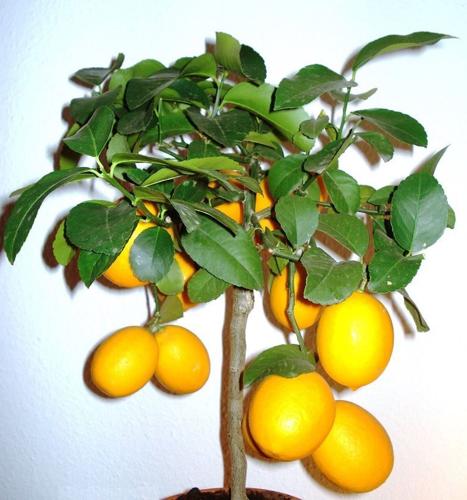
Question: I put a Meyer lemon in a 23 X 23-inch pot three years ago. It has survived but has not been terribly fruitful. I was told at the time that I would need to either “pot it up” or transplant it to the ground in five years. True? If so, how?
Answer: Meyer lemon trees (Citrus x meyeri) can grow to be 10 feet tall when planted in the ground. Planting them in containers may limit their height, especially if you root prune them periodically when they outgrow the container. When your tree outgrows the container, you can decide whether to move it to a larger container, root prune it in the current container, or plant it in the ground. If you have a suitable place for this tree in your landscape where it is protected from frost, planting in the ground may be the easiest to maintain. The first couple years are often slow growing for a tree, so the lack of fruit could be due to transplant stress and getting established. It could also be due to the environment. Keep in mind that containerized trees need more frequent water and fertilizer than plants in the ground. Containers dry out more quickly and the regular watering washes any fertilizer through the soil. Using a slow release product on the top of the soil or adding a water-soluble fertilizer into your irrigation water can help keep enough nutrients in the root zone.
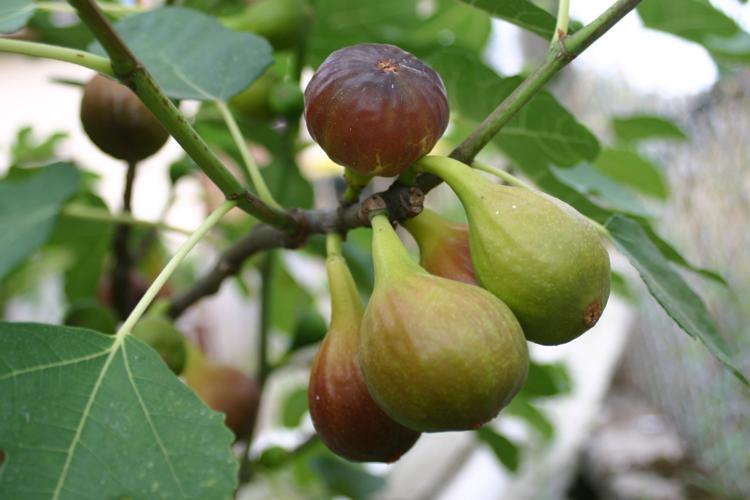
Question: We have had this fig tree for about 13 years and this year figs are only the size of a quarter. We are putting on the ammonium sulfate you suggested and are doing a timer water 15 minutes at night in addition to the watering that takes place every three days for 20 minutes. I love figs and am pretty depressed about it not doing well. Should we be watering this much? Any other suggestions?
Answer: Small fruit could be due to the amount of water the tree is receiving. Figs should receive deep watering once every five to seven days in the summer to depth of 24 to 36 inches. Watch for leaf curling as a symptom of your tree needing more water. During the fall and spring, you can reduce the frequency to once every 10 to 14 days, and during the winter you can water once a month. Figs don’t usually need much fertilizer unless your soil is sandy. A half-pound per year is plenty. The fertilizer you mentioned, ammonium sulfate, can be applied in three parts, one each in May, June, and July.
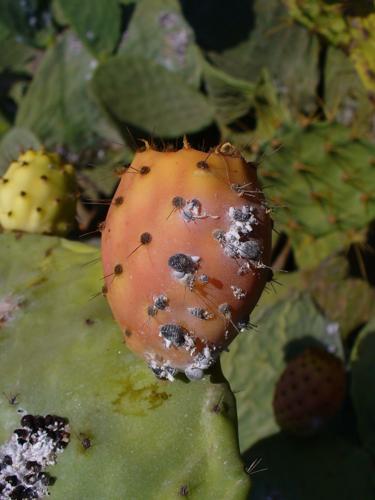
Question: I have several prickly pear cacti on different parts of my property. Some giant ones at least 15 feet tall. One of the smaller 8 footers has that white spot-like fungus and even after I spray it off with the hose it comes back. Now it is snow white covered. Is there a simple “home remedy” or specific spray that will get rid of this or is this bunch sickly or weak because the giant ones don’t have it?
Answer: The white spots are insects rather than fungus although they certainly resemble one. The insects are called cochineal scale (Dactylopius coccus) and they feed on the pads by sucking sap.
In large numbers, they can reduce the vigor of the plants to the point where they might drop some pads. The largest common prickly pear species we have (Opuntia ficus-indica) are not immune but seemingly not favored as much as some other smaller species. I have several at my house and only one is infested. You can spray scale insects with insecticidal soap or horticultural oil to reduce their numbers but it’s impossible to eradicate them. Fortunately, these cacti can exist with small populations on them. The best time for applying these sprays has passed this year. The young hatch in late winter and they are the most susceptible life stage. You can also try wiping the insects off the plant with a sponge. Don’t be surprised to see their bright red blood if you attempt to remove them manually. These insects have been used for many years to make natural dye for fabrics and continue to be found in some cosmetics and as a food coloring.
Peter L. Warren is the Forest Health Program coordinator for the Arizona Department of Forestry and Fire Management. Questions may be emailed to tucsongardensage@gmail.com



 Former Sam Levitz building sells for $8.6 million