

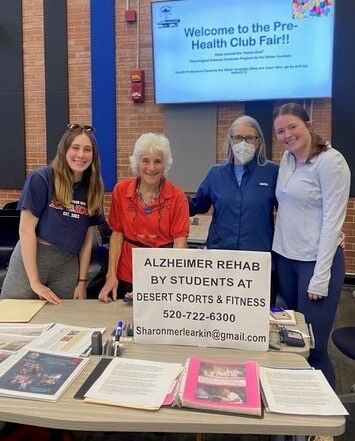
Alzheimer Rehabilitation by Students, a program with a decade of history in Tucson, invites referrals and applicants for the fall 2024 semester to begin in mid-September. “Elder Rehab” is a physical and cognitive fitness program for people with mild-to-moderate Alzheimer’s Disease or dementia from another cause.
The program was developed and is directed by retired University of Arizona researcher Dr. Sharon Arkin who demonstrated the program’s effectiveness in improving fitness and mood and maintaining cognitive function in Alzheimer patients under a research grant from the National Institute on Aging.
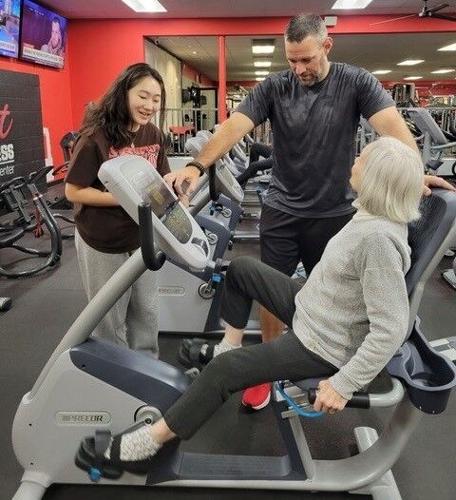
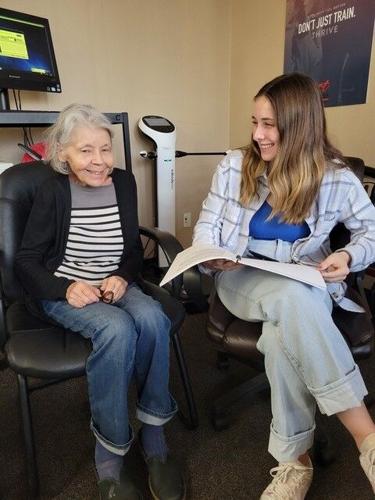
The program matches memory-challenged seniors with trained UA student interns and volunteers who provide their respective partners with 20, one-to-one, 2-hour sessions per semester. Each session consists of one hour of physical exercise and one hour of language and memory stimulation activities.
People are also reading…
The exercises include flexibility, balance, strength training, and aerobics on a stationary bike or treadmill depending on the participants’ stability. An initial fitness evaluation is required at the program outset from which a fitness routine is customized. Beginning- and end-of-semester fitness tests of upper and lower body strength and a timed walk register measurable improvements for participants, a source of pride when they are losing skills in many areas of their life, according to Arkin.
People with dementia have difficulty generating conversation, says Arkin, whose post-doctoral training was at the UA Department of Speech/Language and Hearing Sciences. Cognitive exercise sessions focus on structure and “triggers” to elicit meaningful responses, Arkin explains.
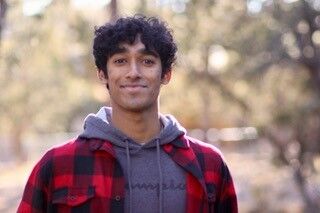
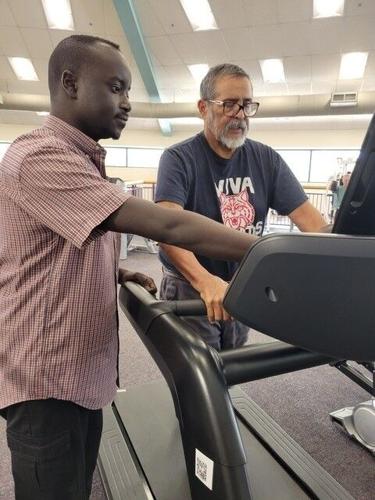
Zeyad Abbker, a third-year UA pre-med student, recently completed the spring 2024 semester as an Elder Rehab volunteer. “I’m able to help seniors by guiding them through physical and memory stimulation activities,” Abbker says. “This has given me wonderful insight into how dementia affects the lives of individuals and how they can adapt to living with dementia.
“Volunteering reduced my misconceptions about dementia and showed me how to interact with those affected, appropriate to their abilities and mental status. This will be very helpful as a doctor when I interact with dementia patients.”
Abbker was partnered with 74-year-old Gilbert Alvidrez in the recent spring program. Alvidrez noticed significant improvement in his strength and stamina from the physical exercise. Baseline and exit assessments documented this improvement. He says the cognitive exercises helped him focus. “My self-confidence improved with each exercise The more confident I felt, the more attentive I was to details,” he says, adding that he was sorry when the semester ended. Abbker continued privately in the summer as an exercise coach for Alvidrez and another program participant.
Caregivers Cite Benefits
“The Elder Rehab Program is a win-win-win for the patient, caregiver, and student,” says Ron Arnold, caregiver for his wife Paula Arnold, a previous program participant. “We saw progress with Paula during the program. Especially important, there seems to be no decline in her mental or physical ability.” He also notes development in the student volunteer’s understanding and skills in working with Alzheimer’s participants and adds that he appreciated the few hours of relief he received as a caregiver.
Dr. Wayne Morgan, whose wife MIsty begins her third semester in the fall, says his wife accompanies him to a medical conference annually. There, a colleague noticed how much his wife’s conversation had improved since the previous year.
“Leon was hesitant about going to the first session,” says his wife, Lois Thikoll. “By the second class, he was ready to go. He wasn’t doing any exercise before and now he looks forward to it.” Now he acknowledges his cognitive impairment more readily and talks about it, she adds.
Program Details
To qualify for the program, participants must be age 60 or older; have disabling memory problems; be able to follow simple directions and communicate understandably; be unable to travel independently but have reliable transportation by a caregiver or student partner); have the consent of a family member or guardian; be continent of urine and bowel (pads or Depends acceptable); and be ambulatory or able to transfer from a wheelchair (cane or walker acceptable).
While the program begins in September, rolling registration continues through the semester. Sessions are held at Desert Sports and Fitness (DSF), 2480 N. Pantano Rd. DSF is a private gym specializing in senior fitness. The Elder Rehab fee is $499 per semester (20 2-hour sessions), plus $85 for the initial fitness assessment by a certified personal trainer. Late entrants will be charged$25 per session. The initial fitness assessment is completed after a free cognitive session, administered by Arkin, and observed and recorded by the student partner.
Respite Grants
Applicants with a joint income of less than $150,000 may apply for Lifespan Respite Caregiver grant of up to $1,200/year. Applications may be approved within a week of submission with proper documentation, according to Dr. Nelly Clotter-Woods, executive director of the Arizona Caregiver Coalition and administrator of the grant program. Grant funds may be used for program reimbursement, respite care, and assistive home care equipment. Grant payments may take up to eight weeks and require receipts and time sheet submission. For grant information, contact Arizona Caregiver Coalition (https://azcaregiver.org/service/respite-home-care/) or the helpline at 888-737-7494.
For further program information or to apply for Elder Rehab, contact Dr. Sharon Arkin at (520) 603-2912 or sharonmerlearkin@gmail.com
Tucson-based Journalist Debe Campbell is a full-time caregiver to her husband, an Elder Rehab participant.


