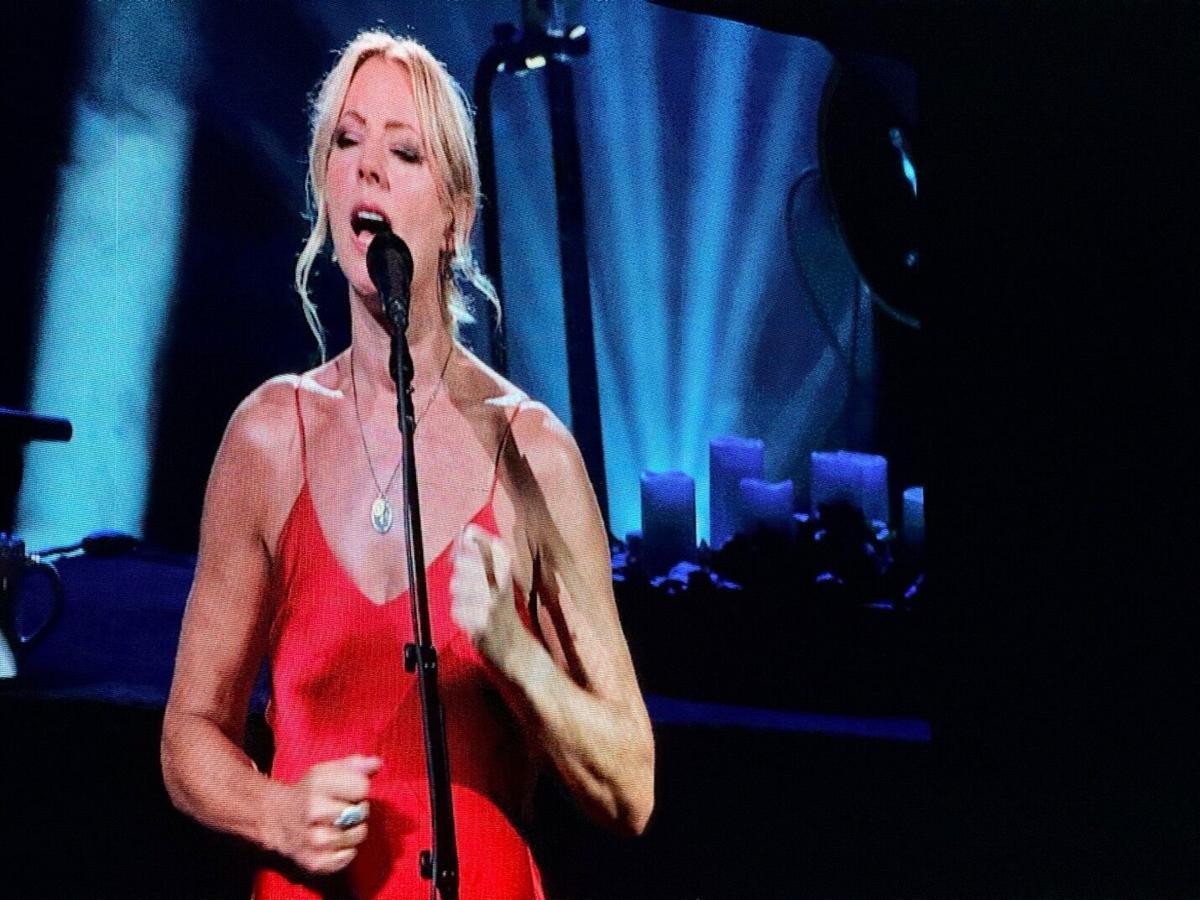
Most concerts give you one or two things worth remembering. Sarah McLachlan's night at the Greek Theatre in Los Angeles gave the crowd something closer to a conversation — the kind where the music reaches into a private corner of your life and reminds you why it mattered to you in the first place.

Dr. Barton Goldsmith
What surprised me was the intimacy of it. The Greek isn't a small room, and McLachlan has been doing this for decades, but nothing about her performance felt like muscle memory. She looked genuinely moved by how the crowd responded to her, and the crowd gave her plenty to be moved by — by the fifth or sixth song, people were already on their feet, and standing ovations kept happening all night.
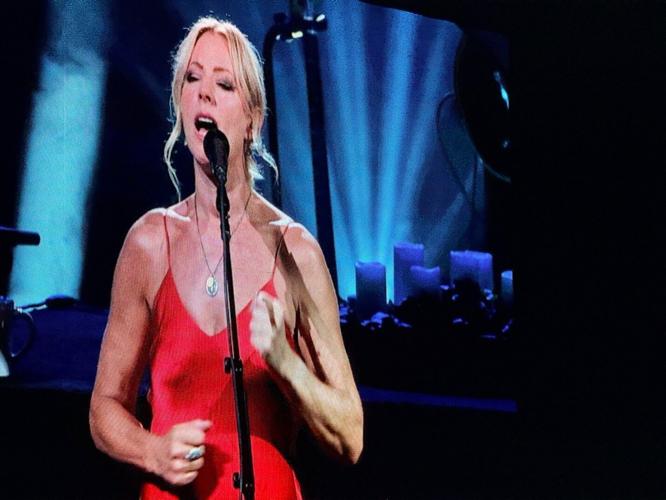
“I Will Remember You” and “This Is Gonna Hurt Like Hell” were the early highlights, and both reminded me why McLachlan has always been so good at pairing melody with real vulnerability. She's a singer who understands that pulling back can say more than pushing a note as hard as it'll go. Her voice is still remarkably expressive, but what stayed with me was how little she seemed interested in proving that. She was there to tell the stories, not to show off the instrument.
People are also reading…
That showed up most clearly when she started mixing in songs from her new album, "Better Broken." New material usually is the part of a legacy artist's set the crowd politely tolerates on the way to the next hit. Not here.
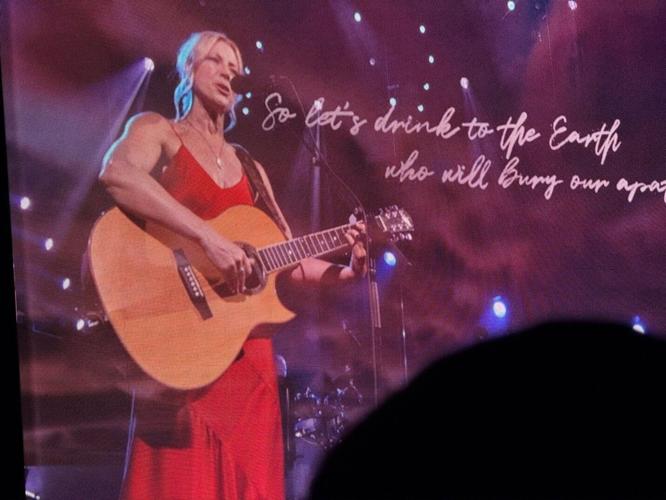
“If This Is the End…,” which McLachlan has described as having the feel of an Irish drinking song, turned into one of the night's best surprises. She put the lyrics up on the screen and got the whole place singing along. Thousands of people who had no business knowing those words were suddenly part of the performance, and a song that's actually about some pretty serious things turned playful and communal for a few minutes. That's a hard trick to pull off with brand-new music, and McLachlan pulled it off.

Sarah McLachlan performs Aug. 4 at the Greek Theatre in Los Angeles.
At one point, she also talked about her parents — how she'd sat down to write and kept finding her mother creeping into the song, particularly through what her mother had given to her parents' marriage. I've spent 30 years as a psychotherapist, and that kind of moment is exactly what keeps me interested in songwriters: You set out to write about one thing, and the song quietly insists on being about something else. McLachlan seemed fully willing to let a few thousand strangers watch her figure that out in real time.
Then came “Ice Cream,” and the room did something it hadn't done yet. The crowd didn't just clap and stand — they sang, full-throated, closer to a church choir than a concert audience. For a few minutes McLachlan didn't have to carry the song at all. The room had taken it over, and she looked happy to let them.
“Gravity,” also off "Better Broken," was the most personal moment of the night. McLachlan has spoken about the song coming out of a rough stretch with her older daughter and the counseling that got them through it, and that perspective gave the performance a weight that went beyond the melody. It landed as something any parent, any daughter, anyone who's had to fight to stay close to someone they love, could recognize in themselves.
She widened the lens too, at points — talking about human rights, playing a protest song, making it clear her music has never lived entirely apart from what's happening in the world. You could feel that philosophy running under the whole show: music isn't just something performed at people. It's something they get to be part of.

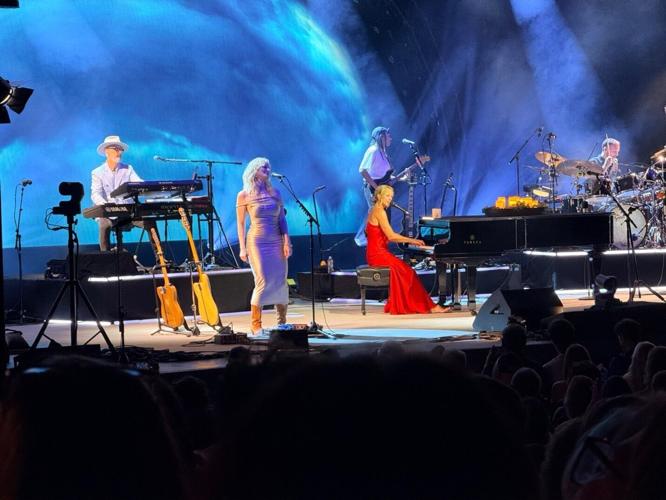
Sarah McLachlan, at the piano, performs Aug. 4 at the Greek Theatre in Los Angeles.
Her band — Vincent Jones on keyboards and vocals, Melissa McClelland on bass and vocals, Luke Doucet on lead guitar and vocals, Matt Starr on drums, and Nana Adjoa on vocals, bass and guitar — knew exactly how to work around that. They could fill the Greek to the back row when a song called for it, and just as easily disappear and leave McLachlan alone with a lyric.
She walked offstage eventually, though nobody in that crowd was going anywhere, and came back for an encore that closed with “Angel.” It felt like the whole night arriving exactly where it needed to — after all the ovations, the stories, the new songs sitting comfortably next to the old ones, and a few thousand voices singing along, we ended up back at what McLachlan has always done best: finding the place where melody meets real human vulnerability.
The last notes faded into the night outside the Greek. The feeling they left behind didn't fade nearly as fast — which is probably the best measure of whether a concert worked. You don't just remember what you heard. You remember what it did to you.