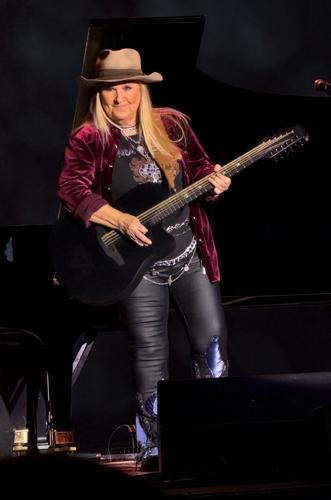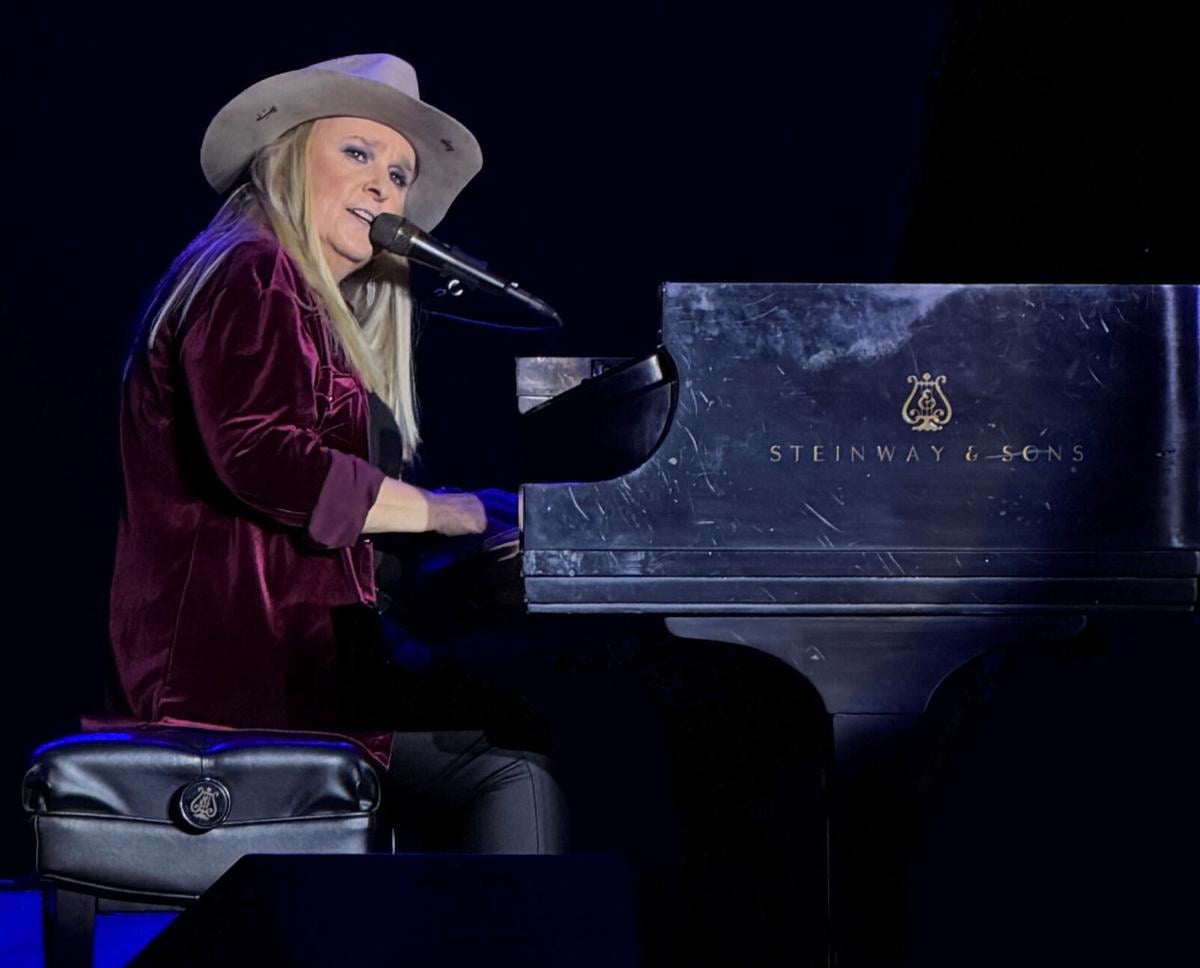
Melissa Etheridge recently presented an evening of stories and songs at the Lobero Theatre in Santa Barbara, California — and the stories turned out to be every bit as compelling as the music.

Dr. Barton Goldsmith
Performing solo, Etheridge turned the night into something close to a musical autobiography, complete with guitars, piano, harmonica, a kazoo and enough rock ’n’ roll attitude to remind everyone why she’s remained a force for nearly four decades.
I’ve seen plenty of performers who need a full band to fill a room. Etheridge doesn’t. I think I prefer her stripped down, and my wife agreed. Without a big production around her, her musicianship and distinctive voice came through clearly.
She opened with the driving “Bring Me Some Water,” strumming so hard it was obvious this would be no quiet acoustic recital.
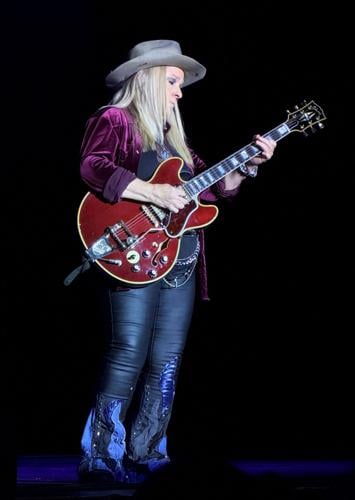
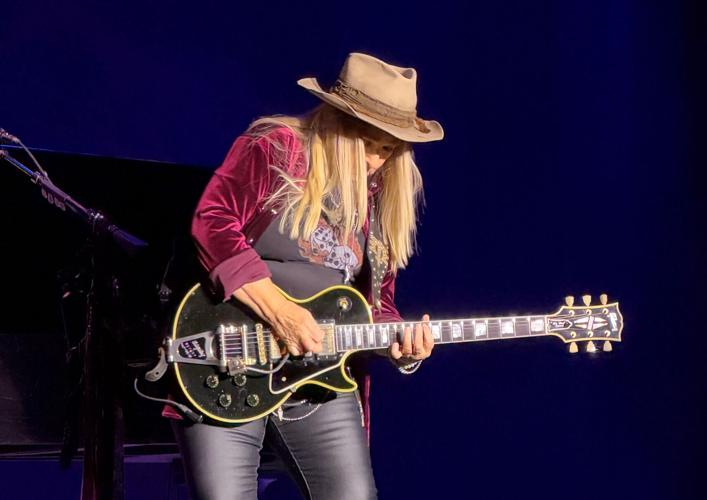
Throughout the evening, Etheridge moved between a 12-string acoustic, a black Gibson Les Paul and a Gibson Custom ES-335. At one point she looped a rhythm part on the 12-string, then picked up an electric and played over her own accompaniment. One musician, and it sounded like a band.
People are also reading…
Then the stories began. She talked about her childhood, her mother and the road that led her to Los Angeles, including a stint at Berklee College of Music before she dropped out to chase a career.

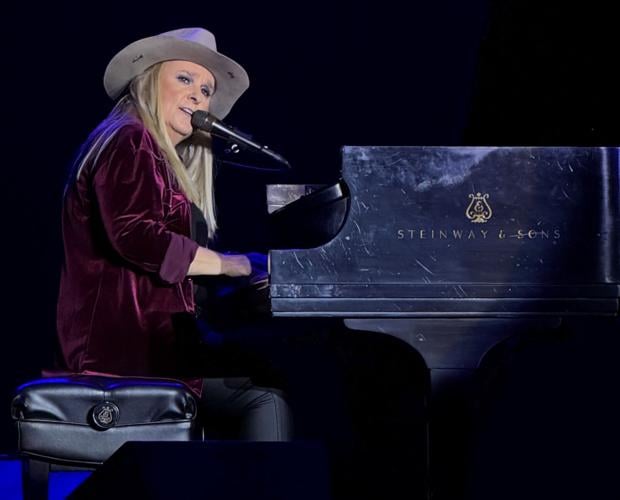
Melissa Etheridge performs Oct. 23 at the Lobero Theatre in Santa Barbara, Calif.
Seated at the piano, she noodled quietly beneath her own storytelling, giving each memory its own soundtrack. It made the venerable Lobero feel like someone’s living room.
She also recalled spending five years playing women’s bars in Los Angeles, long before the rest of the world discovered her. As the night went on, her stories about growing up gay and discovering her identity moved to the center. She told them through anecdotes and songs rather than speeches, with the kind of intimacy that would be hard to pull off with a full band behind her.
Introducing “Tomboy,” from her new album "Rise," she looked back on those formative years with humor and affection. The song even ended with a kazoo, an unlikely flourish that worked.
There’s a little Steven Tyler in Melissa Etheridge, right down to the scarves hanging from her mic stand. She has the same unapologetic swagger, though her stage presence is all her own. She can be funny, tender and ferocious, sometimes in the same song.
From her second album, "Brave and Crazy," she played “Royal Station 4/16,” pulling out a harmonica for one more texture. Earlier, “No Souvenirs,” from the same record, had shown how well her older material holds up stripped down.

Melissa Etheridge performs Oct. 23 at the Lobero Theatre in Santa Barbara, Calif.
One of the loveliest moments came when Etheridge talked about Joan Armatrading, whose music she admired during her early years in Los Angeles. She described finally meeting Armatrading years later, then sat at the piano and performed “The Weakness in Me,” a reminder that every star was once a young musician looking up to somebody.
The evening also went somewhere far more painful. Etheridge spoke about losing her son, Beckett, and the hard work of moving forward after that kind of loss. She tied those experiences to her new music and talked about writing and recording with Chris Stapleton.
Those memories gave the songs from "Rise" real weight. By then, the new material felt like the next chapter of the story she had been telling all night.
“To Be a Woman” came across as a striking rock ballad, with the mix of vulnerability and strength that has always marked her singing. What impressed me most was how much emotion she conveyed without over-singing.
Introducing the title track, “Rise,” she said she wrote it to help people through hard times. After hearing her talk so openly about grief, identity and survival, the song sounded like hope she had earned the hard way.

Melissa Etheridge performs Oct. 23 at the Lobero Theatre in Santa Barbara, Calif.
Through all of it, she never forgot that people had come for a show. She switched instruments, told stories, cracked jokes and proved what a formidable guitarist she is.
When she launched into “Come to My Window,” the Lobero erupted. People sang along, many rose to their feet, and for a few minutes the distance between the stage and the seats seemed to disappear.
Melissa Etheridge came to the Lobero with a stack of instruments and a lifetime of stories, and she gave the audience a little of everything: rock ’n’ roll, laughter, heartbreak and hope. With almost nothing standing between her and the crowd, the evening felt like a long visit with an old friend who happens to play a mean Les Paul.