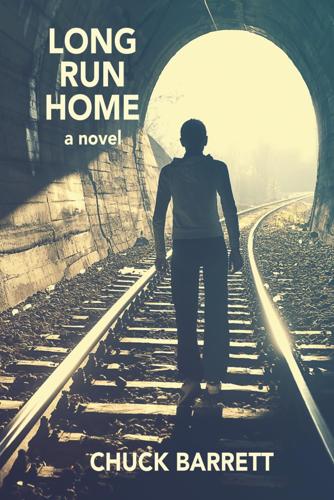
“Long Run Home” by Chuck Barrett (independently published). 197 pp. $12.99.

Tucson writer Chuck Barrett has a history of humanitarian activism: for five years he volunteered on Virginia’s death row (coincident with a six-man, death-row escape) and directed prison alternatives; he worked as staff for the Farm Labor Organizing Committee and United Farm Workers; and capped his career working with Indigenous communities in Mexico, including the Frente Democratico Campesino and Tarahumara communities in Chihuahua.
All of which serve him well in this empathetic novel featuring an escaped death-row killer.
Blind African-American Lewis Pearson was 17 years old when he was sentenced to death for killing the drunken white man coming at him with a knife, crowing about having raped Lewis’s sister.
People are also reading…
The book opens eight years later, in a Carolina swamp, where Lewis and his Mecklenburg maximum-security prison-escapee partner Dalton are rolling through skunk cabbage and mud to throw off bounty hunter Branagan’s tracking dogs. Dalton will soon do something stupid and get caught, but Lewis is befriended by an old “hobo,” Cob, who agrees to help Lewis in exchange for helping him build his dream place in New Mexico.
A cross- country (and cross-border) run ensues, with train-hopping, a stay in a “Reaganville” 1980s recession-era homeless camp; a jam session with Doc Watson (Lewis on guitar); a chance encounter with a sweet-voiced dulcimer player, and even a venture into Tarahumara territory.
With Branagan constantly just a step behind.
With chapters alternating points of view — including Branagan’s — Barrett keeps suspense building, including to a crisis of conscience. He creates a sympathetic character in Lewis and deals thoughtfully with nuances in administering justice. He also develops rich auditory and olfactory settings to represent how blind Lewis makes his way in the world.
It’s a worthy read.
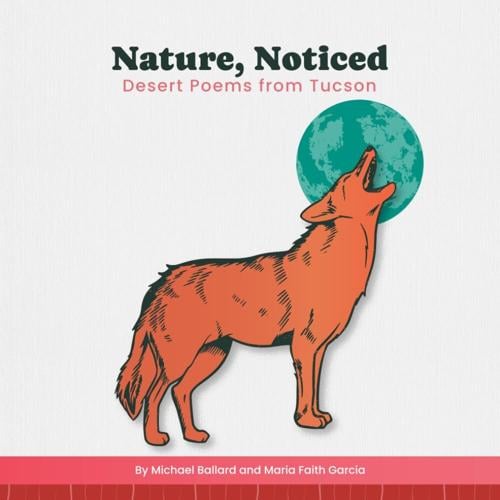
“Nature, Noticed: Desert Poems from Tucson” by Michael Ballard and Maria Faith Garcia (independently published). 30 pp. $15.99.

This handsome illustrated chapbook should be slipped onto a side table in an Arizona room, or bedside in a guest room, or just on your desk, for a break from the screen.
It’s presented as “an invitation to slow down and notice the desert as it moves through the months,” and deserves return views.
A collaboration between poet Michael Ballard and artist Maria Faith Garcia, “Nature, Noticed” is comprised of 12 (one per month) two-page layouts, each consisting of a haiku by Ballard and a line drawing of a desert animal by Garcia. Garcia has rendered sky- or land- scapes in swaths of color. Opposite the animal is a companion page of repetitive graphics in similar colors.
February’s, for example, features a bighorn sheep and this haiku: “February chill / fleeting fog clouds my vision/ watch my breath vanish.” The sky is in greens; a shelf of orange representing a promontory at the sheep’s feet. The companion page consists of green shapes that resemble petroglyph etchings.
Colors and shapes heat up and cool as the year plays out. The July entry has a green lizard searching for shade over streams of oranges and yellows broken by patches of black.
This is a celebratory Sonoran Desert book, and a felicitous collaboration which does, indeed, offer “a moment of stillness” in a noisy time.
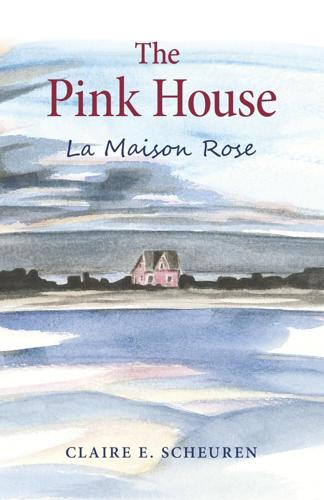
“The Pink House/ La Maison Rose” by Claire E. Scheuren (Zeitgeist West). 193 pp. $12.99.

Tucsonan Claire Scheuren has set this affecting bilingual English/French middle-grade book in a place where she lives seasonally — the historic fishing village of Gabarus, Cape Breton Island, Nova Scotia.
As it opens, 12-year-old Daphne Whalen is returning to the village of her birth, Gabarus, for the first time since she lost her parents Sept. 11, 2001, in New York City. After weeping over their graves in the village cemetery, Daphne tentatively approaches their beloved family home, unoccupied since their deaths.
It’s a fading pink house on a spit of land jutting into the harbor. The door stands open. As Daphne cautiously steps in, she hears children’s voices: “What will become of us?” a small child asks. “Don’t worry,” responds an older girl, “we’ll be all right. We have each other.”
But the house is completely empty.
Thus begins Daphne’s mysterious engagement with 18th-century soul sister Lily, who lived in the pink house, and whose story begins to parallel Daphne’s.
Through Daphne’s 21st-century story of an innocent victim of violence, Scheuren threads a comparable historical one — the attack by British troops on the French settlement in 1758. Daphne’s parents were killed at an international church gathering in New York. Lily’s parents were attempting to avoid the bloody clashes between the British and French in Gabarus when they were killed.
In both situations, the children are collateral damage. But Daphne and Lily learn lessons in perseverance, forgiveness, and the power of choosing good over evil. (“I’m studying how to grow goodness in the human heart,” shares Dr. D’Autremont, Daphne’s friend, the enigmatic, wise alchemist in the village.)
Growing goodness in the human heart is something he and Scheuren share with the reader.
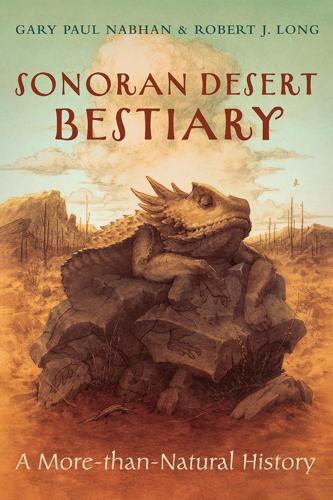
“Sonoran Desert Bestiary: A More than Natural History” by Gary Paul Nabhan & Robert J. Long (The University of Arizona Press). 194 pp. $19.95.

You might expect a “Sonoran Desert Bestiary,” penned by an ecologist, ethnobotanist, and native seeds pioneer, to prove a scientifically and mythologically informative work on desert animals.
And it is.
But if said ecologist, etc. is renowned Gary Paul Nabhan, MacArthur Foundation fellow, Ecumenical Franciscan Brother, curious observer, and spiritual seeker, the book becomes an arresting sort of layered odyssey. Throughout the collection’s essays, prose poems — along with hauntingly magical pencil illustrations by Robert J. Long — Nabhan weaves personal anecdotes that touch on and personalize interactions of his with desert beasties.
Take the book’s first chapter, for example, on the pinacate beetle:
We learn about the chemical composition of the stinky secretion that the pinacate beetle (Eleodes armata) can emit. We learn about how the grasshopper mouse has figured out how to gobble one without being squirted. We read a Comaac (Seri) story about how Pinacate out-tricked the trickster Coyote. And we picture Nabhan himself on Pinacate Peak, in a volcanic field in Sonora:
It is back in 1983. With his 8-month-old son on his back, Nabhan has summited Pinacate Peak. He plops the baby on the ground and obediently stands on his head for the photo. That’s apparently a requirement for anyone who reaches the summit of Pinacate Peak. You’ve got to execute the Pinacate beetle pose (head down, rear up, just like the guy we know as the stink bug).
Nabhan writes that he then hung the baby upside-down, too, and concludes the chapter with thoughts on gently reconciling Western science and Indigenous knowledge.
Nabhan features nearly three dozen exotic, sometimes fear-inducing, wild, or imagined denizens of our desert in this “More-than-Natural History” — from Triassic Triops and desert pupfish through walking catfish, Arizona bark scorpions, the five-toed mole lizard (watch where you defecate!), the chupacabra and jackalope, to the Sonoran Desert toad and the boojam.
For his subjects, Nabhan provides scientific, evolutionary and behavioral information; he matches them with their assorted mythologies and stories; and then he reflects on what we “rational” beings can learn from them.
How, in this context, then, do we see Nabhan’s odyssey? Well, we see the naturalist flattened in a mud puddle to find a “Dinosaur shrimp,” the neophyte toad-sorter discovering that Hammond’s spadefoot toads might smell like garlic, the ethnologist searching for tales from his second-home Comcaac neighbors on the Sea of Cortez, the spiritual truth-seeker drawing together the natural and “more than natural” worlds.
They make this a collection not to be missed.
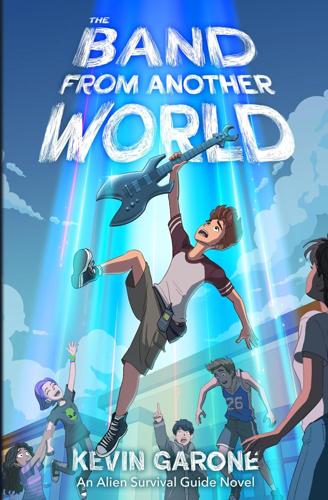
“The Band from Another World” by Kevin Garone (Temor Press). 220 pp. $19.99 hardback, $12.99 paperback, $4.99 e-book.

It’s tough being a seventh-grader, especially if you’re slightly quirky. So you need to find your “thing.” Even if it makes you seem even quirkier, it gives you an identity. Marv’s “thing” is being the UFO kid — the one always on the lookout for extraterrestrials.
In this third Alien Survival Guide, middle-grade sci-fi novel, Marv (code name “Gold Leader”), along with friends Jace (“Baller One”), Kenji (“Pyro”), Nora (“Space Cadet”), and new girl Liv (“Alien Lover”) track a strange message to an abandoned house. “We are the homing signal,” it seems to be saying.
When they get inside the house, they find not aliens, but a set of instruments and amplifiers for a rock band. Since guitar and drums prove irresistible to this band of ET hunters, naturally you have to wonder who’s hunting whom. Especially since Marv, who’d never picked up a guitar before, inexplicably finds himself a nearly-legendary guitarist, and his friends become a tad strange.
Once again, town of Maricopa resident Kevin Garone has offered an age-appropriately suspenseful, fast-action, amusing, entertaining kids’ book with all the trappings: everything-gobbling ET Sleeches, rogue disembodied brains, and the sage advice from Byleth X. Dongo’s “How to Survive an Alien Invasion” (“Remember, not even your own home is safe from extraterrestrial activity.”).
Former high school and college English instructor Christine Wald-Hopkins is an essayist and longtime regional and local book critic.
If you are a Southern Arizona author and would like your book to be considered for this column, send a copy to: Elaine Encinas, P.O. Box 26887, Tucson, AZ, 85726-6887. Give the price and contact name. Books must have been published within a year. Authors may submit no more than one book per calendar year.