Newly reviewed books by Southern Arizona authors:

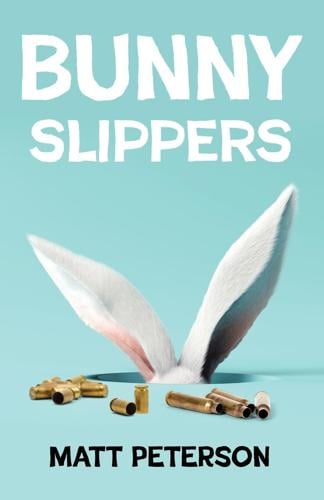
“Bunny Slippers” by Matt Peterson (Atmosphere Press). 366 pp. $19.99 paperback; $8.99 Kindle.
Professional killer Bunny just doesn’t miss. Ever. Be it another killer or lab full of zombie-breeders, he can annihilate with the flick of a wrist and just saunter away.
“Bunny Slippers” is the debut novel for Tucsonan Cisco Gonzalez (pen name Matt Peterson). It opens with Bunny in hot water. He’s refused an assignment from his killers’ guild, MARI, so “Mother” MARI has put a $15 million bounty on his head, and he has six thousand assassin-colleagues anxious to cash in.
Bunny, however, is good. He can appear and disappear without a trace, and — because he has his own tech security company, and himself designed the very communications system MARI uses — he can keep track of them tracking him. So he sets out to eliminate assassins before they get him.
People are also reading…
The elimination is going swimmingly (deaths by shooting, by shovel — that’s Bunny’s killer-apprentice nephew’s MO, by chandelier, roller-coaster, defenestration), until Bunny realizes that MARI’s out for more than just destroying him; Mother MARI wants world domination, so Bunny needs to step up.
The book is pretty nonstop action, with tons of bodies. It’s remarkable that Bunny always comes away unscathed. And, the guy deliberately doesn’t plan, so where did those explosives come from? Curious readers would like to know.
“The Boneyard Blues” by Dexter K. Oliver ((Bandit Press). 156 pp. $12 from the author, P.O. Box 716, Duncan, AZ, 85534 or dexoliver @yahoo.com.
“Journeyman writer” Dexter K. Oliver, author of 15 books and over 590 magazine and newspaper articles, has grown weary of reviewers’ focus on his “contentious” nonfiction writing (mea culpa, truth be told) rather than his considerable body of fiction. So he decided to offer up a sampler of his narratives.
“The Boneyard Blues” is a compilation of short stories and novel excerpts published through the years. As his fiction draws directly from personal experience, we see a lot of animals and wilderness action reflecting Oliver’s 35-plus-year career as a nuisance wildlife operator in Arizona and New Mexico.
The short stories he includes are light but pointed: independent wildlife agents needing to aid a government crew stymied over rescuing a gnarly javelina at a Tucson house; a city father dragging his family out on a camping trip, and doing all the wrong things. I won’t mention bear, coyote, poison ivy as t.p., or Fluffy the miniature poodle.
The real strength — and tease — of this collection, though, is the novel excerpts. There’s strength in the breadth of Oliver’s desert and mountain setting descriptions, his knowledge of animal behavior and trapping, and character development, and tale-spinning. You’ll see an Anglo woman kidnapped on the Tohono O’odham Reservation, a shrunken head in Mexico, a bar-room brawl, a very creepy serial killer, and (thankfully) unromantic sex. The tease? Just when something suspenseful is happening, the excerpt cuts off. It’s not a bad way to bag readers.
You can purchase this book and Oliver’s many others “the old-fashioned way” — directly from the author in Duncan. (See above.)

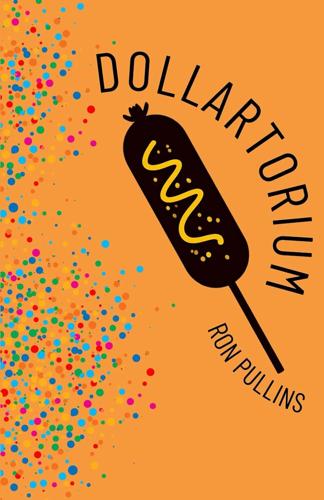
“Dollartorium” by Ron Pullins (Unsolicited Press). 244 pp. $19.95.
“Ralph makes corn dogs. Yes, he does. From scratch,” says the narrator in this little allegory on American greed.
Ralph’s corn dogs are all natural. He raises the pigs; he feeds them corn from the cornfield his daughter Stella farms. He stuffs the pork from casings made from the animals’ own innards, skewers the wieners on wooden sticks, dips them in cornmeal batter, deep-fries them, and hangs them to dry while his customers line up outside his Corny Doo Doggery. Ralph is famous for his dogs.
With the help of daughter Stella — a lovely, smart twenty-something who’s not averse to work, and his wife Phyllis, who mans the cash register while she watches contestant, prize-promising TV shows, who IS (averse to work), Ralph happily runs a modest business.
Two realities set up this tale: 1) Ralph knows his corndogging so well that he can read his beloved Plato as he works, and 2) Phyllis wants more than life’s given her. Phyllis wants money. Phyllis loves money. Phyllis wants what those game show contestants get — money. Or things money buys, and Ralph seems incapable of providing it.
When the Money Master, a TV huckster dressed in stars and stripes and a coat of paper money, walks out of the television set to offer her guaranteed wealth — training at the Universitatum Dollartorium — Phyllis signs up Ralph.
The Dollartorium will change him. And not necessarily for the better.
In a folksy, small-town Kansas narrator’s voice, Tucson writer Ron Pullins pokes at our current economic, political, philosophical and cultural state.
Through the Dollartorium’s sessions, Ralph learns a lot: The wealthy do not work; they create wealth. To create it, you must recognize that wealth is a pure Idea that you package to sell. Never invest your own money, only other people’s. Benefit from your bankruptcies. Never pay taxes. Never learn skills; just manage. It’s all part of the “beauty of the deal.”
The Master even comes away from Ralph’s sessions with an idea for a book — “The Art of the Corn Dog.” I won’t give away the ending; it’s yours to discover.
In these days, here’s comfort to be found in gentle satire. Try “Dollartorium” if you’re feeling a bit outa’ sorts.

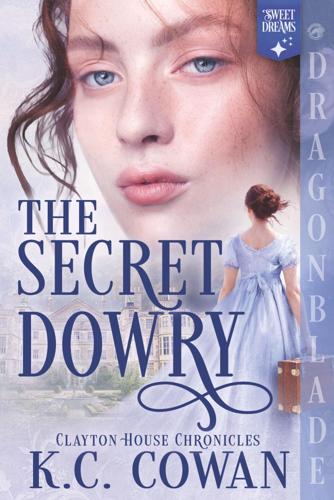
“The Secret Dowry” by K.C. Cowan (Dragonblade Publishing). 275 pp. $12.99.
It is a truth universally acknowledged that a single lady in possession of a good dowry must be in want of a husband.
Whether she knows it or not.
Which is the premise of this Regency Romance by Tucson writer K.C. Cohen.
Gentleman’s daughter Charlotte Kendall is nearly 21, has been sent to London for two seasons without receiving a single marriage proposal, and her family is beginning to fear she’s doomed to spinsterhood. She still lives happily in the manor house with her father and married brother, who will inherit the house, and doesn’t care about marriage. Her beautiful older sister Dorothea, however, who married well and has an estate in the country, insists that Charlotte spend the summer with her family. After a full complement of teas, dinners, at-homes and dances, Charlotte is certain to be engaged by the end of the summer, Dorothea figures.
Especially as Dorothea’s husband has increased Charlotte’s modest one-thousand-pound dowry to a generous six thousand. Word gets around, but not to Charlotte herself. And, to her surprise, she becomes very popular.
Cowan pulls threads and restitches Jane Austen in this romance: Charlotte is not as beautiful as her sister, but she’s handsome and witty. English law dictates inheritance. Social conventions must be strictly followed. And there’s a Darcy-like arrogance to one of Charlotte’s suitors which proves misleading. Pride? Prejudice? Betrayal?
I think readers will be satisfied with how this plays out.

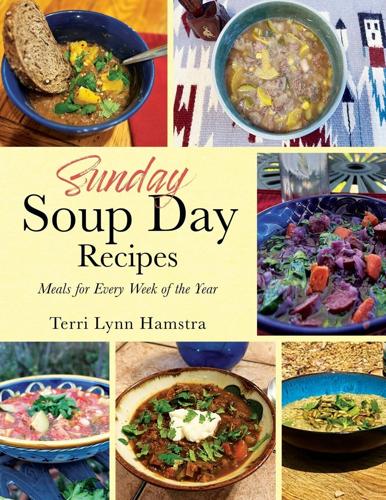
“Sunday Soup Day Recipes: Meals for Every Week of the Year” by Terri Lynn Hamstra (BookLocker.com, Inc.). 113 pp. $32.96.
If you’re also a carnivore and could use a one-stop source to find rich, tasty, casual recipes for yourself and your vegetarian and vegan friends, do we have a cookbook for you.
Vegetarian Tucsonan Terri Lynn Hamstra writes that she was inspired to begin serving soups on Sundays by a friend’s routine for an easy weekend meal. “Soup,” she says, “is not at all like baking, where you must be more exacting in your measurements and ingredients.” You can throw in “the odd carrot, potato, half an onion. … No two soups are ever exactly alike.”
This pleasingly forgiving attitude continues through the book’s 52 (“Meals for Every Week of the Year”) recipes. Hamstra offers ingredient replacements and adjustments for carnivore/vegetarian/vegan preferences. She draws and adapts from French, Native American, Mexican, Italian, Thai, Indian, Korean, Vietnamese, Spanish and Jamaican traditions, and credits friends for recipes and family for criticism. Hamstra’s husband Scott gets credit for the beautifully staged photographs of the soups in bowls. And it’s very Tucson.
Some of the highlights? Red Lentil Coconut Soup (Mexico). Thai Lemongrass and Coconut Curry. Enchilada Soup. Korean Chicken Noodle (“Spicy!”). Artichoke Hearts with Mushrooms. And — with ingredients from each member of the old Pac 12 Conference — March Madness Soup.
¡Buen provecho!

“Watch Us Burn: Poems for a Lost Earth” by Gene Twaronite. (Kelsay Books). 94 pp. $20.
From the forest conflagration photo on the front cover and the book’s title, there’s no mistaking Gene Twaronite’s message in this latest collection of his poetry. Turns out, though, it’s not as rough as it might have been, as it also celebrates nature.
Twaronite writes of trees’ means of communicating with each other, and, in a bit of whimsy, questions if they send love notes, or wonder “what it must be like to walk / on feet or touch each other / the way these wise apes do.”
He takes a long view of evolution and cosmic history, claiming kin with ancestral hominin Lucy, and seeing more in common with a gorilla than his blue-eyed forebears who rowed to the New World.
But you can’t miss Twaronite’s point in the title poem. It’s from a section in the book called “Centos,” a form of poetry composed of lines written by other poets. “Watch Us Burn” offers a sharp jolt. Excerpted from it here are lines from Theodore Roethke, Anne Waldman, Margaret Atwood, Alberto Rios and Angelica Freitas:
“In a dark time, the eye begins to see…/ How to fuel the world, then die…./ We smile all the time now, smiles of the lobotomized, and the world fries, no matter how many warnings we have heard … / The facts were told not to speak and were taken away… / Watch us burn: possible epitaph.”
Former high school and college English instructor Christine Wald-Hopkins is an essayist and longtime regional and local book critic.
If you are a Southern Arizona author and would like your book to be considered for this column, send a copy to: Elaine Encinas, P.O. Box 26887, Tucson, AZ, 85726-6887. Give the price and contact name. Books must have been published within a year. Authors may submit no more than one book per calendar year.