


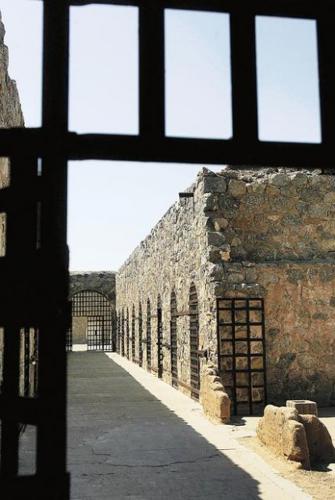
Ben Wade didn't want to go to Yuma — for him, it was a trip to hell, one that he fought hard against.
But Wade, the character played by Russell Crowe in the remake of "3:10 to Yuma" set in the Arizona Territory of the 1880s, was being sent to Yuma to stand trial and — presumably — to be thrown into the Arizona Territorial Prison. The one dubbed a "hell hole."
If polled, the guess is that most Arizonans probably would agree with him: Yuma is a "hell" to be avoided.
So he had good reason to avoid the place. Arizonans, on the other hand, by and large base their opinions on myths:
• It's so hot!
• There's nothing interesting to do or see.
• It's so hot — and dry.
People are also reading…
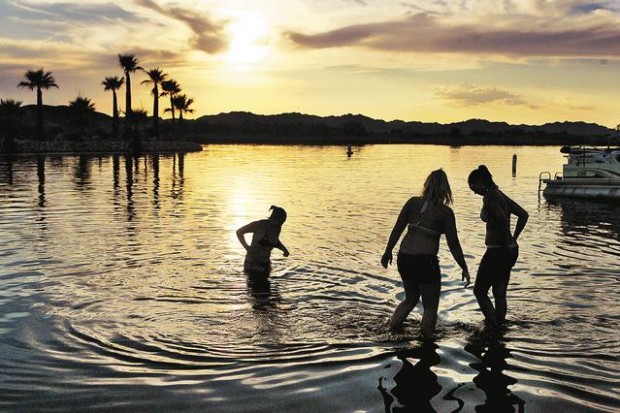
The irony is that Californians — especially those from around the San Diego area — disagree. They come by the thousands to spend weekends and even a week or more in Yuma.
Maybe it's time, then, to re-examine Arizonans' popular beliefs and show you another side of the Yuma you only think you know. — Rosalie Robles Crowe
YUMA — There's more to this city than a few fast-food restaurants and gas stations, the pit stops of choice for Arizonans headed for California beaches. But to find out what's here, you'll need to relinquish some myths.
Myth No. 1 — The heat.
Yeah, it's hot — several degrees hotter than Tucson, as a matter of fact. But have you taken a look at the temperatures in Phoenix over the past 10 years or so?
They're not that much different from Yuma's. Matter of fact, on many days, they're a degree or two higher.
Neither city, however, is hotter than Bullhead City or Lake Havasu City — both accepted vacation destinations.
Besides, if the heat gets you down, try Yuma anytime between October and May. It's warm days and cool nights; can't beat it, Yumans say.
Myth No. 2 — Nothing to see or do in Yuma.
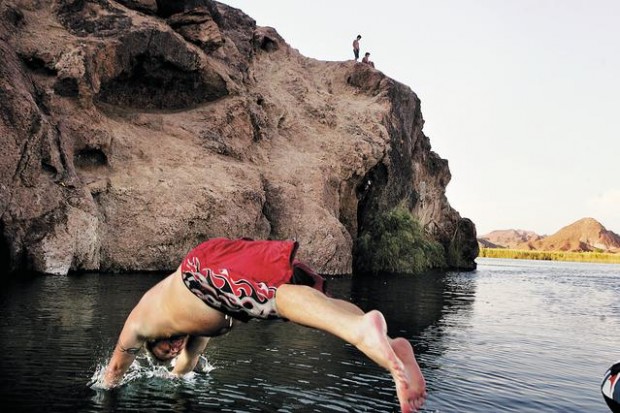
Do you like history? Outdoor activities such as water sports, hiking, bird-watching and golf?
You get all that plus a growing list of amenities generally associated with bigger cities, says Ken Rosevear, executive director of the Yuma County Chamber of Commerce.
Eight "major brand" hotels are being built or are already open, he said. There are 16 golf courses, including Desert Hills, "one of the best municipal courses in the state," and major retailers and restaurants. And for those who enjoy them, the Cocopah and Quechan Indian tribes have casinos.
But Rosevear cites Yuma's history as a key to current — and future — growth. With the development of the city's Old Town, Yuma is a Williamsburg in the making, he believes.
And what a story Yuma has to tell. If you like the Old West, Yuma's your place because it all happened here:
Prehistoric peoples and Indians? Conquistadores and early missionaries? They were here. Ditto the mountain men and fur trappers.
Riverboats, ferries, cattle ranchers, cowboys and sheep herders? Their contribution to Yuma's history is immense.
Miners — gold, silver and lead — they were here, as were outlaw gangs and vigilantes, law enforcement and posses. The Butterfield stage came through Yuma, and the U.S. Army had a strong presence in this corner of Arizona.
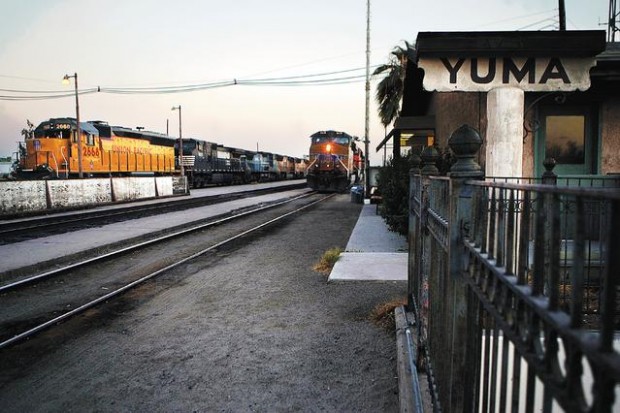
The railroad, the early telegraph and Army Signal Corps wrote exciting chapters in Yuma history.
Even the first airplane to land in Arizona landed in Yuma.
Myth No. 3 — It's so hot!
That again? Of course it's hot. It is the desert, after all, and the low desert at that. Yuma sits at only 137 feet above sea level — a lot lower than Tucson's 2,548 feet (at the airport).
And dry? It is that, too. National Weather Service statistics show that Yuma averages something less than four inches of rain a year.
You'll forget "dry," however, when you see what Yuma is doing with the riverfront.
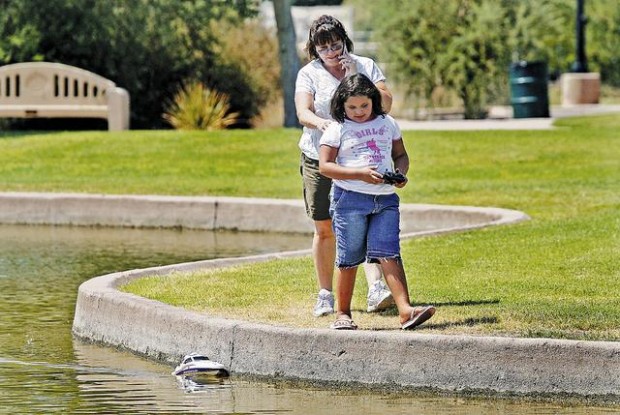
As part of the Yuma Crossing National Heritage area, the Colorado River is being reclaimed and rehabilitated, and natural habitat is being restored. A lot has been accomplished already — two parks with a special children's play area that is part castle, part Western fort and is a kid-crowd pleaser, and a small-boat launch area for kayaks and canoes.
When the whole area — West and East Wetland Parks, Gateway Park and historic downtown areas — is completed within the next seven years, it will include new hiking and birding trails, nature parks, even equestrian trails, that wind through miles of downtown-area riverfronts.
And in the midst of it all at the foot of Main Street will be the Hilton Garden Inn and Conference Center, a 150-room hotel and a 19,000-square-foot conference center.
Located in the heart of Yuma's historic Old Town and within walking distance of three museums and the Yuma Fine Arts Association's four galleries, the hotel and conference center is expected to be ready for business by late fall 2008, says Charles Flynn, executive director of the Yuma Crossing National Heritage Area.
According to Flynn, the river restoration — a combined effort of local governments, the Quechan Indian Nation, local landowners, federal and state regulatory agencies, businesses and community organizations — already is attracting birds that haven't been seen in the area for years.
Bob Ingram, executive director of the Yuma Visitors Bureau, says hundreds of bird species are being drawn by the renewed wetlands along the Colorado River.
Fred Phillips, a restoration practitioner and owner of Fred Phillips Consulting, agreed.
"There are 330 bird species in the lower Colorado River basin," he said.
A consultant on the wetlands reclamation project for the Yuma Crossing National Heritage Area, he listed some of the birds that have been sighted in the new wetlands areas.
They include white-faced ibises, brown pelicans, egrets, greater blue herons and little blue herons ("The little blues are rare in Yuma," he said), black-necked stilts and greater yellowlegs.
'the Greatest whore in the West'
With Yuma being one of the main crossing points into California for people heading to the gold fields in the mid-1800s, it naturally attracted some colorful characters.
Among the more colorful: Yuma's first business owner and first businesswoman: Sarah Knight Bourdett Bowman.
Sarah was a restaurateur, cook and "hotel" keeper who started out as a camp follower with the U.S. Army during the Mexican War.
Technically, that meant she was married to one of the enlisted men. And she was — four or five times, actually.
Dubbed the Great Western (the largest ocean-going steamer at the time was the Great Eastern) by the troops, Sarah was a big woman: 6 feet 2 inches and, reportedly, 200 pounds, bigger and taller than most men of that era. Hers, it is said, was a generous hourglass figure.
She ran an officers mess, nursed wounded soldiers, even fought alongside them if necessary, loading cartridges on the battlefield.
It's said that she once caught two troopers trying to flee, grabbed them by their collars and threw them back into the fray.
By the time the war ended in 1848, Sarah owned a hotel in Saltillo, Mexico. When the dragoons were ordered to California, she sold out and prepared to go with them. But Sarah needed another husband.
A dragoon named Davis volunteered, and Sarah was again part of the army.
Sarah arrived at Yuma Crossing in 1852, now married to Albert Bowman, and opened a restaurant at Fort Yuma.
Ten years later, no longer married to Bowman, she opened a hotel below the fort on what is now the southwest corner of First Avenue and Main Street.
Sarah loved the military — in just about every way possible — and the military loved her. One soldier called her "the greatest whore in the West," while another, Lt. Sylvester Mowry, who was stationed at Fort Yuma in 1856, wrote that "among her other good qualities she is an admirable pimp."
When Sarah died in 1866 of a spider bite, she was breveted (granted an honorary commission) a major in the U.S. Army and buried with full military honors at Fort Yuma.
In 1890, the Army decommissioned the fort and exhumed all those buried there — including Sarah — for reburial at the Presidio in San Francisco.
Yuma Events Calendar
Nov. 10 — Southern Pacific Railroad Families Reunion. Celebrating the 130th anniversary of the first railroad to enter Arizona. Looking for family members of ex-railroad workers. Tours, talks about SP history, railroad photos. Sponsored by the Arizona Historical Society and the Yuma Quartermaster Depot. 1-928-782-1841 for more information.
Nov. 30-Dec. 2 — 13th Annual Christmas Arts & Crafts Festival. Main Street in Old Town Yuma. Music, food and crafts. Begins 10 a.m. daily. 1-928-782-5712 for information.
Dec. 4 — Farmers Market in Old Town. Main Street. Fresh produce, music and crafts. Slated at 10 a.m. Tuesdays, Dec. 4-March 25.
Dec. 7 — Holiday Memories on Parade. Fifth annual electric light parade and tree lighting in downtown Yuma. 6:30 p.m.
Jan. 4-6 — Old Town Jubilee Arts & Crafts Festival. Main Street in downtown Yuma. Music, food, children's activities and crafts. Begins at 10 a.m. daily.
Jan. 25-27 — Yuma Lettuce Days. Honoring the "Winter Lettuce Capital of the World." Main Street in Old Town Yuma. Displays of agricultural equipment and produce. Children's activities, the World's Largest Salad Bowl daily, multiple stages with entertainment, arts and crafts. Begins 10 a.m. daily. 1-928- 782-5712 for more information.