

P oor butterscotch. It was once a darling of a dessert. The very word conjures midcentury moms cheerfully stirring a pot of homemade pudding or of well-scrubbed youngsters ordering it over vanilla ice cream at the soda counter.
My own mother made candy by melting butterscotch and chocolate chips with sweetened, condensed milk and walnuts. And didn't everyone's grandmother keep a glass dish filled with little orange cellophane-wrapped butterscotch hard candies?
But then butterscotch virtually disappeared.
Sometime in the past couple of decades, butterscotch, that sweet, rich, homey flavor, was overshadowed by a new darling: caramel.
The two are similar but by no means identical. "The New Food Lover's Companion," a dictionary of culinary terms, says that "the flavor of butterscotch is a blend of butter and brown sugar." Caramel, on the other hand, is defined as "a mixture produced when sugar has been cooked (caramelized) until it melts and becomes a thick, clear liquid that can range in color from golden to deep brown."
People are also reading…
Butterscotch now crops up infrequently on restaurant menus. It's no longer ubiquitous in ice-cream shops. Butterscotch brownies are rare; ditto butterscotch cream pie. And try finding a box of butterscotch pudding in your local supermarket. I visited three stores and came up empty-handed. Too bad I wasn't seeking white chocolate or cheesecake or dulce de leche, all of which were represented.
The 1946 edition of "Joy of Cooking" lists 11 butterscotch recipes; the 1997 version has but six.
But some of us still carry the torch.
One enthusiast is Zanne Stewart, executive food editor of Gourmet magazine, which ran a butterscotch chiffon pie on the cover of its 65th-anniversary issue in January.
"Caramel really took over everything," she says with a trace of wistfulness. But she hasn't given up on butterscotch.
"One of the things I love to do for a casual dinner party is to make wonderful brownies and let people top them with ice cream," she says. "Then I have a pitcher of hot fudge sauce and a pitcher of hot butterscotch sauce. Without fail, people say, 'This is such good caramel.' Then I can set the record straight."
Jeff Vallone of Tony's restaurant (he's Tony Vallone's son) says the iconic Houston restaurant has been serving butterscotch soufflés for more than 30 years. But when asked if it was as popular as the establishment's signature chocolate version, Vallone just laughs.
"No, ma'am," he admits, "but it's a close second."
In Tucson, Terra Cotta pastry chef Fabrice Mallet has created a Butterscotch Crème Brûlée, and Lorraine Glicksman, the pastry chef at Pastiche, uses butterscotch in a Pot de Crème. Butterscotch connoisseurs can also find Butterscotch Bars on one of the catering menus at Jonathan's Cork, and a butterscotch cheesecake at Fuego, along with a decadent drink called the BBC, which is made of butterscotch, Bailey's and cream.
Vic Zimmerman, who owns the Mt. Lemmon Cookie Cabin just beyond Summerhaven, always keeps an eye out for butterscotch. "It's something you've kind of got to watch for," he says. "I particularly like it as a topping on sundaes."
Zimmerman describes its appeal as "kind of a light flavor but very distinctive."
You can find butterscotch chips — along with oatmeal and coconut — in the Rachel cookies (named for the daughter of a former manager) that have a loyal following at the Cookie Cabin. "It makes a real nice combination," Zimmerman said, noting that customers are willing to wait for the cookies to come out of the oven.
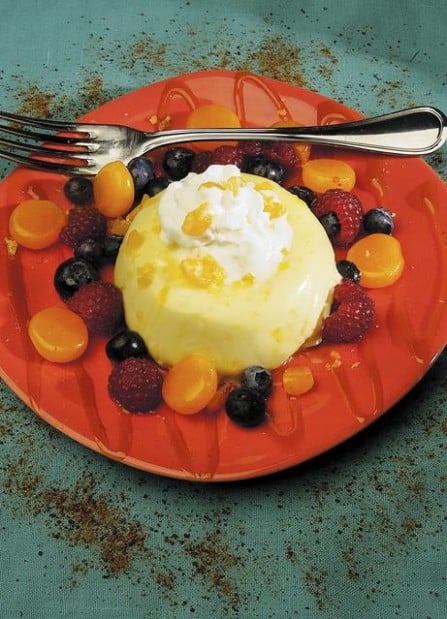
One of the most inventive uses of butterscotch is found at Benjy's in Houston. Inspired by a mention in The New York Times, chef Dylan Murray and pastry chef Elva Rincon invented a recipe for butterscotch panna cotta flavored with an unexpected ingredient — Brach's butterscotch candies.
Rincon, originally from Puebla, Mexico, remembers first tasting them as a teenager.
"When I came to this country, I went to the store and bought a little bag of them. Oh!" she exclaims, rolling her eyes at the memory as she pulverizes the sweets in a food processor, filling Benjy's kitchen with a heavenly aroma. The candies plus just three ingredients — cream, gelatin and vanilla — create a deceptively simple update on butterscotch pudding.
Tim Mena, corporate chef at Pepper's in League City and Pasadena, Texas, also is a fan. "Every once in a blue moon, I'll still go buy a box of Jell-O butterscotch pudding," he says. But not the instant variety. "The stuff you cook, the stuff that gets the skin on top, that tastes like Grandma's." Guess his grocery store is better stocked than mine.
At Pepper's, he serves a rich white- and dark-chocolate cake in a puddle of butterscotch sauce. He eschews caramel, he says, because butterscotch is "richer in flavor and holds to the plate better. I was bringing something back that I loved as a kid."
Caramel may be enjoying an of-the-moment popularity, but butterscotch is much easier to make at home, if a bit misunderstood.
Caramel is fickle, turning from golden brown to irretrievably burned in a blink as the sugar melts in the pan. It requires vigilance, plus nerves of steel — it gets hot, can crystallize and is prone to boiling over when other ingredients are added. Butterscotch is mellower, more forgiving.
"I think a lot of people really don't understand butterscotch," says Jami Kling, pastry chef at Bistro Moderne in Houston. She says she's served butterscotch in the past, but, sadly, it's currently absent from her menu.
"With butterscotch, you don't have to make a caramel," she says, referring to the intimidating process of melting sugar. "It's just dark brown sugar and butter, and you melt that together and add the cream. It's pretty easy."
But will it make a comeback?
"I'm totally doing my best," says Stewart. "I really believe with all my heart that our butterscotch chiffon pie is going to bring it back."
My fingers are crossed. I can't help but notice, though, that Gourmet's original recipe as it appeared in 1956 called for a simple brown-sugar custard base. But the 2006 version began by making a caramel.
Butterscotch Sauce
The Houston Chronicle kitchen-tested this recipe from "Betty Crocker's Cookbook" — the 1972 edition. (The revised "Big Red," published last year, contains a different version of the recipe.) It's delicious warm over vanilla ice cream.
1 1/2 cups packed brown sugar
1/2 cup light corn syrup
4 tablespoons ( 1/4 cup) butter
1/2 cup heavy whipping cream
1 teaspoon vanilla extract
In a medium pot, heat the sugar, syrup and butter over medium-low heat to boiling, stirring constantly.
Remove from heat; stir in the cream and vanilla. Stir just before serving.