

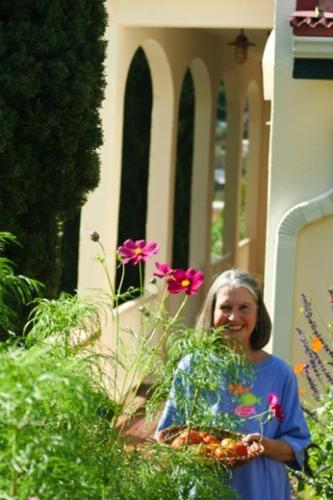
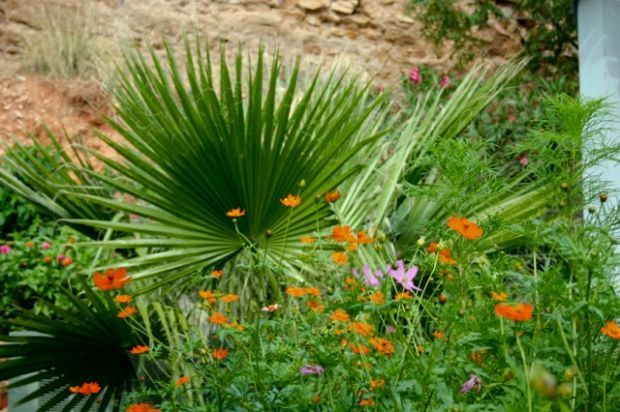
A rock is a hard place to grow a garden, but Bisbee homeowners will show how they’ve done it during a self-guided garden tour on Saturday.
The 13th annual Bisbee garden tour by the Bisbee Bloomers features 11 stops, including several on rocky ledges above Old Bisbee.
GROWING SOIL
Ken Budge, a Bisbee councilman, and his wife, Mary Alice, have built up the soil in their front, back and side yards surrounding their home, which sits on rocky and caliche-filled Bee Mountain.
The hard soil was made even less plant-friendly by three cottonwood trees whose knotty roots left little space — and water — for anything else to grow.
Ever since the couple removed the trees 10 years ago, “the soil has loosened up,” Mary Alice Budge says.
People are also reading…
The couple has hauled topsoil, fertilizer and mulch to the yards and vigorously composted leaf litter to add to the dirt.
Today the landscape features Cypress, flowering plum, desert willow and mulberry trees, as well as wisteria, Tombstone rose, barrel cactus, prickly pear, salvia, marigold and bushes that attract butterflies.
Budge suggests patience when it comes to building up nurturing soil.
“It’s a long process,” she says. “Over time, as the plants get bigger and leaves start to drop, that naturally will build up your soil.”
VERTICAL PLANTING
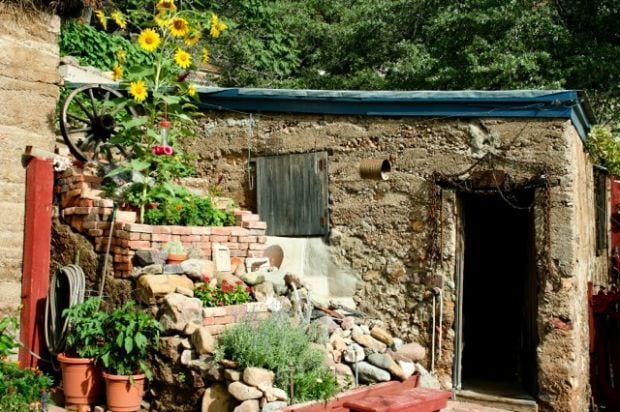
Susan and Jim Miller, whose home sits on a caliche bed, didn’t bother making the existing land friendly for growing.
“We didn’t dig anything out,” Susan Miller says. “We went up everywhere.”
They built beds using surrounding loose rocks and filled them with topsoil. In them they grow peppers, tomatoes, zucchini, other vegetables, flowers and drought-tolerant plants.
They converted an abandoned cement staircase — they’re found all over the Bisbee hillsides — into a tiered bed of vinca, sunflowers, marigold and amaranth. Potted plants sit on rocks and atop rock walls.
“This is an accumulation of 40 years,” Jim Miller says.
CONTAINER GARDENING
Jim Cobis says his house “sits on one solid knob of rock” and loose rocks are strewn throughout his property, which includes a wash.
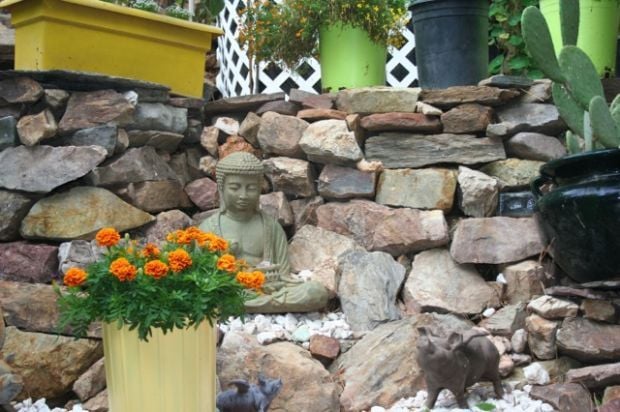
Instead of being a nuisance, he considers the rock a resource that he uses to shape his garden.
Cobis has rearranged them into beds and walls. He has left outcroppings alone so that plants can grow in their nooks and crannies. They also provide shelf space for his many pots and planters.
“Every small flat surface has something,” he says. A pomegranate grows out of a nook in the rock, sometimes fed by rainwater that streams down the rock face.
Planters are full of nasturtium, coleus and marigolds. Pots sit atop stone walls or on horizontal slabs.
A rocky landscape doesn’t bother Cobis, a longtime gardener, because he prefers gardening in containers.
“I never consider gardening directly in the dirt if I can avoid it,” he says.
Instead, he mixes his own formula for nutritious soil in which he plants vegetables and flowering plants.
ROCKY SANCTUARY
A rock face provides a natural backdrop to the home of Mary Ann Hanson-Germond. It also helps to close off the flat patio into an intimate space.
“It just makes it a wonderful, quiet place to sit,” Hanson-Germond says.
Walls built from the stones on the property form a grotto into which she has installed a huge cement planter. She fills that with pots of penstemon, succulents, hysop, mint, sage, chives and oregano.
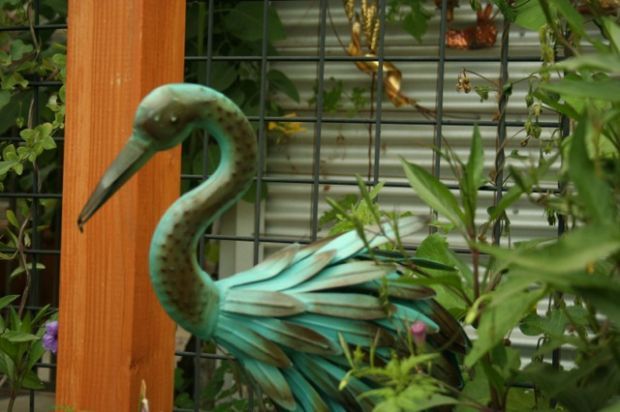
Art puts the garden “a bit on the funky side and also very humorous,” Hanson-Germond says. Her metal animals include a heron, two vultures, a crocodile and a dinosaur.
She uses magnets to affix “knickknacks” to the corrugated metal walls of her house.
Garden art and plants share space on craggy shelves and on the steps of an abandoned stairway. Hanson-Germond enjoys using her imagination to find the right mix.
“I love creating,” she says, “and gardening is such a wonderful way of creating. It’s kind of like being an artist.”
MORE TOUR STOPS
A public courtyard features 25-feet-tall Mexican fan palms rescued from a former mining foundry in Douglas. The gates are recycled fire doors from a Bisbee business.
The renovated grounds of the Muheim Heritage House Museum includes new trees and other plants.
Old Cypress, juniper, quince, pomegranate, pear and olive trees share space with a vegetable plot in a two-tiered garden.
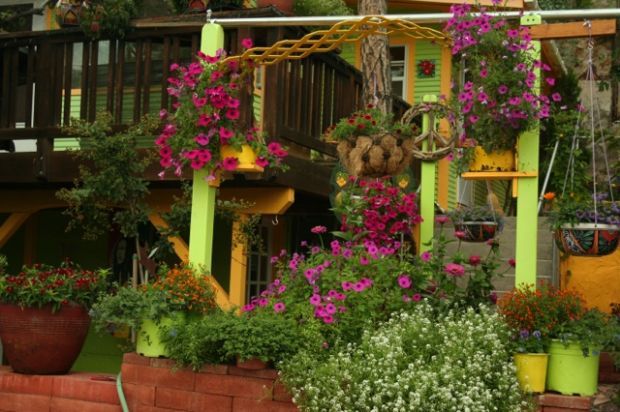
Ornate iron and steelwork line the walkways, patio and gazebo in a low-maintenance garden.
An unruly garden of wildflowers, grasses, fruit trees, potted plants and shrubs also includes a pond and vegetable garden.
A tunneled stairway leads to a tiny wild garden furnished with seating and statuary brought from Europe during the homeowners’ travels.
Ten miles from Bisbee is an one-acre spread with several seating areas surrounded by flowering shrubs, mature shade trees, a garden for vegetables, a plot with flowers for cuttings and some 100 potted plants.