

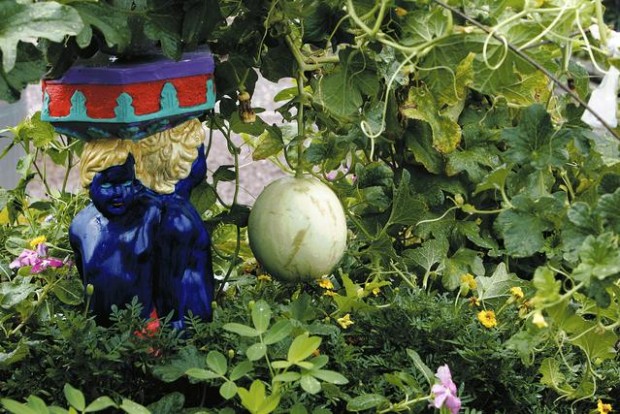
Muskmelon (often referred to as cantaloupe) and honeydew are favorite melons in home gardens because they're the sweetest and most flavorful when handpicked at the peak of ripeness. They also love the heat and do extremely well when grown in the desert Southwest.
In general terms, muskmelon's fruits are those with dull yellow surfaces (when ripe) and fine raised netting. Although some people refer to these netted muskmelons as cantaloupes, the true cantaloupe (which is actually a type of muskmelon) is more commonly grown in Europe. Honeydew melons are smooth and have either green or orange flesh. As honeydews ripen, they turn from green to yellow or creamy white. Other melon types include crenshaw, casaba and the French charantais, reputed to be the sweetest and best-tasting melon of all. We have had excellent results with muskmelons and French charantais (a true cantaloupe) at the University of Arizona-Pima County Cooperative Extension gardens.
People are also reading…
Regardless of the type, all melons need hot weather. They are cold-sensitive, so should be planted after all danger of frost has passed in the spring. For the best selection of varieties, purchase seed in advance from garden catalogs or online. Seeds started indoors in March will be ready for planting out in the garden in April and ready to pick in July. Successive plantings in May, June and July will provide a ready supply of ripe melons well into October.
A sunny location and ground preparation are the keys to success in growing melons. Mix generous amounts of organic matter into the top 12 inches of soil. At the same time, mix in 1 pound of ammonium phosphate (16-20-0) or similar-analysis vegetable fertilizer for each 100 square feet of bed area. A complete organic fertilizer may be used, too. Melons can also be grown with great success in raised beds filled with composted organic matter.
Melons do require regular irrigation, applied often enough to keep the soil evenly moist. An excellent way to hold in and conserve moisture is to use a straw mulch layer over the soil around developing melon plants. If space is limited, melons can be trained to grow on trellises above ground. To support their weight, fruits grown on a trellis should be cradled using pantyhose or netting material.
Sometimes, melon plants fail to develop fruit even if they've flowered. The most common reason is lack of pollination of the female flowers.
Melon plants produce male and female flowers on the same plant. It's common for a melon plant to produce a majority of male flowers. Sometimes bees fail to transfer pollen from the male to the female flowers, causing them to abort. To ensure fertilization, pollen can be transferred to female flowers using a small artist's brush. Collect the yellow pollen from the male flower and apply it directly to the stigma of the female flower. You can identify female blossoms by their miniature melonlike ovary at the base of the flower. You'll ensure pollination and fruit development by transferring pollen in this fashion.
Harvest melons when the fruit is fragrant and a slight crack completely encircles the stem where it is attached to the fruit. When ready, the fruit can be pulled cleanly away from the stem, leaving a smooth cavity. This cracking (called a slip), however, does not occur in crenshaw, casaba and some honeydew types. Harvest these melons by cutting the stem when the fruit softens at the blossom end and starts to turn yellow.