

Many plants we grow in Southern Arizona are tropical or subtropical species and need protection from freezing temperatures.
Plants we commonly grow include: citrus trees of all types, exotic cacti, bougainvillea, plumbago, hibiscus, natal plum, crown-of-thorns, cape honeysuckle and tropical bird-of-paradise.
Flowers that need protection include: geranium, impatiens, begonia, lobelia and alyssum.
A few supplies should be readied now to protect these plants from approaching cold snaps.
Top on my list of supplies to have on hand are sheets and blankets. Never throw away old sheets, as they provide excellent cold protection when draped over frost-sensitive plants.
Cloth and paper have the best insulating qualities. If sheets are not available, consider purchasing frost blankets sold in garden centers and nurseries. Frost blankets are made of nonwoven polypropylene that is lightweight and can be left on plants for several days without causing them harm.
People are also reading…
Newspaper also makes an excellent frost blanket. The newspaper covering should be several sheets thick to maximize cold protection.
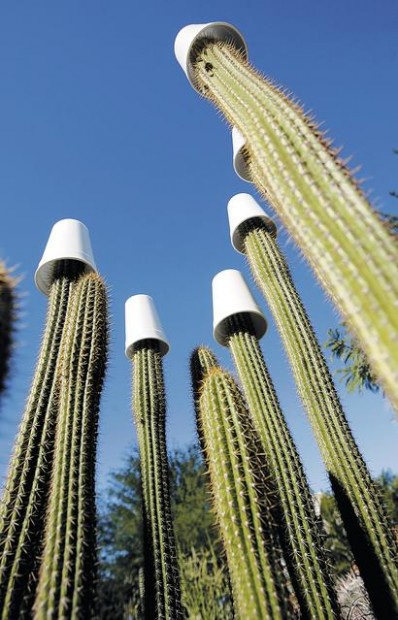
Paper grocery bags are great to use as frost caps to place over the tops of tender plants. Cold-sensitive columnar forms of cactus can be protected by placing white Styrofoam cups over the top of each column. The cups insulate and protect the delicate growing tips from cold.
Straw covers are especially well suited for protecting vegetable, flower and herb beds. Straw bales can be purchased at area feed stores. A layer of straw scattered directly over plants helps hold in the heat. After the freeze danger has passed, the straw can be pulled back and worked in between plants to serve as a beneficial mulch over the soil surface. If needed, it can once again be pulled up and placed over plants for cold protection.
Plastic should not be used to cover plants unless a heat source is provided underneath. Plastic actually conducts cold, so heat must be generated inside the plastic cover to protect the plants within. When covering small areas, a low-wattage incandescent light bulb (40 to 60 watts) contained in a simple utility lamp fixture can be placed under the plastic to provide adequate heating. When protecting larger plants, such as shrubs or small fruit trees, a higher-wattage heat lamp will be more effective. Small-bulb Christmas lights, such as twinkle lights, do not give off enough heat to provide adequate frost protection.
When frost covers of any type are used, it's important that they be secured properly. Cold snaps are usually accompanied by windy conditions, especially on the first night. If plant covers are not secured properly, warmth will escape from under the cover. Cold air will also be forced under the cover on windy nights.
Tender plants growing in containers may not need covers if they can be moved under the cover of a patio or a shade tree. These spots stay warmer because the overhead cover traps heat radiating up from the ground. Areas close to south-facing walls also provide protection. The sun's rays heat the wall surface during the day, and this stored heat is then released at night, keeping adjacent areas warmer.
● John P. Begeman is the urban horticulture agent for the University of Arizona-Pima County Cooperative Extension. If you have questions, call 626-5161 to reach a master gardener.
Gardening
Advice by John P. Begeman