KRASYLIVKA, Ukraine — After authorities broke into Yakiv Atamanenko's home in autumn of 1932 and confiscated the family's food, his mother and two brothers died of starvation and their bloated bodies were tossed among others in a freshly dug grave on the outskirts of this farming village.
Atamanenko and other survivors here said one of their neighbors, Oleksandra Korytnyk and her husband, ate their two children. "They cut their children into pieces and ate them," recalled Atamanenko, now a frail, gray-haired 95-year-old.
In the end, he and others said, the Korytnyks died as well.
On Saturday, Ukraine marks the 75th anniversary of the terrible famine of 1932-33, engineered by Soviet authorities to force peasants across the former U.S.S.R. to give up their privately held plots of land and join collective farms. Millions perished.
People are also reading…
Now President Viktor Yushchenko is leading an effort to gain international recognition of Holodomor — or death by hunger, as it is known here — as a crime rather than merely a disaster, by labeling it an act of genocide.
Long kept secret by Soviet authorities, accounts of the Great Famine still divide historians and politicians, not just in this nation of 47 million but throughout the former Soviet Union.
Some are convinced that the famine targeted Ukrainians as an ethnic group. Others argue authorities set out to eradicate all private land owners as a social class, and that the Soviets sought to pay for the U.S.S.R.'s industrialization with grain exports at the expense of starving millions of its own people.
The dictator Josef Stalin's collectivization drive affected the entire U.S.S.R, but was particularly calamitous for Ukraine, which had some of the former Soviet Union's richest agricultural land. The campaign coincided, as well, with the Kremlin's efforts to root out a growing Ukrainian nationalist movement.
Estimates of the number of people who perished in Holodomor differ, but there is no doubt the death toll was horrific. Yushchenko estimates 10 million Ukrainians died, while Stanislav Kulchitsky, a Ukrainian historian, believes the number is closer to 3.5 million.
Authorities set production quotas for each village. But these quotas generally exceeded crop yields, and in village after village, when farmers failed to meet their targets, all their food was confiscated.
Residents were forbidden to leave their homes — effectively condemning them to starvation.
A starved village
In Krasylivka as many as 1,017 people — roughly the village's present-day population — died in the course of that terrible year, according to a list of the victims compiled by village authorities. Elders say the famine nearly wiped out the village.
Villagers tell stories of their neighbors collapsing in the street and dying. Driven to despair, people ate whatever they could scrounge: leaves, dirt, birds, dogs, rats and — several witnesses said — even each other.
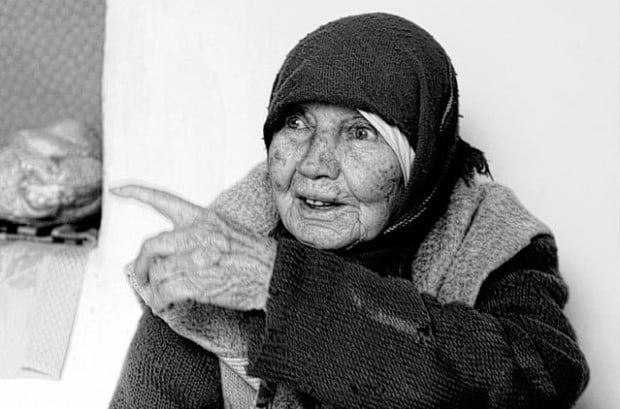
Olena Yaroshchuk, 94, her wrinkled face framed by a green kerchief, said she filled her aching stomach with grass. "Those who could survived, those who couldn't — that was the end of it, one house after another — almost all died," she said.
Kulchitsky, a leading famine researcher, argues that the famine was a genocide aimed at Ukrainians who resisted Soviet rule. "The conditions authorities created for the Ukrainian peasantry were incompatible with life," he wrote in a recent article.
But Heorhiy Kasyanov, a top historian with the National Academy of Sciences, says the issue is more subtle. "There is no hard evidence that there were concrete statements or actions aimed at destroying ethnic Ukrainians by someone else."


 Vacant Tucson stores could transform into new housing