
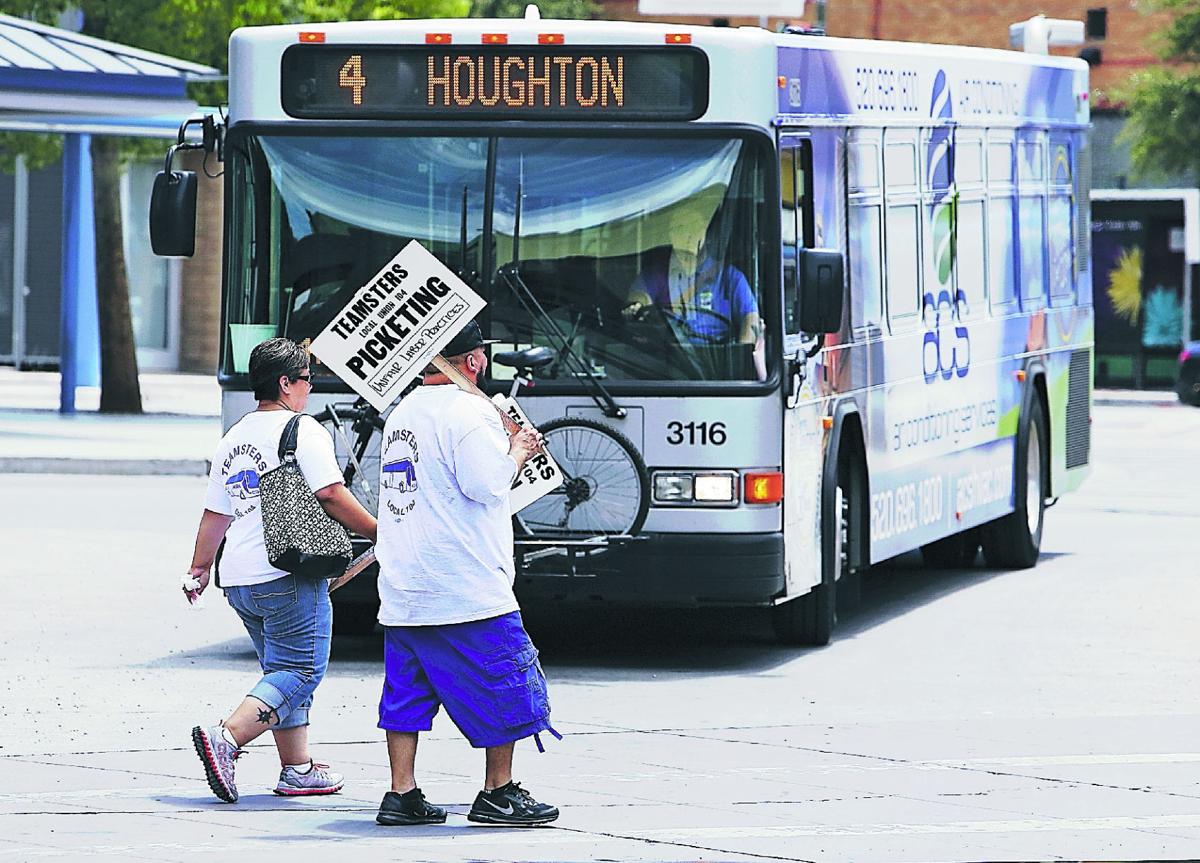
Nearly half of the striking Sun Tran drivers are at the top tier of their pay scale, an Arizona Daily Star analysis of newly released salary data shows.
They’re taking home slightly less than $40,000 in pay and another $15,000 in benefits, including full health-care premiums.
Half of Tucsonans earn less than that. The median wage in Tucson is $32,500, not including benefits, according to the Bureau of Labor Statistics. The lowest-paid Sun Tran drivers make $27,664 a year.
Sun Tran officials confirm that a total of 201 bus drivers — nearly 47 percent — have maxed out their base pay in their position.
The only higher-paid unionized employees in Sun Tran are mechanics, with 75 percent making more than $46,000 a year.
The strike, now going into its second month, shows no signs of ending, with the Teamsters and Sun Tran management deadlocked over competing compensation proposals and driver-safety measures.
People are also reading…
Kate Riley, general manager of Sun Tran, has described the Teamsters as well-paid, noting the full cost for the top drivers can add up to $61,000 a year, including overtime.
This calculation includes 100 percent paid health benefits for employees, which costs Sun Tran $10,219 per employee, and paid pension contributions worth another $5,000 annually.
It is increasingly rare for any privately run company to cover the full cost of health-care premiums, said Gautam Gowrisankaran, a professor of economics at the University of Arizona.
The practice was more common 10 to 15 years ago, but now is usually found in union contracts with highly profitable companies, he said.
“Health-care costs have grown. Most companies can’t shoulder all of the costs,” Gowrisankaran said.
Sun Tran’s current salary cap is slightly less than the statewide average for the best-paid transit bus drivers, which is $42,600, according to the Bureau of Labor Statistics.
Andrew Marshall, representing Teamsters Local Union 104, said the focus on compensation sidesteps concerns about safety on the buses, where there have been assaults against drivers, and concern about dangerous mold in one Sun Tran facility.
The union wants a 75-cent hourly wage increase this year and $1-per-hour increases in the next two years. It also wants $1.58-per-hour increases to pension contributions this year and $1 increases in each of the next two years.
The figure is smaller for drivers making the maximum, he said, with a proposed 55-cent raise every three years for them.
Sun Tran officials say the three-year costs of the union demand would exceed $20 million.
City Councilwoman Regina Romero said she wasn’t surprised that nearly half of the drivers are in the top tier of the pay scale, because she knows a lot of bus drivers who have worked for years for the company.
She said she doesn’t blame workers for making a good wage, but urged the union to come back to the negotiation table with a realistic proposal.
“The status quo is unacceptable. Many Tucsonans depend on public transit to commute daily to work, school, shopping, doctor’s appointments and more. Public transit is a lifeline for many in the community,” she said.
Approximately 60,000 to 70,000 people use Sun Tran on a daily basis during the week when the transit service is operating normally, monthly reports indicate.
Contact Joe Ferguson at 573-4197 or jferguson@tucson.com.On Twitter: @JoeFerguson

Joe Ferguson
Reporter


 Historic bank vault now new Tucson speakeasy