Sometime in the coming days, a 22-year-old NASA space telescope will lose its fight with gravity and burn up in Earth’s atmosphere.
The moment will be bittersweet for one Tucson family.
The Neil Gehrels Swift Observatory is named in memory of an accomplished astrophysicist who grew up in the Old Pueblo and graduated from Catalina High School and the University of Arizona.
Since 2004, the orbiting telescope has cataloged nearly 2,000 gamma-ray bursts from stellar collisions and newborn black holes, helping scientists better understand the causes behind the universe’s most powerful explosions. Swift has also pushed well beyond its primary mission — and its original, two-year lifespan — to study everything from comets to supernovas.
People are also reading…

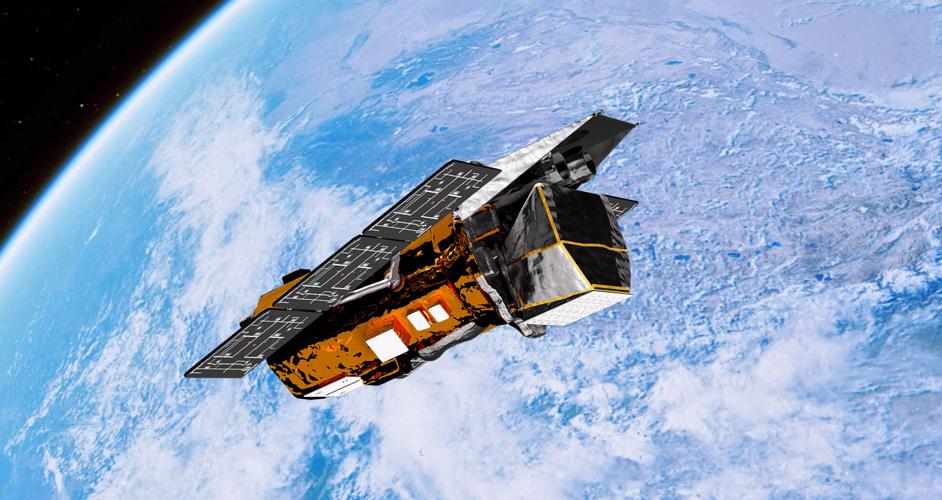
NASA’s Neil Gehrels Swift Observatory orbits above Earth in an artist’s rendering.
But the $250 million spacecraft’s orbit has decayed rapidly in recent years, as atmospheric drag made worse by recent solar activity pulled it closer and closer to Earth.
When a hastily launched rescue mission failed in August, Swift’s fate was sealed. Some scientists now expect the SUV-sized satellite to incinerate in the atmosphere as early as Monday.

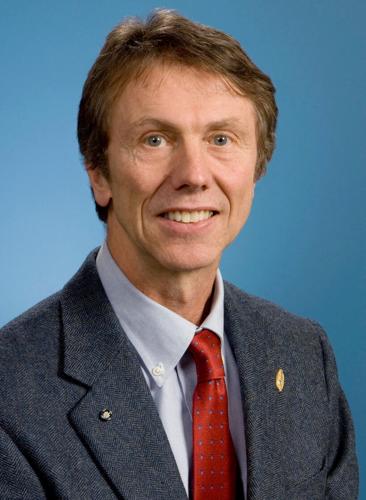
Neil Gehrels
“It's kind of like having a person die in the fullness of time,” said Tucson resident Ellen Williams, Neil Gehrels’ wife of 36 years. “I think we'll have a family wake when Swift goes down.”
Born under stars
Cornelis A. "Neil" Gehrels was born in Wisconsin in 1952 to two recent emigrants from the Netherlands.
He was named after his paternal uncle, Cornelis Gehrels, who died in a Nazi prison camp near the end of World War II.
Neil’s father, Tom Gehrels, was a hero of the Dutch resistance during the war before moving to the U.S. with his wife, Aleida, and becoming a prominent astronomer. “We all called him Pops,” Williams said.
Neil Gehrels developed an early interest in the stars while growing up surrounded by his father’s work.
“We lived for a whole year on a mountain while he was observing at McDonald Observatory in Fort Davis, Texas, and I would go with him to the telescope and help out,” Gehrels said years ago in an online Q&A with NASA. “That was a fantastic experience for a 6-year-old kid.”

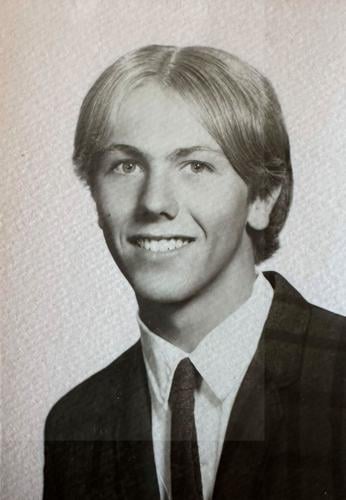
Neil Gehrels in his yearbook photo from Catalina High School.
The family moved to Tucson in 1961 so Tom Gehrels could join fellow Dutch astronomer Gerard Kuiper at the University of Arizona’s newly established Lunar and Planetary Laboratory.
Williams said Pops would sometimes take Neil and his brother, George, with him on overnight work trips to the observatories on Mount Lemmon and Kitt Peak.
“They would go out and do night shifts with him, so they were well exposed to all sorts of activities in astronomy,” she said.
Neil Gehrels attended Jefferson Park Elementary and Doolen Junior High before graduating from Catalina High and enrolling at the U of A.
Even in college, he was something of a Renaissance man — the early 1970s version of one, anyway. He played piano and clarinet, performed as the keyboardist in a rock band called Great White Horse, and channeled his love of hiking and rock climbing into a volunteer gig with a local search and rescue team.
He ended up majoring in musical composition and physics at the U of A, earning bachelor’s degrees in both.

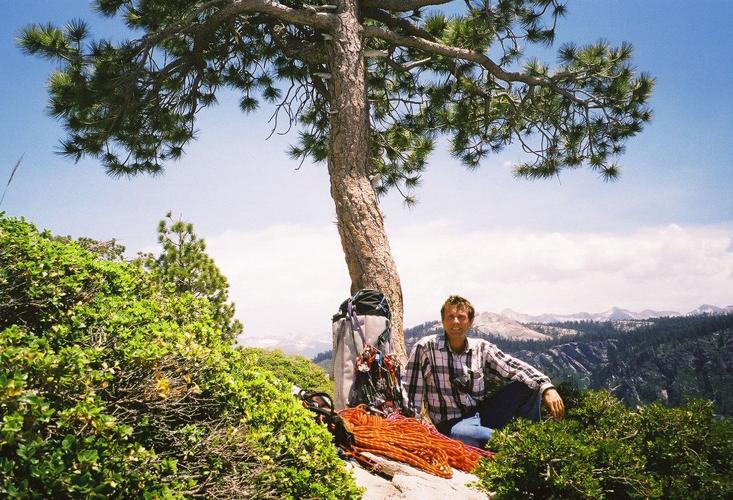
Neil Gehrels smiles from a mountain top at Yosemite National Park, where he loved to go rock climbing and completed two solo ascents of El Capitan.
“Then at a certain point, he realized that music was great, he loved it, but he wasn't gonna make a living that way, so he decided to stick with physics,” Williams said. “Fortunately for me, he went to Caltech, and we met there.”
Gehrels earned his doctorate in astrophysics from the California Institute of Technology, with two standouts in the field as his advisers: Rochus Vogt and Edward C. Stone, who both played key roles in NASA’s Voyager program and at the famed Jet Propulsion Laboratory.
Williams earned her Ph.D. in chemistry on her way to her own distinguished career in research, academics, commercial science and national energy policy.
Watch a speech by Neil Gehrels (Ph.D. ’82, Physics), as he accepts a distinguished alumnus award from the California Institute of Technology in 2016, the same year his wife, Ellen Williams (Ph.D. ’82, Chemistry), received the honor.
The two met in 1976, Williams said, and before long this “huge mountain man” was taking her rock climbing all over Southern California.
“We met in the dorm, had a wonderful courtship, moved in together and got married, all at Caltech,” she said. “Then we both got jobs in Maryland — he got a postdoc at Goddard Space Center; I got a postdoc at the University of Maryland — and two years later, both of us fortunately got permanent jobs.”
The first Swifties
Gehrels and a team from Penn State University first pitched Swift to NASA in the late 1990s.
The idea was to put a rapid-response science platform in orbit to track incredibly powerful but elusive gamma-ray bursts from deep space, which were first detected 30 years earlier by Cold War-era satellites deployed to spot nuclear weapon tests.
The innovative observatory was designed to scan huge swaths of the sky at once and quickly turn to point its onboard telescopes at the first signs of a burst. Within seconds, Swift could pinpoint and observe the fading afterglow of the cosmic explosion and relay its coordinates to other observatories across the planet so they could study it, too.
Launched on Nov. 20, 2004, NASA's Neil Gehrels Swift Observatory has been on the hunt to uncover the mystery of the universe’s most powerful explosions: gamma-ray bursts.
The spacecraft would prove to be “phenomenally successful,” Williams said, but it was “a really high-risk instrument” at the time Gehrels’ team proposed it. It relied on new sensor technology and a dynamic way of swinging around to find its targets that “had really never been done before,” she said.
Gehrels was intimately involved in every aspect of the observatory’s development. He even commissioned a member of his project team and her band to write and record an original song about Swift that he played during a meeting with the NASA officials who would decide whether to fund the mission, Williams said.
When the time came for launch in 2004, Williams traveled to Florida with son Thomas and daughter Emily to join Gehrels at Cape Canaveral, but bad weather kept delaying blastoff.
“We had to come home while Neil stayed,” she said. “I couldn't keep the kids out of school.”
She ended up following along on the internet as the rocket carried Swift into orbit, and the spacecraft successfully deployed its solar panels.
Mountain man
The observatory started picking up gamma-ray bursts almost as soon as its instruments were switched on.
“It was like being married to an obstetrician,” Williams said. Their phone would ring at 3 in the morning, and Gehrels would have to get up to go talk to his team about the latest detection. “And he'd be getting five to ten bursts a week,” she said.
Things seemed to calm down after the first year or so, allowing Gehrels to resume a somewhat normal life. Williams said they would take their kids camping and to visit the rest of the Gehrels clan in Tucson at least once a year.
And whenever he was able, Gehrels still liked to climb.
His adventure journal is loaded with detailed accounts of technical climbs on peaks in the U.S., South America, Europe and Africa. Williams said local rock climbing guidebooks still include the route her husband pioneered to the top of Baboquivari Peak, the sacred Tohono O’odham mountain about 60 miles southwest of Tucson.

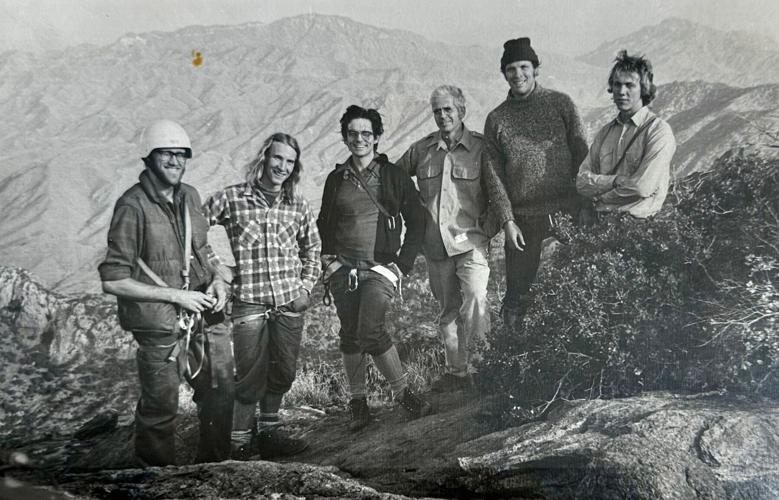
Neil Gehrels, far right, with other members of the Arizona search and rescue group he volunteered with while attending the University of Arizona in the early 1970s.
Twice he completed multi-day solo ascents of the famous Nose Route on El Capitan at Yosemite National Park, which required him to sleep overnight on platforms hung from ledges more than 1,000 feet up the rock wall.
“It's scary to be married to a rock climber sometimes,” Williams said. “But Neil was never so crazy as to climb without a rope.”
His final ascent of El Capitan came in late July of 2015, when Gehrels was 62. Later that year, he was diagnosed with pancreatic cancer and underwent major surgery and extensive treatment.
He continued to lead the Swift mission up until about a month before his death on Feb. 6, 2017.
“We had several memorial services … after he died, and it was really touching how many people found him important in their work and their lives,” said Williams, who retired from the University of Maryland in 2023 and moved to Tucson for good in 2024. “People all over the world were working on Swift data, and it was really touching.”
Rescue mission
Not long after that, NASA officials decided to add Gehrels’ name to the observatory, something Williams said her husband “would have been so pleased” about.
The Swift science team has kept in touch with Williams ever since, so she always knows what’s going on with the mission.
She said she first heard about the planned rescue operation from S. Bradley Cenko, a close friend and colleague of Gehrels who replaced him as principal investigator for Swift. Cenko invited Williams to Goddard in June to get a firsthand look at the 5-foot-tall robotic satellite that would be sent to try to rendezvous with the space telescope and boost it back into a safe orbit.

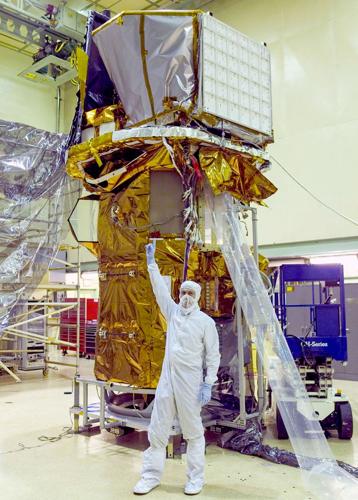
Neil Gehrels poses in front of the completed Swift spacecraft inside a clean room at NASA’s Goddard Space Flight Center on Sept. 9, 2003, about 14 months before it was launched into space in 2004.
It took Flagstaff-based Katalyst Space less than a year to design, build and test its LINK satellite-servicing machine under a $30 million contract with NASA.
“I got to see little LINK … and I met the project leader who was in charge of it,” Williams said of her Goddard visit. “He was a very pragmatic, let’s-get-this-thing-done kind of guy, because they had a very short timeline to make this work.”
LINK was transported from Maryland to the South Pacific, where it was successfully launched into orbit on July 3. The spacecraft operated normally for several weeks before the mission team began to lose control of it.
On Aug. 19, NASA announced it had called off LINK’s planned rendezvous with Swift. Neil’s sister, Jo-Ann Gehrels, called it “a sad outcome for a truly heroic effort.”
A month later, NASA Administrator Jared Isaacman highlighted the “low cost, high reward” rescue mission during an appearance at the U of A.
“What we gained from that, what we learned, is going to help other telescopes and other satellites that need servicing out there,” Isaacman said. “It was a great lesson that it’s OK to fail when what we learned stands to pay dividends.”
Loss of signal
The looming loss of Swift has sent ripples through the astrophysics community. Researchers are already lamenting life without its novel quick-targeting capabilities and its enormous, ever-growing trove of data, which has already contributed to about 7,000 published scientific papers.
If there’s a silver lining to the failed rescue mission, it’s that it allowed Swift to squeeze a little bit more science out of its last month or so of life.
For most of this year, some of the observatory’s key functions were taken offline to reduce atmospheric drag and buy as much time as possible for the rendezvous attempt. The spacecraft returned to full operation in mid-September, observing hundreds of science targets before its orbit decayed so much that it finally had to be shut down for good on Oct. 20.
All that’s left now is the final fiery descent.
Williams said she and the Gehrels family are planning “a real Irish-style wake” for the spacecraft. They will gather at the midtown Tucson home where Neil grew up to raise a glass to the mission, share some memories and maybe sing along to “The Swift Song.”

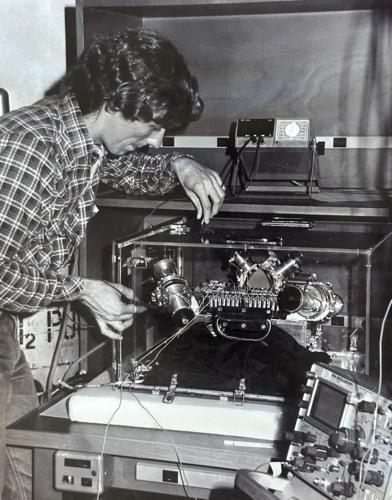
Neil Gehrels in the 1970s, working on a science-instrument project while in graduate school at the California Institute of Technology.
Then in the spring, Williams hopes to return to Maryland so she can be there for Goddard’s celebration of the two-year space mission that ended up lasting more than two decades.
She just wishes her husband was around to see all the attention Swift is getting and all the effort that went into trying to keep it alive.
“He would have been so thrilled, oh my gosh. He would have been right in the middle of it,” Williams said. “Swift has had an amazing lifetime, and, you know, this last attempt to save it was just really thrilling and completely in the context of Neil's character. Neil was a big risk taker. He always was willing to try hard new things.”


 ‘Bear Down’ at 100: Seven things you might not know about the U of A legend