

It’s getting pretty normal out here.
Drivers are sitting in traffic again. Planes are full. Restaurants – at least those that can find enough staff to open – are busy. Shoppers are shopping, largely without masks. Workers are going back to work, campers back to camp, and performers back to performing in front of crowds – not just video cameras.
After a year-plus of sheltering, distancing and masking, that feels good. Perhaps a bit jarring at times, but good.
Normalcy is good.
But how do we maintain this renewed sense of stability?
What rules should we NOT let go?
The medical experts we interviewed consistently identified a big three:
• Keep washing your hands. “That’s hugely important for public health,” said Dr. George Rutherford, an epidemiologist at the University of California, San Francisco. “It’s for respiratory diseases, it’s for gastrointestinal diseases, it’s for skin disease. It’s for everything, basically.”
People are also reading…
The relevance of hand-washing to Covid prevention is well known, so we asked Rutherford for an example beyond respiratory ailments like this coronavirus.
“Fecal-oral transmission,” Rutherford said. “You’re basically eating fecal organisms.”
That’ll make you keep scrubbing your hands.
Rutherford is talking about the bacteria that causes norovirus. It’s highly contagious and steeply unpleasant, and can live on surfaces for days and lead to diarrhea and vomiting. You can get it from a person, from contaminated food, or just by touching something where the virus lives. Hand-washing cuts way down on the spread of those germs, Rutherford said, and others “you pick up from surfaces.”
It’s also smart to keep cleaning “high-touch surfaces” in public settings, said Dr. Thomas Russo, the chief of infectious diseases at the University at Buffalo Jacobs School of Medicine and Biomedical Sciences, but “not the crazy level of disinfection” – he means practices like wiping down groceries – “we saw during the early stages” of the pandemic.
• Keep staying home when you’re sick. Until Covid, the hard-charging, work-driven American culture rarely celebrated the idea of staying home when you feel ill. “It used to be that you had to be really super sick before you called off work – it was almost a badge of honor,” said Dr. Joseph Chow, president of TeamHealth Ambulatory Care, which operates five WNY Immediate Care facilities. “I think that script has flipped, and rightfully so. You really have to respect other people, too.”
That means absolutely staying home if you have a high temperature – “Fevers are no-brainers,” Chow said – and carefully judging the difference between, say, allergies and something more. “The threshold is brought down lower on whether to stay home,” Chow said. “Don’t try to tough it out. If you have questions, seek treatment and call your doctor.”
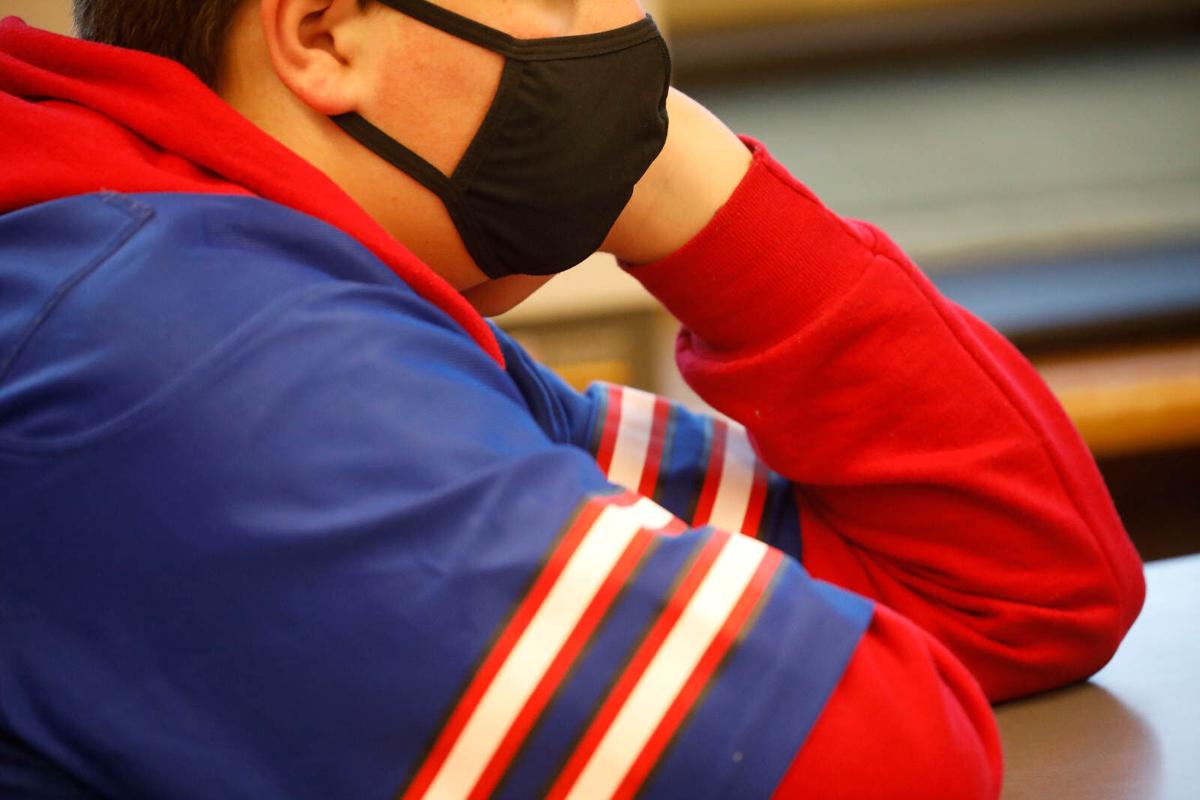
• Keep your masks. We’re not done with them yet anyhow. The pandemic is still a thing, and you’ll need those masks in health care facilities, nursing homes, airplanes and in businesses that require it. (That’s for people who are fully vaccinated, by the way, which right now is one of every two New Yorkers. If you’re not fully vaccinated, state and federal guidance says you should be masking indoors just as before.)
But looking beyond this pandemic, there are still benefits to keeping masks on hand. For some people, this may be for your own comfort – for example, wearing a mask to an arena event because it calms your nerves in a crowded place. But in other instances, you’ll be doing it out of empathy – say, if you’re visiting people who are elderly or have a vulnerable immune system. Sometimes it’ll simply be the smart thing to do, like wearing a mask in a medical setting during the winter months, when viruses like influenza tend to spread.
Those strategies worked this year. Masking, distancing and sanitizing seemed to render the flu to a near-zero level. “There’s never been a season when I haven’t seen somebody with influenza,” said Dr. John Sellick, an infectious diseases specialist with the University at Buffalo, Kaleida Health and Veterans Affairs. “It’s just so crazy. And even tracking a lot of the other viruses, they’re really much less than we would normally expect.”
So we should get accustomed to masks?
You’ll see them more frequently than we did before Covid.
In many Asian countries, it was typical long before the pandemic to see people wearing masks. Sometimes that is a precautionary measure against air pollution, but it’s also a widely accepted – and expected – way of cutting down on the spread of viruses.
Much of that mindset can be attributed to culture. In an interview last fall, Russo told The News, “In the United States and Western Europe, we tend to be more egocentric and tend to be more about ourselves – individual rights and liberties. Whereas Asian countries are much more community and family oriented, right? What’s best for family? What’s best for the community?”
That dynamic certainly hasn’t shifted in the United States. You can see it in any grocery store: Just over 50% of New Yorkers are fully vaccinated, but it’s rare to see half the people in a store masked while shopping. The strong feelings for and against masks aren’t dissolving, but at the same time, people won’t be surprised to see them worn in the future, either. “I think we’ve socialized them more,” Rutherford said.
Speaking of positive traits – like empathy – where can we employ them more?
People who are immunocompromised will continue to need everyone else’s help. That includes organ transplant patients, people battling HIV/AIDS or blood cancers, and those undergoing chemotherapy. For them, the vaccines are not likely to work as well because their weakened immune systems are unable to mount a strong response.
Wearing masks around those patients – especially if you’re unvaccinated – is one way to help. Getting a vaccine is another way – and the most scientifically sound choice. “You’re acting for your own benefit and being altruistic if you get immunized,” said Dr. Brahm Segal, an infectious diseases specialist at Roswell Park Comprehensive Cancer Center and co-leader of the National Comprehensive Cancer Network's Covid-19 Vaccine Advisory Committee. “When you get vaccinated, you obviously protect yourself. But you also reduce the likelihood of spread within the community. And if you have friends, family, other people, coworkers who are immunocompromised, then I think your need for altruism goes up even more to look out for them.”
What can we do for ourselves?
It's as simple as this: Identify a good habit you developed at any point during the pandemic, and keep it going.
One example is the approach to eating. During the first wave of the pandemic, data collected from 1.5 million participants through the COVID Symptom Study app revealed that four in 10 people changed their eating habits. Of those, about half adjusted “for the better,” said Tim Spector, a professor of genetic epidemiology at King’s College London and one of the study’s lead researchers.
People who were eating poorly before the pandemic often improved during it, Spector added. “For many people it seemed to be a motivating factor (for) them to change their habits in not only how they eat, but perhaps to exercise more,” said Spector, author of the book “Spoon-Fed: Why Almost Everything We’ve Been Told About Food is Wrong.”
Those people, he said, adopted a positive-change mindset of, “I’m going to be on a (track of) self-improvement. I’m going to take this time to do something.”
You can still do something, of course. You’ll just be doing it in a world where time seems to be moving faster.


