

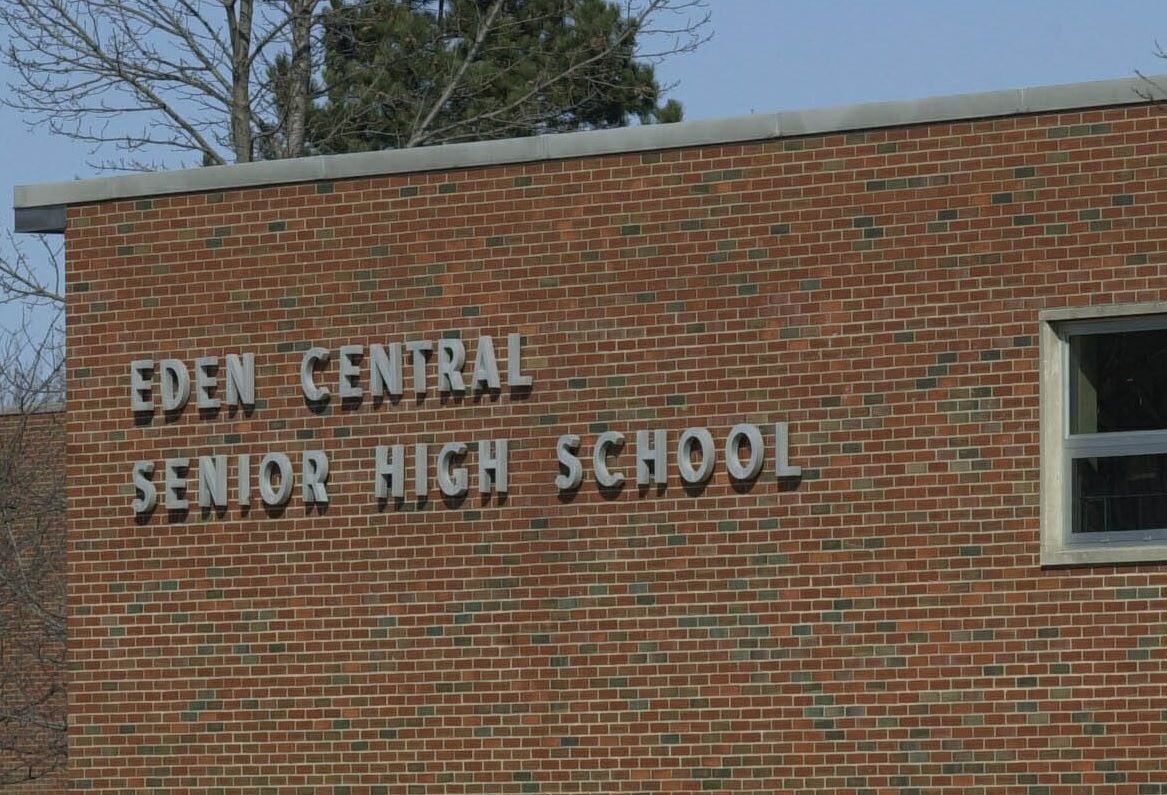
The superintendents of the Cheektowaga and Eden school districts spoke by phone Friday morning, and it wasn't to chat about our unseasonably warm weather.
"We were commiserating," Cheektowaga Superintendent Mary Morris said in an interview.
The districts are the only two in Erie and Niagara counties that saw their school budgets go down to defeat this week, and in both cases the difference was less than 50 votes.
The districts now must figure out where to go from here.
They have to put a contingency budget in place by July 1, the start of the 2020-21 school year, and then wait for guidance from New York State before deciding whether to hold a second vote on the budget.
"We're certainly disappointed," said Eden Superintendent Sandra Anzalone, who is retiring at the end of the month.
People are also reading…
District officials here and across the state had worried that changes to the voting process put in place to limit the spread of the coronavirus would lead to more budgets voted down.
Districts were required to mail ballots to every eligible voter. This raised the cost, for postage and printing, and boosted the number of voters well beyond the level seen for traditional, in-person elections.
In the end, of 675 school districts statewide reporting so far, 664 saw their budgets pass, according to the New York State School Boards Association. This 98% approval rate is comparable to previous years.
Thirty-four of 36 districts reporting in Buffalo Niagara also had their budgets pass.
The 37th, West Seneca, ran into difficulties scanning its paper ballots at Erie County Board of Elections headquarters and as of Friday afternoon hadn't finished counting its votes.
Cheektowaga and Eden don't know why voters in their districts voted down the budgets.
In Cheektowaga, the $47.2 million budget raised spending by 3% but the tax levy increase was within the state property tax cap. It failed by 49 votes – 1,105 no votes to 1,056 yes votes.
Morris said typical school elections in Cheektowaga Central draw about 600 voters and the budget passes with about two-thirds voting yes, but this year brought nearly 2,200. In her 29 years working in the district, this is the third time the budget failed.
"One was a tie," Morris said. "Isn't that crazy?"
She said she hasn't had a chance to talk to district residents about why they voted no. She did say the pandemic and its financial repercussions likely affected how people felt about the spending plan.
"I have a large senior citizen population in Cheektowaga. And this is hard, this is hard for everyone," Morris said.
Eden's Anzalone offered similar thoughts on that district's budget defeat.
Eden received about 2,230 ballots when typical in-person elections would bring in 500 to 700 votes. Anzalone said the school system mailed out 6,800 ballots to eligible voters in the district.
The $32.4 million budget, which raises spending by 3.23%, failed by just 26 votes, 1,051 to 1,025.
In addition to retirees who don't have children in Eden schools, Anzalone said, "We also believe that there is some misunderstanding by the general population that schools were literally closed since March and therefore there's a large savings."
Eden rolled over its fund balance and applied money from its reserve fund to help limit the proposed tax increase for 2020-21, Anzalone said. "We felt that we did what we could given the unknowns for next year," she said.
Both Eden and Cheektowaga said they are waiting to find out how a revote would take place before deciding whether to proceed with one.
The governor's office hasn't said whether districts would have to mail out ballots to all eligible voters, again, or whether they could mail ballots only to those who request them or hold in-person voting.
In Eden, for example, in-person elections normally cost about $4,000 but the district spent $18,000 on this year's school election, Anzalone said.
"We were hoping that the revote process would be less onerous than the process that had surrounded this particular budget vote," said Jay Worona, general counsel for the state school boards association. "The expense is enormous."
The revote date isn't set yet but is likely to take place in late July.
A contingency budget can't spend more than the previous year's budget and also automatically bars spending on certain items such as equipment.
Districts then have to look at other ways to bring down spending in the budget and are limited in what they can cut. Schools often turn to athletics, music and other programs to trim spending.
"All that's on the table, because it's not mandated," Morris said.


