PHOENIX — The stench hit Maricopa County Sheriff's Officer Shannon Pryor as she entered the house.
Her eyes watered as she saw a miniature pinscher giving birth to four puppies in the living room. In the kitchen, dog cages stacked on top of each other had left marks on the floor.
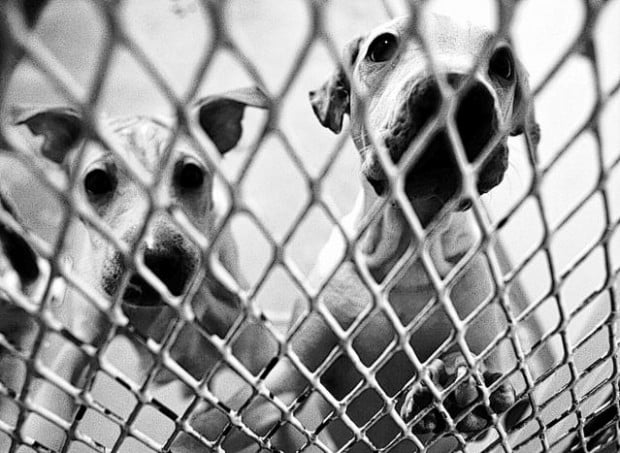
Outside, she saw chain-link-fence kennels filled with dogs. Some of the kennels lacked water. The dogs that had water drank from bowls filled with brown, murky liquid.
The Sheriff's Office found enough evidence of suspected animal cruelty to remove 145 dogs, and other assorted animals, from the Tonopah home in May. The investigation was the largest single seizure from a dog breeder in Maricopa County in several years. The owners face more than four dozen misdemeanor counts of animal cruelty, which they have pleaded innocent to and are fighting in court.
People are also reading…
Their case may be extreme, but breeding puppies in the backyard is common.
In fact, law-enforcement and animal-welfare groups say "backyard breeders," the Arizona equivalent of small-scale puppy mills, are a chronic problem. The breeders raise puppies in poor conditions, often without enough water, food, shelter or medical care. Because they sell directly to consumers, they are free from federal restrictions and inspections required of businesses that sell animals to pet stores.
No one knows how many backyard breeders operate because no agency tracks them and new breeders go in and out of business all the time. Animal-welfare groups estimate the Arizona numbers are at least in the thousands. Law-enforcement officials estimate that only a fraction are exposed when people call and complain of animal cruelty.
"I would call it common and widespread," said Marsh Myers, director of community outreach for the Humane Society of Southern Arizona in Tucson. "We see it in every part of the community, not just the rural areas."
Backyard breeders are a "weekly issue" for the society, he said. People bring in sick puppies bought from backyard breeders or puppies advertised as one breed that turn out to be another.
A puppy bred in poor conditions can mean a dog with illnesses or genetic diseases that require veterinary care.
Larry Cook of Phoenix knows the problems all too well.
He and his family bought a dachshund puppy in Apache Junction that came down with parvovirus within months and then distemper. If the breeder had vaccinated the puppy, the illnesses could have been prevented.
Cook estimates that the family spent more than $2,000 on vet bills.
"When we tried to contact the breeder, we got the door shut in our face," he said.
Besides health issues, puppies raised in poor conditions also can suffer from behavior problems. They may be aggressive or so shy that they become "fear biters," lashing out when scared. Some end up in animal shelters because their new owners cannot cope with their behavior. Those dogs are difficult to adopt out, said Linda Soto, shelter division manager for Maricopa County Animal Care & Control.
Arizona is better known for backyard breeders than large-scale puppy mills, animal-welfare experts said.
The Midwest has the worst reputation for puppy mills because its central location makes the area attractive to animal brokers, said Bob Baker, who investigates puppy mills for the New York City-based American Society for the Prevention of Cruelty to Animals. The Midwest's abundance of farmland makes raising puppies an easy moneymaker, he said.
Baker has a somewhat broader definition of the traditional puppy mill, saying it can be as small as selling three dogs and keeping them without adequate sanitation, nutrition, housing or veterinary care.
He estimates that 2 million puppies are sold from mills every year, though lax reporting laws make the trend difficult to quantify.
"That's the problem," he said. "It's so unregulated."
The Internet has fueled the backyard breeder trade because sellers find it easier to advertise and sell puppies. Many people shop for puppies in newspapers or Internet Web ads.
The Craigslist Web site published more than 1,000 pets in a recent week in the Phoenix area, many of them dogs. Though many reputable breeders exist, consumers should be cautious of backyard breeders and never buy a puppy sight unseen.
"If they're not going to let you come to the house, it's a huge red flag," said Kim Noetzel, spokeswoman for the Arizona Humane Society.
In Arizona, state law requires owners to provide dogs with adequate food, shelter, water and medical care. But the state has few restrictions when it comes to breeding dogs.
Breeders who sell directly to consumers fall outside the jurisdiction of the U.S. Department of Agriculture and are not subject to federal inspections. Arizona has a "Puppy Lemon Law," which requires pet stores to reimburse customers for expenses if a puppy becomes sick within a few weeks. But the law applies only to pet stores.
More regulations would uncover more backyard breeders and help crack down on them, animal advocates say.
Arizona's law requires kennel permits for five or more dogs, but permits are left up to the counties. The state does not mandate inspections. Law-enforcement officials can inspect pet stores, but it's more difficult with private breeders. Detectives can ask to see where the puppies are raised, but if the homeowner declines, they need a search warrant. That can take a half-day or more.
By the time the Sheriff's Office seized 145 dogs from the Tonopah home earlier this year, deputies knew the owners well.
The county attorney charged Daniel Clendenen with 62 misdemeanor counts of animal cruelty and Annette Clendenen with 59 misdemeanor counts of animal cruelty.
Sheriff's officials loaded the 145 dogs into vans and moved them to the First Avenue Jail in Phoenix, where Maricopa County Sheriff Joe Arpaio has a shelter for animals seized in cruelty cases.
The shelter found homes for most of the dogs over the next several months.
Twenty-four remain.
Officer Robin Schneider, who works at the shelter, crouches beside one of the dogs, named Shadow, and calms her barking.
"I would love to see her adopted. She's an old lady. She needs a good home."
"We see it in every part of the community, not just the rural areas."
Marsh Myers, director of community outreach for the Humane Society of Southern Arizona in Tucson.

 Vacant Tucson stores could transform into new housing