

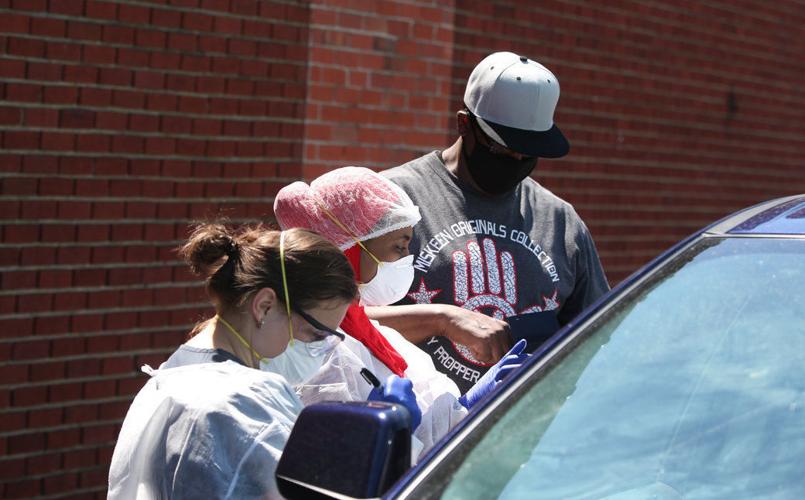
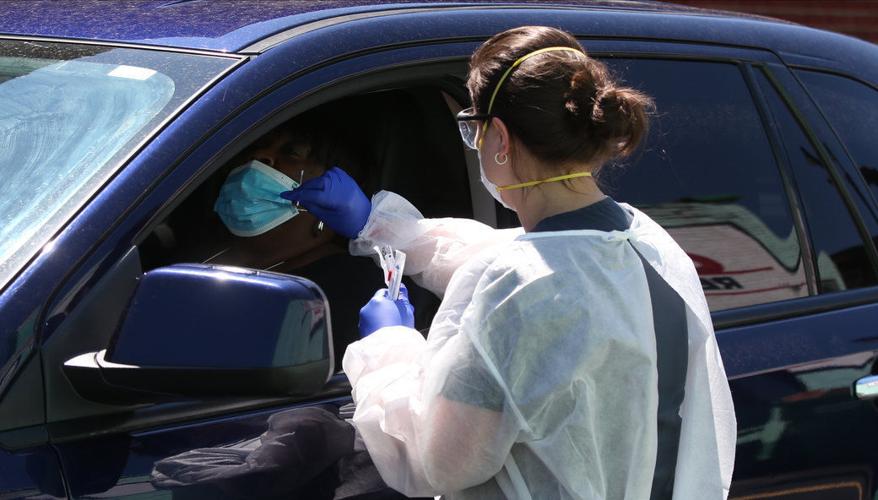
As the region reopens and Covid-19 declines, there are still neighborhood pockets in Buffalo where the virus has remained stubbornly high.
Three health centers on the West and East sides of Buffalo have seen double-digit rates of infection for Covid-19 since early in the disease's spread.
"If there is a hot spot somewhere, it will hurt us anywhere," said Dr. Myron Glick, Jericho Road Community Health Center founder and chief executive.
The community center, which largely serves immigrant and African American populations, tested 5,258 people for the virus between April 2 and June 17, and 15.7% were positive. Of the Asians tested there, mainly Burmese, Karen, Bengali and Nepali, 31% were positive.
Erie County data has shown the new coronavirus has disproportionately hit some low-income neighborhoods where residents already experience health disparities, including higher rates of pre-existing conditions that can make Covid-19 more deadly. Residents in some of those neighborhoods also work in manufacturing and other jobs that make social distancing more difficult or can live in multigenerational homes where the virus can more easily spread. That's why the rate of infection, some medical leaders say, is cause for public health concern across the region.
People are also reading…
Many Jericho Road patients work at factories, clean hotels, wash dishes and are employed in city and suburban communities, Glick said.
At the Community Health Center of Buffalo, on the East Side, 12% of 2,158 people tested from April 15 through June 19 were positive.
At the Neighborhood Health Center, with locations on the West Side and in northwest Buffalo, 10% of the 750 patients tested were positive for the virus from April 23 through June 18.
"In the communities we serve, Covid is still a big problem and does not seem to be getting better, despite all the talk of reopening," Glick said. "The reality is that Covid is hitting the communities we serve very hard, and especially the refugee community.
"We speak of racial injustice, and yet at the same time we are reopening our region despite the fact that Covid is still very much a part of the West Side and East Side of Buffalo," Glick said. "I doubt very much we would be talking of reopening if this was happening in Clarence."
The Town of Clarence has had 137 residents test positive through June 20. Erie County doesn't provide percentages of infection for residents of towns and villages.
But positive test percentages overall in New York State have shrunk to below 1%, Gov. Andrew M. Cuomo said Friday. Erie County, which showed a 1.2% rate of infection on Sunday based on 17,998 people tested, is in the third of four phases.
Jericho Road's test results last week still showed a double-digit rate of infection at 10%, though down from 14% the week before.
Erie County as a whole hasn't had double-digit infection rates since early May.
"I am frustrated that Gov. Cuomo and County Executive (Mark) Poloncarz, and for that matter The Buffalo News, just keep saying all is going in the right direction when the data I look at every day is not showing this for the communities we work in," Glick said.
County says it is helping
Poloncarz said ongoing efforts look to slow the rate of infection in hard-hit communities, but he doesn't think the region is reopening too soon.
"We are concerned about some of these smaller communities that are still showing higher-than-average rates of the coronavirus," Poloncarz said. "Are we reopening too quickly? I don't think that's the case. I think we are reopening smartly under the phased plan of New York State."
The county is providing resources to community providers and working with families to address the higher-than-normal contraction rates in immigrant and African American communities and reduce the spread. That includes a hotel for people to stay who need to safely quarantine, Poloncarz said.
Overall, Erie County is seeing a steady decline in new cases and new hospitalizations, numbers that he said are the lowest they've been since Covid-19 data collection began.
"We are still on track for stage four at the end of the month, and I think the region is headed in the right direction," Poloncarz said. "But we will continue to offer assistance to those communities that have higher-than-average contraction rates."
Dr. Lavonne Ansari, who heads the Community Health Center of Buffalo, said "a more targeted effort" in education and testing on the East and West sides is needed.
"We have to have a sense of urgency," Ansari said. "Everyone is so wanting to open back up, but the sense of urgency in our communities of color has never let up."
The health center operated a pop-up testing site in front of Doris Records at East Ferry and Jefferson Avenue on Saturday to reach people who hadn't been tested. But interest was spotty, with around 15 people stopping for a nose swab in the first five hours.
Jericho Road began last week going door-to-door in the 14207 zip code in Riverside to offer on-the-spot testing to Burmese and Karen families, who are testing positive at a 35% rate.
Han Moe, a registered nurse at Jericho Road who was sickened last month with Covid-19, said 80 people were tested for the virus Friday with about 50 expected Saturday. Their goal is to test as many as possible of the 1,700 Jericho Road patients who have not been tested.
Forty-one Jericho Road patients have been hospitalized from Covid-19 since March. Six died, including five who were African American. A 24-year-old Burmese man remains on a ventilator after nearly a month.
Glick said the rate of spread within the immigrant population was low at first, but after the disease took hold it has remained persistent.
The pressure to return to work at jobs that don't provide sick pay is another contributing factor to the disease's spread, Glick said.
Glick said there is a concern that highlighting what's happening could spark a backlash against immigrant communities. He prefers to believe people will seek remedies instead.
"If you don't know about something, you can't fix it and be a part of the solution," he said. "That's why I feel there is a need to get the word out."
Ansari worries about what will happen in the fall, when the flu adds to the mix of sickness.
"We need a plan on how to address slowing down this virus in our community so we can get this under control," she said, "because we are really seeing alarming rates and deaths."
At the Neighborhood Health Center, 16% of Asians, 15% of blacks and 8% of whites have tested positive for Covid-19. Joanne Haefner, the health center's chief executive officer, said she isn't surprised.
More than 90% of of the center's patients live in poverty and frequently suffer from chronic diseases at a younger age than their white, middle-income counterparts. That makes them more susceptible to Covid-19.
"This isn't any different than any other health issue that happens, given the inequity of race and poverty, frankly," Haefner said.
"It would be so wonderful if facing this racial and poverty inequity issue was in the forefront in our community right now," she said. "This is the time for it."


