As I write this piece, I am winding up my stay at the Arizona Daily Star in Tucson, where I have been based for the last several weeks as a visiting journalist from Kenya.
I am grateful for the sunny weather, which is more or less the same as what I am used to in my village in Machakos county, in the eastern part of Kenya.
On the weekends, I walk around the neighborhood near the University of Arizona, but I see very few people out — they’re probably hiding from the overhead sun, maybe to protect their skin. Just like in all parts of the United States, the American culture of cars is ingrained here.
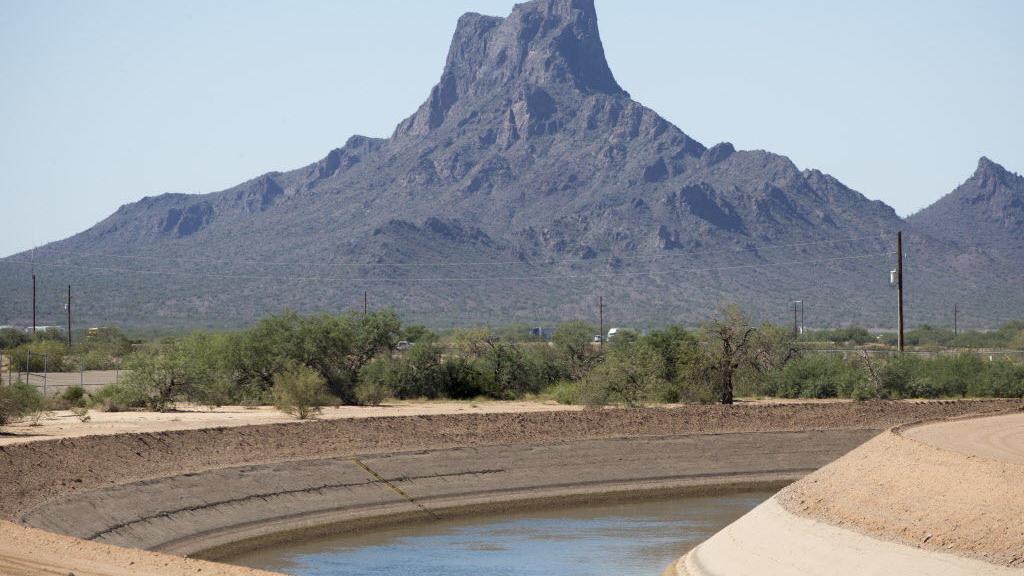
More than half of Kenya is either arid or semi-arid like Arizona, but I am impressed with the way Tucsonans have made the best of the desert conditions. To my surprise, we have more green here than I would expect in such conditions.
People are also reading…
We also have more trees and forests than I see in my country. On Thursday, my good friend Jim Maish, a copy editor at the Star, took me to Mount Lemmon. I was struck by the amount of vegetation I saw despite two devastating summer fires. Tranquillity greets you on Mount Lemmon. Were it in my country in a place with so many trees, the noise of power saws would welcome you from a distance. Timber merchants would be all over, harvesting the trees with or without a license to satisfy their appetite for money. With a lesser supply for timber used mostly in construction, this business is very lucrative in Kenya.
As a result, Kenya has less than 10 percent forest cover, less than recommended by the United Nations despite warnings from the former Nobel laureate the late Wangari Maathai, who led many street protests about protecting forests. Her warnings that nature can be unforgiving if you unsettle it are now coming to pass with unpredictable weather patterns being a reality.
I am impressed by the debates surrounding water usage in this city of about 1 million people. Groundwater extraction is almost taboo here — I was taken aback that a story on a golf course’s plan to test well water, which has created suspicions that this may lead to large-scale pumping of groundwater, got front-page space in the Daily Star. Such a story would be lucky if it were used as a brief in a newspaper the size of the Daily Star in my country.
A visitor to any town or city in Kenya will be struck by mounds and mounds of garbage — or is it trash? — which have become an eyesore. Garbage dumps in Kenya are under the control of gangs that forage for any recyclable material. Fatal fights over the control of such dumpsites are not uncommon. Last week, a gunfight broke out between rival gangs over the control of the dumpsite in Nairobi. Never mind the guns are illegally acquired.
Plastic bags, mostly from the stores and malls coming up on every corner in Nairobi and in all major towns in Kenya, are the biggest threat — especially now that we have no capacity to recycle. But give it to Tucson for the way trash is separated, even at the family level. I had to get used to my hosts, Perla Trevizo and Luis Carrasco, reminding me every time where to put what depending on whether it was recyclable or not.
Forgive me for being a first-time visitor to the United States, but time zones here can be very confusing. Thank God, Arizona is among the few states where one does not need to adjust the time. Talk of losing and gaining time, to me, is too much to comprehend.
Probably what shocked me to the bone is the amount of processed food people here consume. It is literally possible to have your meals without lighting a fire in the house. If anything, the restaurant is just around the corner where you can make orders from home and pay through credit cards.
Whether or not this is healthy eating is not for me to judge. But you just need to see the number of people struggling with weight on the streets and judge for yourself.
One thing I need to ask, though: Where are the genetically modified foods (GMO) that I hear so much about? Is this not the home of Monsanto and others in favor of GMOs or have I eaten GMOs without knowing?
And talking of restaurants, come mealtime you will be lucky if you will not have to answer this question: Have you been to a Mexican, Japanese, Ethiopian, Chinese or this and that restaurant?
In the restaurant, the first thing that greets you is a glass of water with ice whether you have asked for it or not. You have to be shown where to sit, with some restaurants having notices that you ask to be directed where to sit.
I give a big thumbs-up here because systems work. Police respond to distress calls, fire and safety teams are the first to arrive at a scene, electricity and water are always available. Traffic is orderly, and drivers have respect for pedestrians, and roads have lanes for bicycles. But despite all this, reports in the media indicate pedestrian deaths are on the rise. Somebody needs to stem this before it spirals.
Show me one office building without a stand-by generator to provide electricity during black-outs and I will tell you that this is a newcomer to Nairobi. It is not unusual to find the taps dry. Consequently, power and water rationing are not new to us.
Who cares about politicians? Not here. Political meetings every weekend, as happens in Kenya, are nonexistent. For the time I have been here, Arizona Sen. John McCain has been here for a town hall meeting and the turnout was appalling.
City Council officials here — who, by extension, are politicians — hold meetings where residents give their feelings on the performance of their elected representatives. I was amazed at the ease with which the residents tell off their mayor and council, criticizing their performance and saying what should be done.
Meanwhile, the mayor and council sit stoically without interrupting the speaker, despite the unpalatable comments. After the speaker’s allocated time is up, they call another and another, who continue to dismiss the performance of the council without any fear of retribution.
While this is the norm in Tucson, it is the exception in Kenya. Except for purposes of budgeting, when the local authorities invite the residents to give their input, we do not have such forums where the people give their appraisal of the performance of their leaders. Access to government is not easy.
One reporter asked me how easy it was to get documents from the government for a story. Unlike here, where all you need to do is write a letter to the authorities, in Kenya such a story might never see the light of day because it will never be done. You would wait for donkey years for the authorities to respond, let alone to give you the documents.
So journalists use all sorts of tricks, including befriending government officials who steal the documents you need. The good thing is, any matter in government in Kenya would have some people for it and others against it. You use those against to get your information.

 Vacant Tucson stores could transform into new housing