A lawsuit challenging the city's approvals for a 133-unit apartment complex on the edge of the Fruit Belt neighborhood can proceed through court, after a state judge ruled that one of the two plaintiffs has the legal "standing" to sue because of the project's direct impact on her.
Fruit Belt resident Elverna D. Gidney and retired University at Buffalo professor Lorna Peterson filed suit through attorney Arthur Giacalone in July in state Supreme Court in Buffalo, claiming that the city's Planning Board and Zoning Board of Appeals improperly approved the site plan and 13 Green Code variances for The Lawrence.
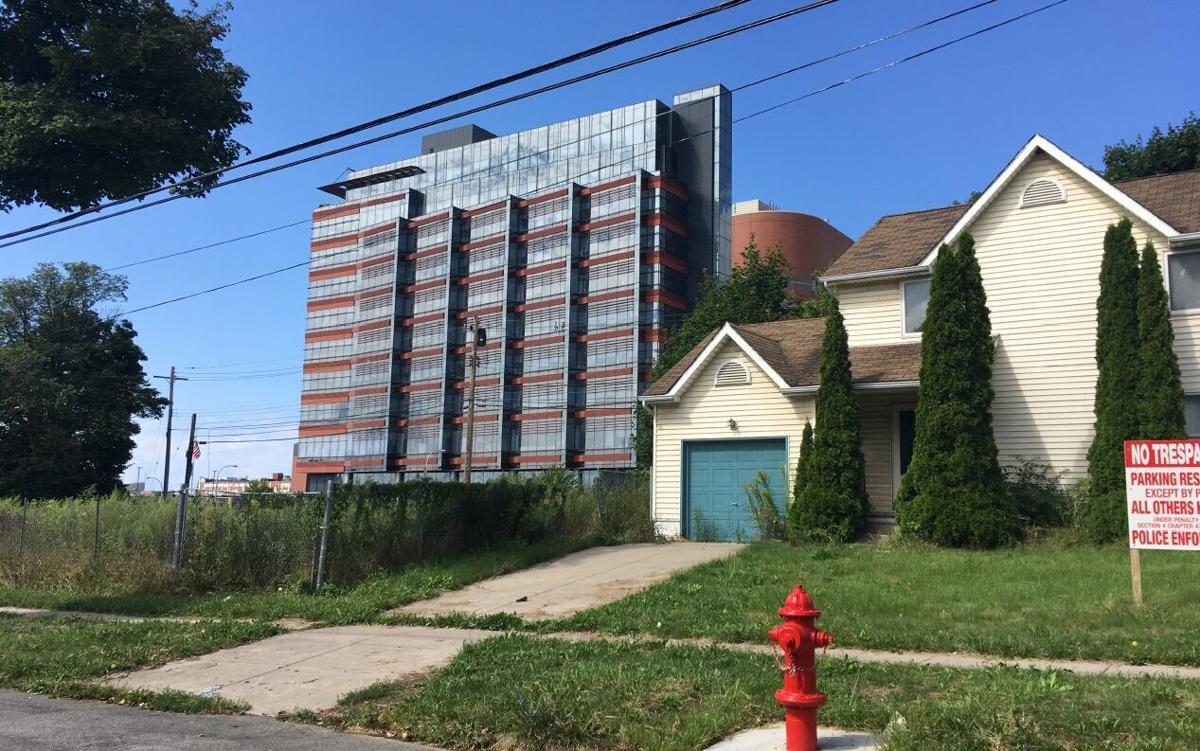
The Lawrence is a proposed 129,000-square-foot apartment complex on Michigan Avenue and Maple Street, across from Roswell Park Comprehensive Cancer Center on the Buffalo Niagara Medical Campus.
The suit argued that the two panels had incorrectly approved "negative declarations" of environmental impact for the $25 million market-rate housing project, and that the ZBA should not have approved "significant" variances in seven different categories – including building height, width, setback and density – to allow the four- and five-story project to proceed. And, it said, the boards failed to consider proper standards and tests, and failed to make written findings of fact or consider environmental impacts.
People are also reading…
Attorneys for developer Symphony Property Management and the city countered that the lawsuit should be dismissed because the two plaintiffs lacked standing, because they don't live close enough and can't demonstrate unique harm.
Justice Frank A. Sedita III – in a ruling Monday – agreed with them regarding Peterson, who does not live in or near the Fruit Belt, but claims to have studied the neighborhood's history, culture and character. But he disagreed for 70-year-old Gidney, who lives on Mulberry Street and also controls property on Maple just a block north of the project site. Gidney is also president of the Fruitbelt Homeowners & Tenants Council.
Oral arguments on the merits of the case are scheduled for 10 a.m. Dec. 16.
Located at 983 Michigan, the Lawrence project calls for a mix of one- and two-bedroom apartments in a pair of long buildings along Michigan and Maple, with 78 underground parking spaces and 55 additional spaces on the medical campus. Supporters said it would be an aesthetic improvement and would bring needed density and professional residents to help the neighborhood's growth and revival, but opponents said it is too big and doesn't belong there.
Giacalone, in his suit, says that variances are supposed to be "narrowly circumscribed" exceptions that may be granted for "unforeseen" circumstances. And, he noted, a ZBA must also weigh the benefit to the applicant against any harm to the community, considering five specific factors – including whether a request is substantial, whether there's an alternative solution and whether a problem is self-created – when deciding whether to grant a variance.
In the case of the Lawrence project, he said, the developer knew of the proposed and final Green Code restrictions when it purchased the 15 properties in late 2016 and early 2017, and could have developed a much smaller project without any variances. Instead, he said, it proposed a much bigger project that – even after reductions in scale prompted by significant community opposition and criticism – still requires variances that triple or quadruple the Green Code limits, and in one case exceeds it by more than eight times.
The suit says the project is inconsistent with the historic neighborhood of small homes, would produce an "undesirable change in neighborhood character" and would be a detriment to "nearby properties," including Gidney's. And, it continued, it is "not consistent with the spirit and intent of the comprehensive plan."
"It does not matter how many times the applicant revises its plans to, purportedly, satisfy the neighborhood residents," Giacalone wrote in his lawsuit. "The original proposal was so massively out of scale and character with the Maple Street side of the project that the repeated tweaking of the façade still leaves a proposed development grossly out of compliance with the standards."
Yet, the lawsuit noted, the approved negative declaration under the State Environmental Quality Review Act called the project "consistent with the existing community and neighborhood character,” and “generally consistent with the pattern of development in the project area.” The determination also characterized the diversions from the Green Code and community plan as a "minor adverse environmental impact," the lawsuit said.
Giacalone also criticized both panels for allowing themselves to be swayed by significant public support for the project, rather than by the regulations, saying they "improperly treated the zoning variance process as a Gallup poll."