
Fresh off its usual summer shutdown, the Fort Lowell Museum will reopen at 10 a.m. Thursday with several new exhibits and other changes.
The 61-year-old historical attraction at 2900 N. Craycroft Road in Fort Lowell Park has been closed to the public since July 1.
Staff members used the hiatus to assemble a new introductory space featuring a timeline for the area from present day to the Hohokam era more than 1,500 years ago.
“This will help give visitors context for what they are looking at in the museum,” said Kate Avalos, director of interpretive programming.
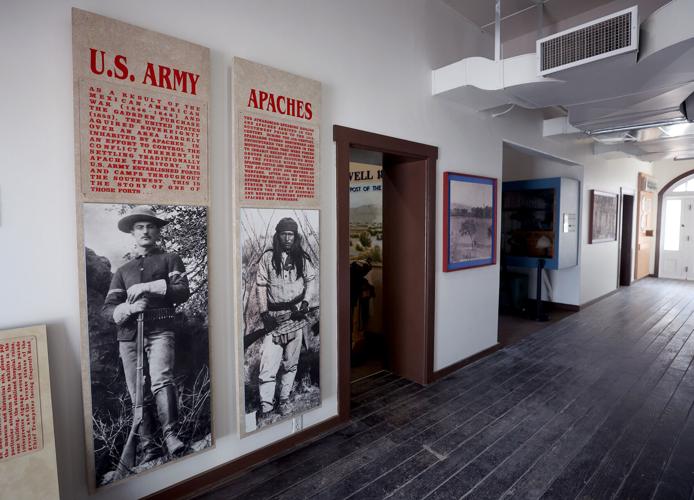
The museum also added a new display about the Buffalo Soldiers and an expanded exhibit, now in its own room, about Apache history and culture.
People are also reading…
To accommodate those offerings, several existing displays have been moved to places that fit better with the museum’s overall story.
Later this year, curators plan to turn the building to the south of the main museum into a replica of the isolation ward at the Fort Lowell Hospital. There, visitors will be able to learn about the hospital, cavalry-era medicine and the treatment of diseases.
Fort Lowell operated as a military supply post from 1873 to 1891, but the lush riparian area where Tanque Verde Creek and Pantano Wash meet to form the Rillito River attracted humans for centuries before that.
After the Army abandoned the fort in 1891, the ruins were used as a settlement for Mexican farmers and ranchers, a picnic and camping spot for daytripping Tucsonans, a private sanitarium for tuberculosis patients and eventually a World War II-era artist colony.
Pima County built a replica of one of the fort’s adobe officers’ quarters and opened a museum there in 1963. The city acquired the building and the park surrounding it in 1984.
Tucson Presidio Trust for Historic Preservation took over operation of the museum last year from the Arizona Historical Society, which ran it for more than 30 years before closing the doors in 2020 during the COVID-19 pandemic.
Since then, the building has undergone $335,000 in renovations paid for with city bond revenue.


 Vacant Tucson stores could transform into new housing