

Before last week, Malene White’s mental health counseling sessions were pretty much the same as those that take place almost everywhere else.
She talked with clients about the challenges they faced growing up, the hardships in their daily lives and the choices they’ve made that add to their burdens.
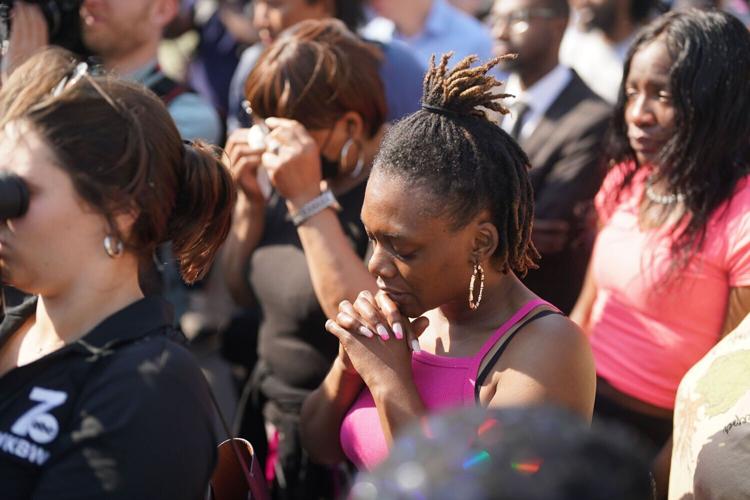
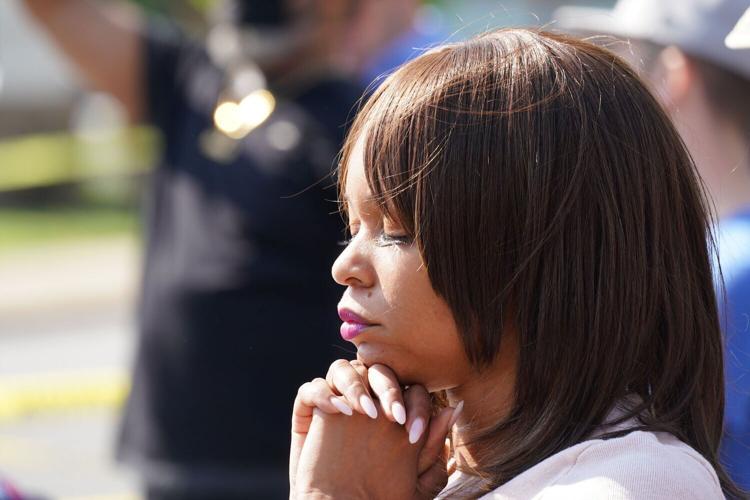
But trying to help process the torrent of emotions that come with a racially motivated mass shooting in their city felt like a crushing weight for White and her clients.
“Once you start counseling and change some things, you see a glimpse of hope,” White said last week. “Then things change so drastically by one negative event. People are worried. 'What do we do now? What do we think now?' ”
The most important step, she told them, is to talk honestly with family, friends, co-workers and others, even if you’re not sure exactly what to say.
People are also reading…
“The scary part is when there is no dialogue,” she said. “My message is let's just talk, let's communicate, let's stay close, connected to each other.”
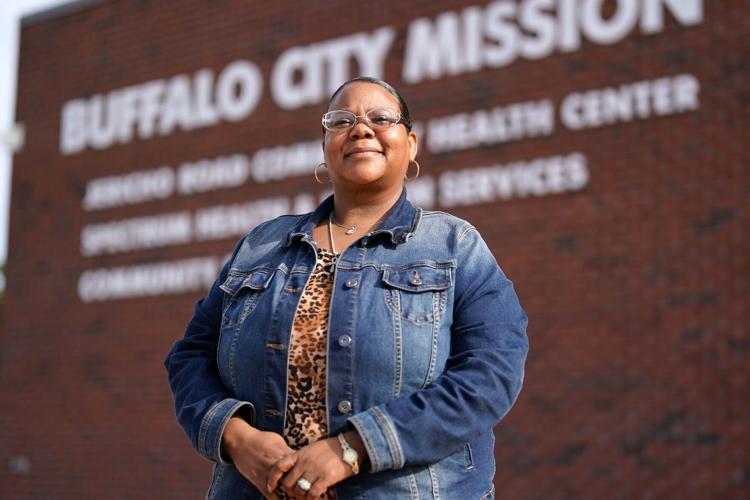
White grew up and still lives on the East Side. She has worked in the health field for two decades, the last five years as a licensed mental health counselor specializing in trauma and post-traumatic care.
Many of her clients are Black, but she serves people of different races, colors and creeds in the Spectrum Health and Human Services Downtown Buffalo Counseling Center.
White also leads a grief and support group Monday afternoons in the Buffalo City Mission and has spent part of the last week helping to provide free trauma counseling at the Johnnie B. Wiley Resource Center, four blocks from the Tops supermarket where a self-avowed racist killed 10 Black people May 14.
The shootings shook even her most optimistic clients, who have worked hard to change their circumstances.
"It's 'I'm hurt. I'm broke. And I don't know if somebody's going to hurt me,' ” White said. “That's different than it was a week ago. Now, we're not talking about coping skills. We're talking about the fear. We're talking about where you can go get groceries. We're talking about how you can navigate in the community. People are talking about trying to move out of the neighborhood. We've backslid a little.”
Many of White’s clients are poor, so more typical counseling conversations involve how to navigate bus routes on a limited income, further their education, find and keep a job, and afford child care and healthy foods. Some have abused alcohol and other drugs that offer only fleeting comfort in their unpredictable lives. Others have been diagnosed with mental illness and need help steering through the health care system and staying on their medications.
For some, the challenges have been intergenerational.
It is harder to process new trauma when you already carry around a load, White said.
“This heavy, massive, massacre-type killing” has challenged many, she said, especially Blacks, including those who have made do without counseling to this point.
“I'm hearing about intrusive thinking. I'm hearing about nightmares. I'm hearing negative feedback, avoiding people, places and bad memories. I'm seeing a lot of tears. There was the feeling of being attacked for many, many, many years due to their ancestry – and now they’re feeling attacked in 2022.”
White talked with double the number of those who typically attend the group session on grief at the City Mission.
“Mind you, the people I work with in both locations are a mixed pool,” she said. “The conversation was, ‘Just recognize that person standing next to you is in an eerie place, as well. Every white person is not out here to kill me. This was an isolated incident, a terrible, terrible deed by one person.’ We talked about loving each other and continuing to love each other, and to not let this create the anger and frustration and division that it was supposed to create.”
The conversations at the mission, and elsewhere, ended in hugs, handshakes and a stronger desire to forge ahead.
White’s overarching message remained the same. Be good to yourself and those around you.
“I'm always talking about self-care,” she said. “I'm always talking about the next journey. What can we do? What are some coping skills to manage life’s struggles? We'll go into the prevalence of services, trying to manage the emotions, knowing that they want to do better.”
It meant a great deal last week to White, her clients and their neighbors that those across the region, and beyond, supported efforts to get more food into the hands of people who lost their only full-service supermarket.
It was also important, she said, that the Erie County Department of Mental Health collaborated to provide free, confidential counseling with Spectrum Health, Crisis Services, Endeavor Health Services and BestSelf Behavioral Health.
That support continues from 1 to 9 p.m. through Friday at the Wiley Center, 1100 Jefferson Ave.; there is no paperwork to fill out and there is a resource room for children to get help, too. All are welcome. Several people have come from outside the neighborhood, said Cherie Messore, a Spectrum Health spokesperson.
White also was among those who participated Friday in a webinar for business owners who sought more counsel about how to talk about the mass shooting with employees and customers, and get them support, if needed.
The message is a familiar one in counseling: Avoid distractions that keep you carrying a heavier and heavier load of troubles.
“I'm talking to people about facing their feelings and their emotions, not running away from them, having those conversations with family and others,” White said. “If we're isolated from them, they’re going to come into your sleep. You're not going to want to eat. You're not going to want to go to work. You're going to find yourself in a place of not being able to cope with life.”
Now is the time to prioritize what is important, she has told her clients. Eat healthier, exercise more and listen to soft music. Volunteer to help your community and country. “Sit still for a moment” often. Rub your feet before bed.
If someone can’t talk with a loved one or needs more encouragement, talk with a counselor.
“It’s important to be able to ride the wave, to be able to engage in a safe place for conversation,” she said.
White started last week fearful that anger would rule her workplace and community. Relief set in as she heard echoes of what she recommends in counseling coming from church and community leaders, as well as President Biden and the First Lady on their visit to Buffalo. Spontaneous gatherings and organized vigils continued to affirm hopes that the city and region will see brighter days.
She knows that won’t be easy, recounting a client who cried so hard at the end of her counseling session Thursday that White handed her several tissues.
“She whispered into my ear and said she was sorry, that she felt so guilty, and her people were so wrong,” White said. “She asked what she could do. This was a white woman. I just hugged her and told her, 'Do what you're doing right now. Just help me help you. Stay connected.' ”
Need help?
Erie County Warmline: Free confidential non-crisis phone line, 716-248-2941, and text line 716-392-2221, for people having difficulty coping with life experiences. Open 4 to 11 p.m. daily.
Erie County Crisis 24-Hour Hotline: Counselors are available to talk with those in need at 716-834-3131.
211 WNY: Visit 211wny.org or call 211 anytime in the region for a free and confidential link to health and human services, including community resources for many health, social, mental health, substance use and developmental disability services.
The National Alliance on Mental Illness Helpline: 716-226-6264, namibuffalony.org
Mental Health Advocates of WNY: Regional resource for mental health support, 716-886-1242, mhawny.org.
Suicide prevention: Anyone contemplating self-harm can call the 24-hour National Suicide Prevention Hotline at 800-273-8255.
email: sscanlon@buffnews.com
Twitter: @BNrefresh, @ScottBScanlon
In this Series
Complete coverage: 10 killed, 3 wounded in mass shooting at Buffalo supermarket
-
Updated
Hochul pledges pursuit of justice after shooting, calls on sites to crack down on white supremacist content
-
Updated
Sean Kirst: In Buffalo, hearing the song of a grieving child who 'could not weep anymore'
-
Updated
Recently retired police officer, mother of former fire commissioner both killed in Tops shooting
- 307 updates


