On Sept. 11, 2001, Robert Menig's 12-hour shift at a Manhattan firehouse was scheduled to end at 9 a.m. — 14 minutes after an initially Los Angeles-bound plane that had been hijacked struck the World Trade Center’s North Tower, instantly killing all passengers aboard.
But because of an early morning doctor's appointment, Menig had asked his crewmate Michael D'Auria to come in early and cover for him.
D'Auria, who was 25, had not yet graduated from the fire academy, Menig said. He was on loan to Engine 40, Ladder 35, as part of his training, and Menig had gotten permission from Frank Callahan, his captain, for D'Auria to cover for him.

Menig
As it was time for Menig to leave, the firehouse was still short one person. So he asked Vincent Morello, who he had worked with the night before, if he could stay until another firefighter arrived.
People are also reading…
"He was getting in his car, and I asked him, 'Can you ride for me? I got to get out of here. I got to go to the doctor's.' He said, 'No problem.' He came in and rode for me," Menig said.
"I left, and they both got killed. I got to see everybody that morning — you know, the kitchen, coffee, whatnot — before they got killed, and that was 11 of them."
As he was heading home from his appointment, news broke that the North Tower had been struck.
"I heard it on the radio," he said. "I was at a particular spot where I was in Queens, and I can actually see the World Trade Center, and I could see that the first tower was burning.
"And then the second plane hit. They were yelling about it on the radio, so I turned around, made my way back to the firehouse, which was tough because the traffic was bad. And when I got to the firehouse, the firetrucks were gone."

Menig
Along with some other guys from his firehouse who also showed up after hearing the news, Menig headed to the World Trade Center after the South Tower had collapsed.
"I was naive enough to think that there were still survivors," Menig said. "Looking back on it, the magnitude of it was almost incomprehensible. Those buildings were huge, and they were completely gone. It was just a pile of crap and dust, and you're like, 'Oh, no, I got it. Maybe it tipped over the other way.'"
He spent the following months at Ground Zero as part of the World Trade Center recovery task force, where he worked to locate and retrieve the bodies of those killed in the attacks.
"The whole site, I think, was about 15 square acres of debris," he said. "And to get from one side to the other side would take about 45 minutes to an hour."
Long-lasting impact
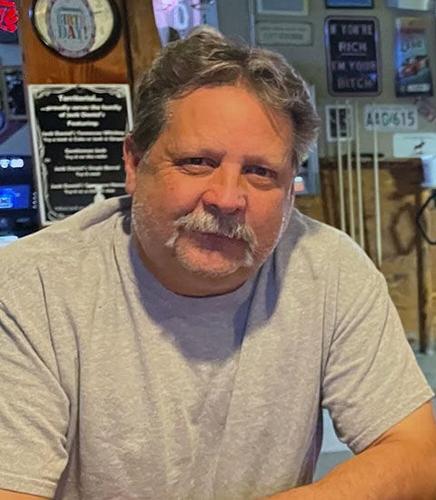
Now, 25 years after the four coordinated suicide attacks by al-Qaeda killed nearly 3,000 people, Menig, 61, is living in Tucson, where he retired to about six years ago.
The dust and the ash and the asbestos which lingered in the aftermath at Ground Zero brought on lung issues for him down the line, he said.
And he's far from the only one. The Centers for Disease Control and Prevention estimates that about 400,000 people were exposed to toxic contaminants, risk of physical injury and physically and emotionally stressful conditions in the aftermath of the attacks. Exposure to the hazards on the ground has been linked to aggravating, contributing to or causing cancers, airway and digestive disorders, and mental and behavioral health conditions, according to the CDC.
Menig is also in need of a living kidney donor.
Along with Kidneys for Communities, an organization that helps to raise awareness and guide those in need of transplants as well as potential donors through the process, Menig has been working to find a match.
Although no causal link has been established between working at Ground Zero and an increased risk of kidney disease, Atul Agnihotri, the CEO of Kidneys for Community, says he has seen a troubling trend of first responders who had spent time in the rubbled aftermath of the attacks in need of a kidney.
"They have to wait till there's a bunch of us that got the same disease that were at the same location at the same time to classify it as a 9/11 related illness," Menig said. "But it falls in a gray area where they say, 'Well, it more likely is, but we can't confirm it yet.'
"It's not going to change anything. I'm still sick."

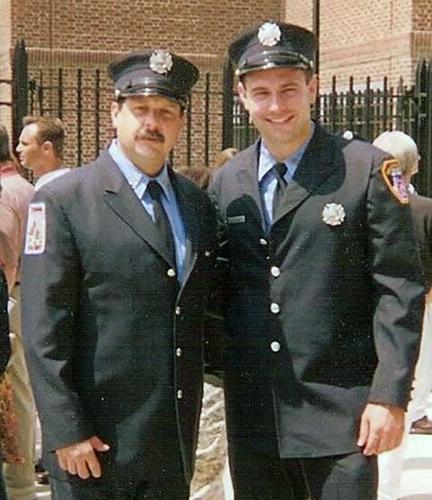
Robert Menig and Harry Callahan pose for a photo at Callahan's graduation from the fire academy. Callahan, the son of Ladder 35's Capt. Frank Callahan who was killed in the 9/11 attacks, followed in his father's footsteps.
Separate from health issues, losing 11 people from his crew, the requisite survivor's guilt and spending the following months recovering bodies took an immense mental toll.
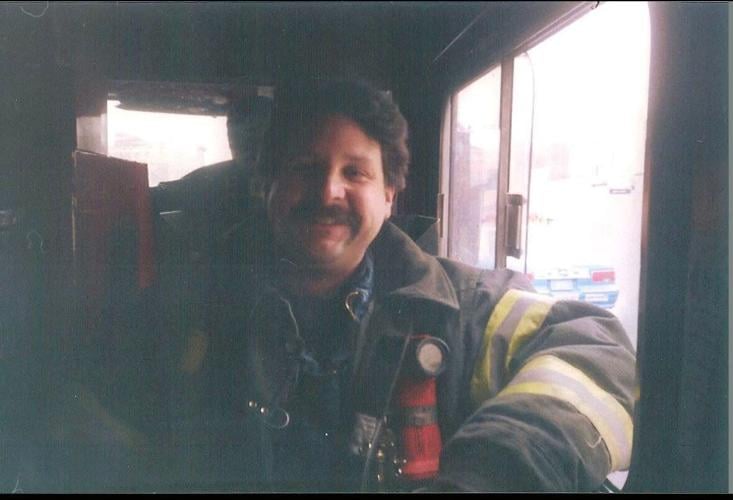
Menig, who joined the New York Fire Department in 1996 after a brief stint at Rural Metro Fire in Tucson and the New York Police Department, had his mind set on being a firefighter from an early age.
"I was always interested in being a fireman," he said. "That was always, always at the top of my list — and being a cop. Then once I was a cop, I hated being a cop. So I got that out of my system."
After spending short stretches in the South Bronx and Queens, Menig was assigned to Ladder 35 in Manhattan.
There, he got the chance to work with very experienced firefighters who helped guide and look out for the newer people. Spending upwards of 12 hours with each other on shift, the crew was very tight.
"We did everything together," Menig said. "We had barbecues together. We played softball together. We went camping together. We went fishing together. We did everything together, and it's like that in all New York City firehouses. They're very, very close."
On 9/11, 343 New York firefighters were killed, according to the NYFD.
The loss hit the first responder community hard, but especially Ladder 35.
"It didn't end that day," Menig said. "The visual part, the horror, ended after a little bit, but the ripple effect just went on for years — a lot of funerals, a real lot of funerals."
"It bothered me for a while," he said. "I would say it got the best of me for a little while, but you got to take care of yourself, too, get the help you need and get healthy again."
"I would do it again," he said of going back to aid in recovery efforts and the months working at Ground Zero. "I'd hate for it to happen, but I would."