A 19-year-old mother shot and killed at a celebration of life for her recently slain cousin.
An elderly woman killed by her son before he turned the gun on himself in the parking lot of a funeral home.
A 17-year-old boy gunned down outside an Omaha bar as he picked his mother up from a birthday party.
People are also reading…
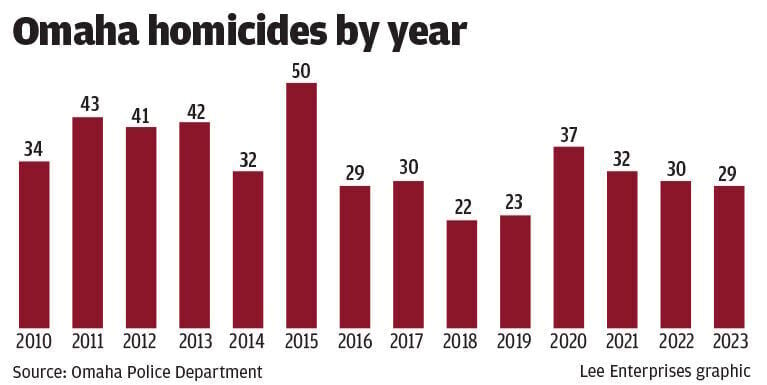
They represent three of the 29 homicides recorded by the Omaha Police Department in 2023 — one less than 2022’s total of 30 homicides, and a continued decline from the pandemic-induced spike in homicides in 2020, which left 37 people dead.
Omaha’s total does not take into account multiple killings that occurred within Douglas County but outside the department’s jurisdiction — like the July double homicide of Marquesha Cannon, 30, and Lisa Cannon, 55, in their Irvington home. It also does not include the killing of Laron Hodges, which allegedly took place in February at an Omaha home near 16th and Binney Streets but is being investigated by the Douglas County Sheriff’s Office because the Sheriff’s Office was already investigating a connected case.

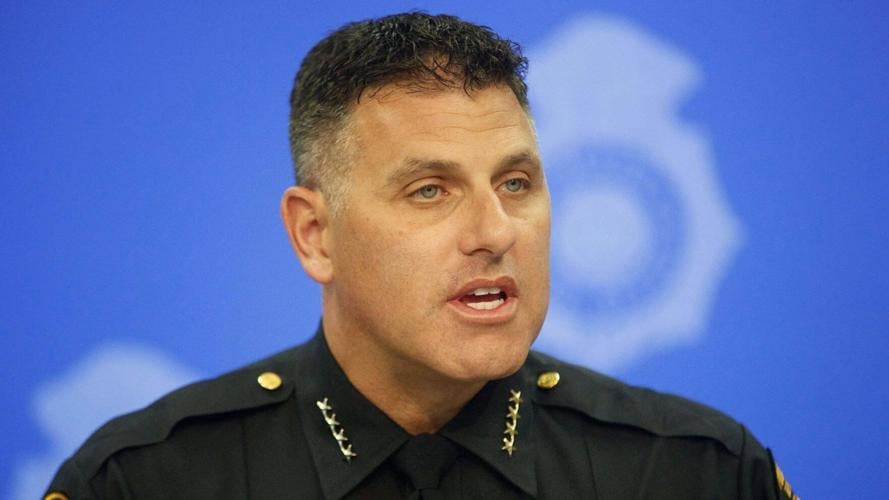
Omaha Police Chief Todd Schmaderer
While all those deaths involved personal tragedy, Omaha Police Chief Todd Schmaderer said there are a lot of positives in the city’s 2023 record of homicides and nonfatal shootings:
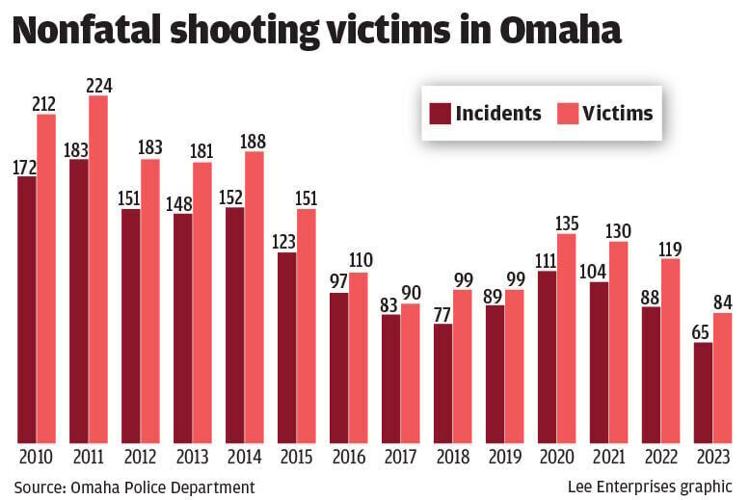
Arrests have been made in all but two of the year’s 29 homicides. Omaha’s northeast precinct, which has historically seen the highest share of killings in the city, recorded its lowest number of homicides in at least 17 years.And the number of nonfatal shooting victims dropped last year by almost 30%.
Because police also made arrests in two homicides from 2022, this year’s clearance rate reached what Schmaderer called the “crown prize” of 100%. For 2023 cases alone, the clearance rate sits at about 93%.
That figure is far above the national average, which has been steadily declining in recent years and was about 50% in 2022, according to data from the Murder Accountability Project, a nonprofit dedicated to tracking unsolved homicides across the country.
Schmaderer said the department owes the high clearance rate to partnerships between police and community members.
“If you want to get a quick gauge of the police and city’s community relations — a quick snapshot — take a look at the clearance rate for homicides,” he said. “You’re going to get a pretty good idea of how well the community and the police work together. In order to solve homicides, you have to have cooperation. And we get that.”

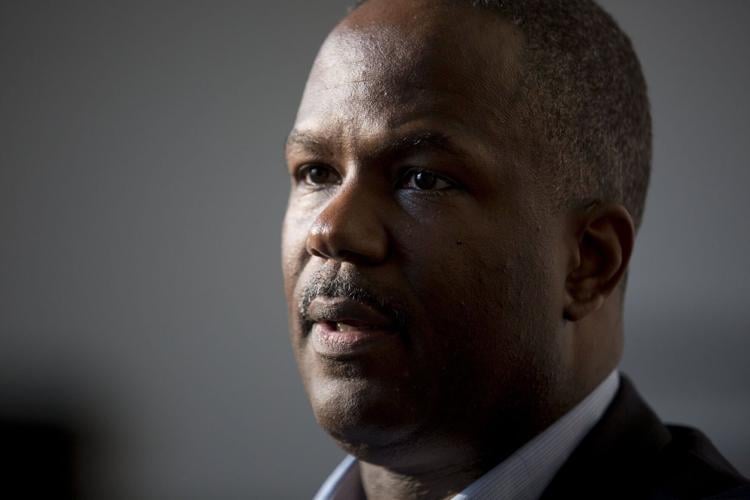
Willie Barney, founder of the Empowerment Network, a nonprofit that aims to reduce gun violence and improve life in North Omaha, said that since he started the organization 15 years ago, he’s seen significant improvement in the willingness of police and community members to work together — something both Barney and Police Chief Todd Schmaderer say has made a difference.
Willie Barney, the founder of the Empowerment Network, a nonprofit that aims to reduce gun violence and improve life in North Omaha, agrees with Schmaderer’s assessment. Since Barney started the organization 15 years ago, he’s seen significant improvement in the willingness of police and community members to work together — something both Barney and Schmaderer say has led to results.
“There were a few who came to the table right away,” Barney said of early relationship-building efforts. “It took some time of building relationships, and what we’ve seen is that some of the people who were the harshest critics are now actively engaged in and supportive of the work we’re doing together.”
Barney said the rising clearance rate is “a strong testament to the type of relationship” between police and community members.

Eighty-four people were shot and injured in 65 shooting incidents in 2023. That’s the lowest number of annual shooting incidents ever recorded in Omaha, according to Schmaderer.
And the northeast precinct, which spans most of North Omaha, saw eight homicides in 2023 — the lowest number recorded since the department began publishing precinct-level data in 2007. Over the past decade, the precinct averaged about 16 homicides each year.
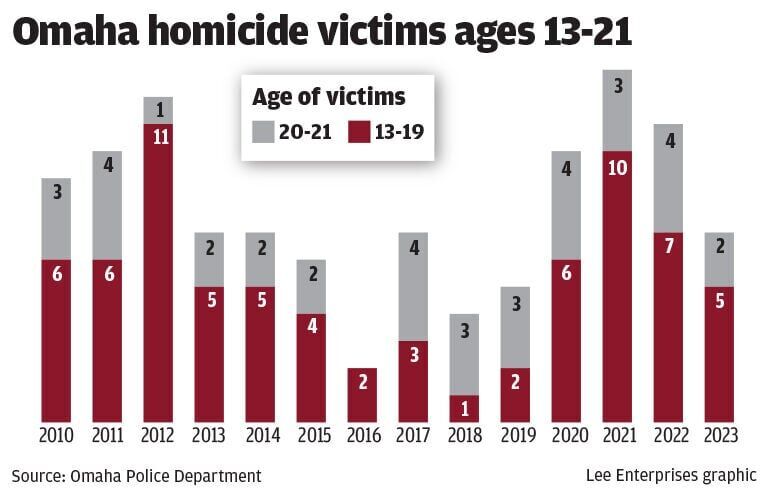
But there are also causes for concern. Despite a significant decrease this year, eight people age 21 and younger — including a 10-year-old boy — were killed last year. Seven of the eight were the result of gun violence.
Omaha saw a 15-year peak of teen and young adult homicide victims in 2021, when about 42% of the total homicide victims were between the ages of 13 and 21. That number declined slightly in 2022 to about 38%. Seven people between the ages of 13 and 21 were killed in Omaha in 2023, amounting to about 24% of all homicides for the year.
Schmaderer said he’d like to see a few more years of downward momentum in teen homicide rates before celebrating the progress.
“For the last couple of years, we’ve been really concerned because we saw an increase in juvenile [homicide] victims and suspects,” Schmaderer said. “This year, we saw a downward trend, and we always appreciate those downward trends, but I don’t think one year is enough to say we’re making good progress.”
Barney agreed. He said he hopes to see more resources placed into street-level gang intervention programs and further opportunities for education and entrepreneurship to keep kids on the right path. And though the community is always pleased to see numbers trending in the right direction, he said, 29 people killed is still too many.
“The numbers are numbers, but they’re actually people,” Barney said. “They represent lives. We aren’t satisfied until we get to the point where we see zero homicides.”