

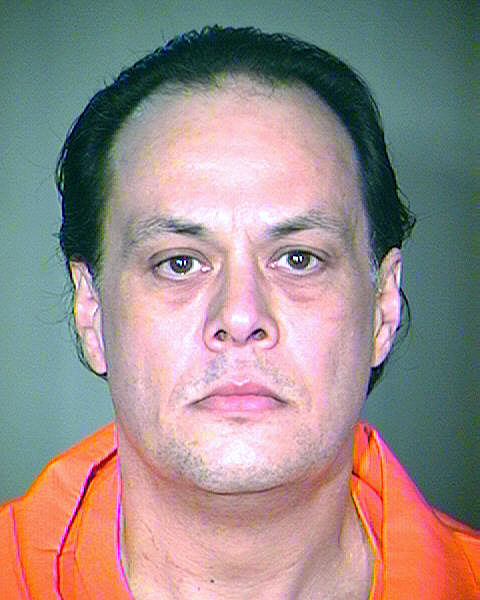
PHOENIX — A man who killed two others in a 1989 Tucson drug rip-off will get a chance to escape being executed.
The attorney for Eric Owen Mann failed to investigate the effects that a 1985 traffic accident might have had on him, according to a split decision Monday from the majority of a three-judge panel of the 9th U.S. Circuit Court of Appeals.
There was reason to believe that the accident, which left two others dead, affected Mann in various ways, including the real possibility of traumatic brain injury, Chief Judge Sidney Thomas said. And that evidence, Thomas said, might lead a new judge to decide not to sentence Mann to death.
Monday’s ruling was not unanimous.
Judge Alex Kozinski accused his colleagues of basing their decision to give Mann a new sentencing hearing on a hyper-technical interpretation of what the trial judge decided. And he said it ultimately won’t make any difference and that, even after a new hearing, the death sentence will be reimposed.
People are also reading…
“One way or the other, Mann will be executed, if he doesn’t die of old age first,” Kozinski wrote.
“But only after he — and the families of the two people he killed 25 years ago — ensure what may be decades of further injustice,” Kozinski continued. “Where’s the justice in that?”
Mann had arranged to sell a kilogram of cocaine to Richard Alberts, 22, for about $20,000, court records show. But Mann’s girlfriend, Karen Miller, later testified that the real plan was to “rip off” Alberts by taking the money and giving him a shoe box filled with paper and then “whack” him.
Alberts came to the rented house in central Tucson with Ramon Bazurto, age 25. When Alberts realized what had happened, Mann grabbed his pistol, which he had placed on the bed, and shot both of them.
Police searched the house about a week later but made no arrest until 1994, when, after breaking up with Mann, Miller went to sheriff’s deputies.
Mann was convicted after a five-day trial. Miller and Carlos Alejandro, who helped dump the bodies, were both granted immunity.
The Arizona Supreme Court rejected claims that both the trial and sentencing phases were tainted by ineffective assistance of counsel. The 9th Circuit agreed with the former, saying a decision not to call witnesses was “strategic.”
Thomas said, though, that mistakes were made by Mann’s lawyer when the court was deciding the penalty. And he said there was the possibility that the evidence never produced would have changed the sentence.
Some of that, Thomas said, was the failure to obtain any school, prison or medical records. But the judge said there was never any effort to look into the circumstances or consequences of that 1985 accident.
Miller said Mann was driving his friend’s ex-wife and 14-year-old daughter when his Jeep rolled over and tumbled into a canyon. He remained unconscious at the bottom of the canyon for several hours before help arrived; his two passengers died.
Thomas said Miller would have testified of a dramatic and long-term change in Mann’s personality, as well as his decision to deal cocaine to bring in money, at least in part due to financial pressures brought on his family from his medical treatment.
And Thomas said that a doctor would have testified there was a “high probability” that Mann suffered traumatic brain injury.
“Counsel’s failure to uncover and present reasonably available mitigating evidence left the sentencing judge and the Arizona Supreme Court with an incomplete and inaccurate picture of Mann,” Thomas wrote. “Had counsel performed adequately, there is a reasonable probability that the sentencers would have concluded that the balance of aggravating and mitigating factors did not warrant death.”
Follow Howard Fischer on Twitter at @azcapmedia


