

When it comes to elections, there’s no question that numbers matter.
But sometimes the numbers before the election are just as important.
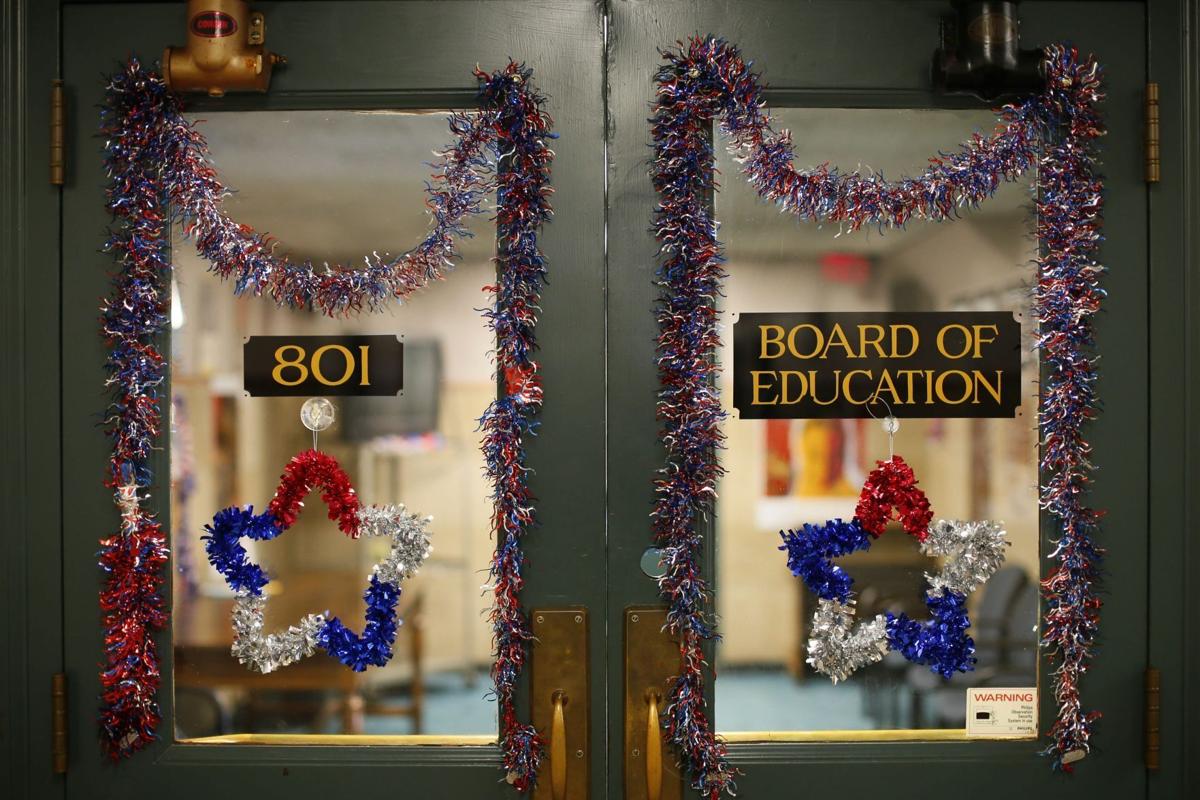
That’s why school reform advocates are making another push to reduce the number of signatures needed to run for the Buffalo Board of Education – and why they’re trying to get it done now.
The timing is crucial if the change is to be in place for this year’s elections, because petitions start circulating April 19 for the six district seats on the ballot Nov. 8, according to the current Board of Elections calendar.
A bill by state Sen. Tim Kennedy, and a companion piece by Assembly Majority Leader Crystal Peoples-Stokes, would lower the number of required signatures from 1,000 to 400 for at-large seats, and from 500 to 200 for district seats.
People are also reading…
The impetus – despite school district efforts to put the best face on modest progress – is the lousy overall state of education in the Buffalo Public Schools.
“We are in a crisis,” said Bishop Michael A. Badger of the Urban Think Tank and one of the community leaders pushing the change.
The numbers speak for themselves. Only about a quarter of the students were proficient in math or reading on the last round of state assessment tests. And while the graduation rate has improved from 65% in 2019 to 79% last year, the figure comes with a huge asterisk, given the relaxed Regents exam requirements implemented amid the Covid-19 pandemic.
But employers who attended a Common Council Education Committee meeting last year complained that even those who graduate too often are unprepared.
Badger, who chairs the Erie County Medical Center board’s Human Resources Committee, recalls when the hospital came up with an aptitude test to fill environmental services positions. He said no one passed even though the exams were based on sixth grade reading levels and eighth grade math levels.
Reducing the number of signatures required to get on the School Board ballot could lessen the impact of unions in board elections and make board members more responsive to the needs of such students rather than district employees.
Badger noted that candidates typically must get two to three times the required 1,000 or 500 signatures to compensate for the fact that many will be invalidated. So that makes the challenge even more daunting, especially for those running without the support of a political organization that can marshal an army of volunteers well-versed in the fine print.
“It really puts anybody who might be qualified and want to serve at a disadvantage if they don’t have a machine,” said Badger, head of Bethesda World Harvest International Church on Main Street.
Samuel L. Radford III of We the Parents of WNY said they actually wanted the numbers reduced to 100 signatures for at-large seats and 50 for district seats, but settled on 400 and 200 as a compromise.
Phil Rumore, Buffalo Teachers Federation president, said he will recommend union leaders back the change when they meet next week, saying there shouldn’t be barriers to running for a board seat.
“Leave it up to the public when they vote,” he said.
He acknowledged that running is easier for candidates who have big organizations helping them, but disputed the notion that the union has undue influence.
“I don’t think it has anything to do with clout … though people like to say that,” he said, adding that BTF-backed candidates have lost some races.
Still, having the union on board should make it easier for Democratic-controlled Albany to get behind this effort.
Kennedy’s bill focuses specifically on Buffalo. But though the language says it will “provide comparable signature thresholds” as exist in other districts, comparisons can by muddy. Syracuse and Rochester, for instance, each have seven-member boards, all elected at-large, unlike Buffalo with its mix of three at-large seats and six district representatives.
Their school board elections also are partisan, which can further cloud comparisons. For instance, current law (pandemic exceptions aside) requires candidates to get signatures equivalent to 5% of the number of enrolled voters in the party, or 1,000, whichever is less.
For Democrats in Syracuse, who vastly outnumber Republicans, that would mean collecting 1,000 signatures – just like Buffalo’s at-large candidates – because that is less than the 1,900 that would be needed under the 5% provision. But for Republicans, 5% would mean collecting only 447 signatures, according to an official at the Onondaga County Board of Elections.
Such differences make drawing exact parallels difficult.
Still, with the BTF and citizen activists on the same page, the only thing standing in the way of Buffalo reforming its petition-gathering process is Albany’s inertia. Badger and Radford said Peoples-Stokes told them that, while making no guarantees, she would do her best to get the change implemented for this year.
Getting state lawmakers to focus on something else specific to one city – in addition to the Buffalo Bills stadium deal – while trying to pass a budget by April 1 will not be easy. But it needs to be done.
If other cities are satisfied with their school systems, so be it. But that doesn’t mean Buffalo has to settle for the educational product it is receiving now. After getting school board elections moved from May to November to get more of the public involved, and board members’ salaries hiked from $5,000 to $15,000 to attract more candidates, education activists have proven what a committed and involved public can accomplish.
Cutting the number of signatures required to run for board seats is the next logical step to bring new ideas, new energy and new oversight to a school system that badly needs all three. The city’s Albany representatives need to get this done – now.
Time is not on the side of Buffalo’s students.


