A federal court struck down a new U.S. rule limiting international students’ visas to four years, a limit that Tucson immigration attorneys and University of Arizona faculty and students said would have had a “devastating impact” on universities, financially and otherwise.
The U.S. District Court in Massachusetts ruled Monday in favor of a coalition that filed a lawsuit on Aug. 18 against the Department of Homeland Security’s move to limit F-1 and J-1 visas to four years. A judge previously blocked DHS from enforcing the rule change, which had been set to take effect Sept. 15, pending the outcome of the lawsuit.
DHS is trying to change a 1978 rule, called “duration of status,” that allowed international students to stay in the U.S. for the duration of their studies. An F-1 visa allows students to enter the U.S., and a J-1 visa allows people to come to the U.S. to take part in study- and work-based cultural exchange programs. A J-1 visa is a common pathway for international medical graduates to do their clinical residencies and fellowships in America.
People are also reading…
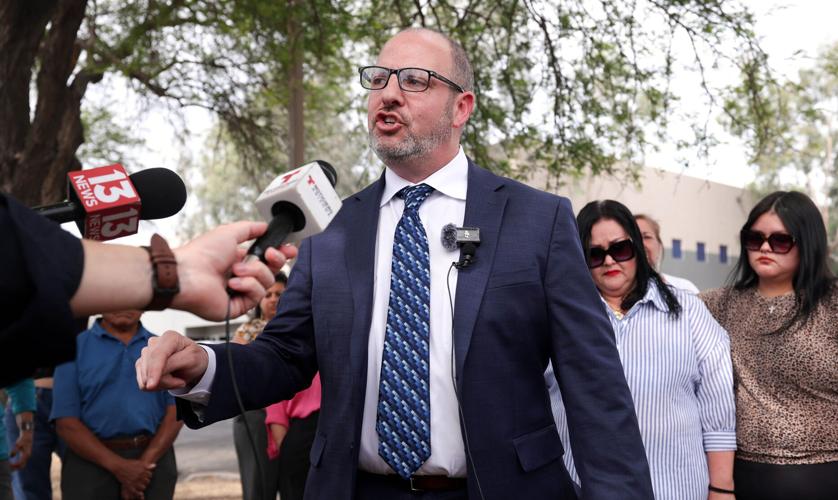
Tucson immigration attorney Mo Goldman said the ruling is great news for the international student community and the colleges and universities that “tirelessly” recruit them. But he cautioned that DHS is likely to appeal the judge's decision to a circuit court, leading to an “ongoing battle.”
“At least for now, it sets a good tone ... for international students to be here if they need to stay an extra year or two years depending on how long their program may take, versus making them have only four years and then apply for extensions,” Goldman said.

Tucson immigration attorney Mo Goldman cautioned that DHS is likely to appeal the judge's decision to strike down a new U.S. rule limiting international students’ visas to four years, likely leading to an “ongoing battle.”
Moving forward, “the U.S. government’s going to have to decide whether they’re going to continue to push this into circuit court, which sounds like they will. In the meantime, international students are still going to continue to be admitted under the duration of status, but there’s the possibility that this could change in the future,” he said.
The government argued that the old “duration of status” rule allowed students to remain in the country indefinitely without having to interact with immigration officials, leading to overstays and national security concerns, Inside Higher Ed reported.
After DHS proposed the rule change, the agency received almost 22,000 comments, with most opposing the revision, according to Inside Higher Ed.
In Monday’s ruling, the court held that DHS’ plan was “arbitrary and capricious because DHS failed to appropriately weigh its costs and benefits, justify the changes based on its stated fraud and national security concerns, consider less burdensome alternatives, or adequately respond to significant public comments,” said a news release from NAFSA: Association of International Educators, one of the organizations that sued.
The court also said the rule would place restrictions on academic studies that “far exceeded DHS’s statutory authority because they were not reasonably related to the nature and purpose of the F-1 student visa program,” NAFSA said. “The statute simply does not grant DHS such broad and open-ended authority to undermine the F-1 visa program,” the court said.
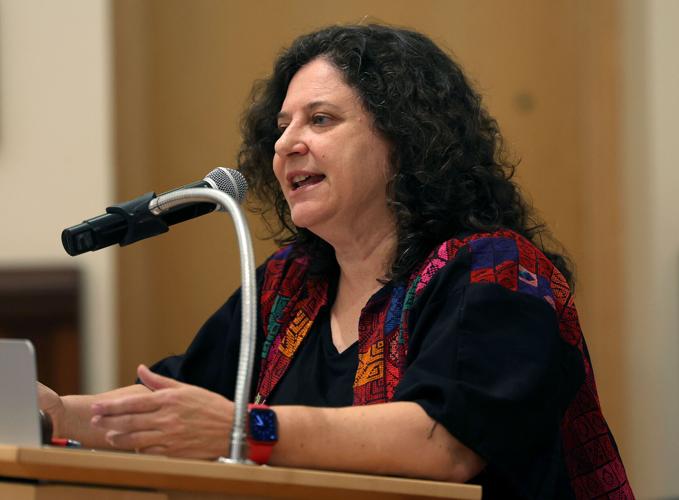
UA Faculty Chair Leila Hudson hailed the ruling.

Leila Hudson, chair of the UA faculty.
“First and foremost, it provides a measure of protection for international students ... from one of the arbitrary, unjustified and xenophobic practices of DHS under the Trump administration,” Hudson wrote to the Star. “It also retains a safety net for the universities and other institutions whose operations, culture and productivity would be further eroded by these capricious restrictions.”
She said this ruling and others show U.S. courts have stayed “resilient in the face of improper ideological pressures on our institutions.” The ruling “resonates with the majority of Americans' support for international, education and economic exchange,” Hudson said.
In addition to NAFSA, the coalition that filed suit included the Presidents’ Alliance on Higher Education and Immigration, the Association of Independent Colleges and Universities in Massachusetts, and the American Federation of Teachers.
“We appreciate the clarity this ruling provides for international students and universities. International students are valued members of the University of Arizona community and contribute significantly to our academic and research mission,” said Jenny Lee, UA’s chief international affairs officer and dean, in a written statement.
Arian Chavez, a UA student in the College of Medicine – Tucson, said international students should be able to focus on their studies without “constant attacks and threats to their education.”
“It is important for all students in be in solidarity with international students,” Chavez said.
“Rather than making higher education feasible to working-class students, university administrators rely on full-paying international students to keep programs afloat. Meanwhile, politicians continue to scapegoat immigrants for ‘taking our jobs’ while doing nothing to fix the underfunded, overpriced and increasingly inaccessible U.S. education system," Chavez said.
How would students be affected?
The rule change would have required students to apply for an extension to stay in the country for longer than four years, creating a “greater backlog” in processing extensions for visas, Tucson immigration attorney Goldman has said.
“Anyone who’s been through the university system or higher education system knows and understands there’s no set amount of time that the student adheres to,” he said. “Sometimes they have a program that could end up going an additional semester; sometimes it’s shorter. It varies and it can change.”
Arizona Board of Regents numbers show UA’s international student enrollment dropped by 13% between 2021-26.
UA’s Lee told the board in 2025 that the Trump administration’s travel bans on several countries combined with ongoing visa barriers presented “a broader systemic challenge, one that can lead to a steady decline of international students over time,” across the country.
Goldman said international students come to the U.S. for multiple reasons, including the flexibility to complete degrees without a rigid time limit and having to apply for extensions.
“There are other ways that the current administration is trying to target international students and their ability to come here, go to school, and then have the ability to use what they’ve learned in real practice at the end of their studies,” Goldman said.
He pointed to another DHS rule, proposed Oct. 7, which proposed that schools and universities will have to pay a fee of $70,000 when initially recommending a student for “optional practical training,” a temporary work authorization program that lets students on an F-1 visa work in the U.S. in a field related to their major. The proposed rule also says schools will have to pay an additional fee of $30,000 after the initial recommendation.
Reporter Prerana Sannappanavar covers higher education for the Arizona Daily Star and Tucson.com. Contact her at psannappa1@tucson.com or DM her on Twitter.

Prerana Sannappanavar
Higher Education Reporter