A Tucson immigration attorney says the federal government’s latest immigration move of limiting international students’ visa durations to four years will have a “devastating impact” on universities, financially and otherwise.
It will make it difficult for immigrant students to stay in the U.S. and will create a “greater backlog” in processing extensions for these visas, said the attorney, Mo Goldman.
On Thursday, the Department of Homeland Security eliminated a federal regulation in place since 1978 that allowed international students to legally stay in the U.S. with their F-1 visas for as long as their programs of study or degrees lasted. An F-1 visa is a nonimmigrant visa that allows students to enter the U.S.
The new rule, taking effect Sept. 15, says international students can stay in the U.S. only four years unless they apply for an extension. It also limits their ability to change majors and institutions once they’re in the country.
People are also reading…
“Anyone who’s been through the university system or higher education system knows and understands there’s no set amount of time that the student adheres to,” Goldman told the Arizona Daily Star. “Sometimes they have a program that could end up going an additional semester; sometimes it’s shorter. It varies and it can change.”
Goldman said the former rule gave flexibility to students and universities, while the new system will be rigid. Even though students can apply for an extension if they’re in programs that will take more than four years to complete, they need to apply through the U.S. Citizenship and Immigration Services, and the application could take up to five months to process.
“We’ll see if it balloons over the next several months, and it’s just going to create a greater backlog in the processing of these extensions,” Goldman said. “To me, it seems like they’re creating a so-called solution to a problem that doesn’t even exist in reality, and it’s on purpose. They want to make it more difficult for immigrant students to be able to stay in the U.S. And mind you, when people say they (students) should change to a work visa or ‘do it the right way,’ once they’re here on a student visa, getting a work visa in the aftermath of that is almost impossible.”

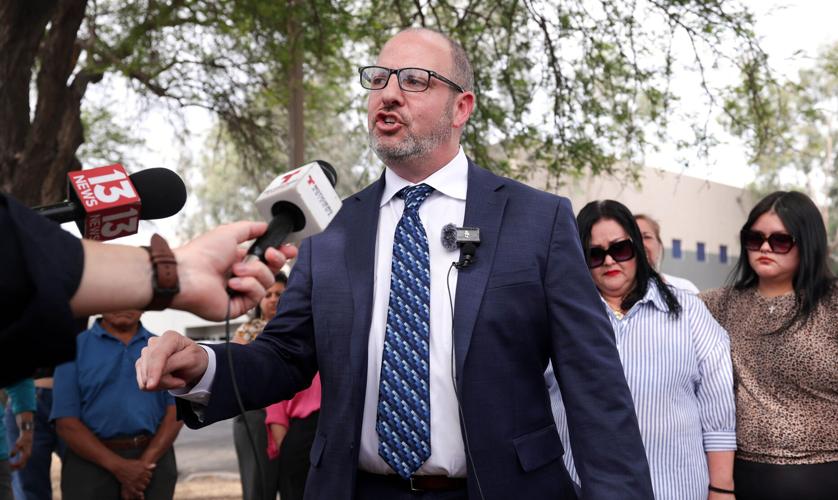
Mo Goldman, a Tucson immigration attorney, says the federal government’s latest immigration move of limiting international students’ visa durations to four years will have a “devastating impact” on universities, financially and otherwise.
University of Arizona spokesperson Mitch Zak didn’t respond to questions from the Star for UA President Suresh Garimella — a former international student and an immigrant from India who studied at Ohio State University and the University of California, Berkeley before working his way up in academia — on how he thinks this will affect international students at the UA and enrollment numbers in coming years.
Garimella had told the Star in a statement last fall: “To international students and families who may feel anxious about studying abroad, my message is simple: you are welcome here at the University of Arizona. Our campus is a place where every student can thrive, pursue discovery, and prepare for a meaningful life and career. International students are an integral part of who we are, and we are honored to be part of their journey.”
Jenny Lee, UA’s chief international affairs officer, also didn’t respond to questions about how the new rule will impact students coming to the UA this fall, what UA and other public universities in Arizona can do at a local level to offset impacts, and how this will affect student tuition revenue here.
DHS officials have said that international students already in the country can stay “through their current program period or up to four additional years.”
The Arizona Board of Regents, which oversees the state’s three public universities, is “aware of the proposed rule affecting international students and is engaging with university leadership as it evaluates the potential impact," said board spokesperson Nicholas Opich.
“The board has adopted goals for the executive director and university presidents that support revenue diversification and cost management as the universities navigate the changing national landscape,” Opich said in a written statement.
‘Law enforcement and screening tool’
DHS has been rolling out this rule since summer last year, Inside Higher Ed reported, saying the agency received almost 22,000 comments, with most opposing the change.
There were comments from higher education institutions saying student groups such as Ph.D. students need more than four years to complete their degrees, and that doctors on J-1 visas who contribute to the U.S. healthcare system will also be affected.
A J-1 visa is a nonimmigrant visa for individuals who take part in study- and work-based cultural exchange programs in the U.S. This visa is a common pathway for international medical graduates to do their clinical residencies and fellowships in America.
According to the Inside Higher Ed reporting, the U.S. government has argued that the old “duration of status” rule allowed students to remain in the country indefinitely without having to interact with immigration officials. This led to overstays and national security concerns, federal officials have said.
DHS said the new rule is “intended as a law enforcement and screening tool to assess whether a student is maintaining normal academic progress and eligibility for F-1 status.” It said the rule won't stop students from continuing their studies and research “as long as individual students are complying with the terms of their nonimmigrant classification.”
“Long-standing policy, which is not changing, allows F-1 and J-1 students to continue their studies for as long as their (extension of stay) application is pending,” officials said.
Goldman explained that until now, once an international student was granted an F-1 visa to attend a U.S. university, the visa itself didn’t dictate how long they could remain in the country, and they were issued a “duration of status” instead. An I-20, an official U.S. government document issued by universities or colleges, was what decided how long the student was allowed to stay, he said.
“I-20 is a form that’s produced through the Department of Homeland Security and it could be updated by the International Student Office at that institution based off of how long the student needs to complete their degree program, or if they’re changing their level of study, or if they’re going to potentially transfer schools,” he said. “A lot of those things are updated in the SEVIS (Student Exchange and Visitor Information System) portal and that is overseen by ICE (U.S. Immigration and Customs Enforcement).”
$42.9B in annual economic revenue
Goldman emphasized that for institutions of higher education, a lot of budget costs are offset by the tuition revenue from international students, who pay twice or thrice the amount paid by U.S. students.
For UA’s fall 2026 semester, in-state tuition for on-campus undergraduates is $12,168, while out-of-state and international undergraduates will pay $42,600 in tuition. Arizona State University charges $14,814 for in-state students and $39,262 for out-of-state and international students, while Northern Arizona University, on average, charges $12,000 and $30,000, respectively.
Universities have “become heavily reliant on foreign students to be able to survive, to offset the costs of other students’ tuition,” Goldman said. “So, get ready U.S. citizens to probably pay more for your tuition … because they have to come up with the money somewhere, somehow.”
According to NAFSA: Association of International Educators, a nonprofit organization working on international education and exchange, international students brought in $42.9 billion to the U.S. economy in the academic year 2024-25 and supported more than 355,000 jobs.
However, the fall 2025 “International Student Enrollment Snapshot” published by the Institute of International Education shows there was a 17% decline in new international student enrollment between 2024 and '25. International students' economic contributions dropped by $1.1 billion, costing the U.S. nearly 23,000 jobs, that report says.
After the current Trump administration took office in January 2025, Homeland Security revoked the visas of thousands of international students, making them vulnerable to arrests, detention and deportation by ICE. Numerous students went on to self-deport to their home countries or elsewhere.
A “handful” of international students were affected by this at the UA, according to UA officials, while ASU saw an estimated 100 students whose visas were revoked.
Nationally, more than 1,800 international students lost their F-1 or J-1 student status.
What do UA students, faculty have to say?
Katie Kelliher, the newly elected student body president at the UA, said student government leaders are still learning about the potential impacts of the new rule, but their priority is to support students who will be affected.
“We will do everything within our control to ensure international students have access to the resources and support they need to succeed at the University of Arizona,” Kelliher said.
Arian Chavez, a UA student in the College of Medicine – Tucson, said the change is “another iteration of the war on immigrants with a focus on international students.”
“This is something that may not immediately affect students right away (but) once these students run out on their initial stay time on their initial visa, they are faced with the risk of having to deal with ICE coming and knocking on their doors,” Chavez said Thursday.
“There’s also the recent report from the New York Times that says the White House is looking for 2,000 (immigration) arrests per day as their new quota to meet. So, all of these things are compounded into what we see as the war on immigrants," Chavez said.
UA Chair of the Faculty Leila Hudson said with the U.S. cracking down on immigration and higher education, there are other countries with initiatives to welcome millions of international students into new programs, including Germany, Ireland, South Korea, Japan, New Zealand and Australia.
“This is a major export sector of the U.S. economy and certainly of the economy of the state of Arizona, so it’s almost inexplicable in so many different ways,” Hudson said Thursday. “Leave aside the traditional goals, benefits of the free pursuit of knowledge and focus simply on the economics of it, but I seem to recall, in the state of Arizona alone, international student tuition and other contributions to the economy may well be a billion-dollar sector. … It’s as if we’re trying to discourage the world from participating in the historically great American academic enterprise.”
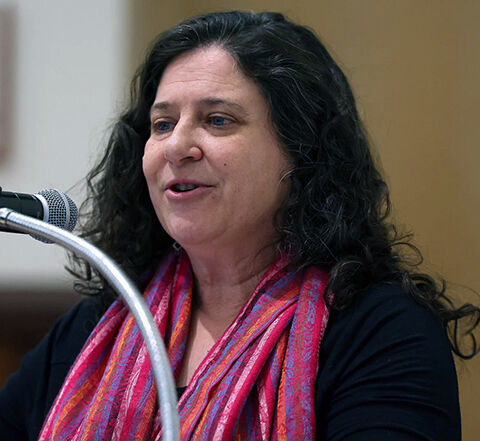
Leila Hudson, University of Arizona chair of the faculty, says of the new DHS rule: "It’s as if we’re trying to discourage the world from participating in the historically great American academic enterprise.”
Chavez said that when international students apply to get an extension on their visas while being afraid of ICE showing up at their doors, it’s going to be impossible for them to get an appointment since the immigration system is facing an extreme backlog.
Inside Higher Ed reported that, according to data from an American Immigration Council tracker, U.S. Citizenship and Immigration Services is facing a backlog of 11.65 million cases from the last quarter of 2025, and it takes more than a year to process applications on average.
What are people saying nationally?
Zuzana C. Wootson, deputy director of federal policy at the Presidents’ Alliance on Higher Education and Immigration, said the new rule imposes “unnecessary burdens” on all stakeholders, including international students and scholars, campuses, employers and federal agencies. She said it’s counterproductive and will ultimately harm their economic and global competitiveness.
“International students are already among the most closely monitored nonimmigrant populations in the U.S. and are subject to rigorous oversight by DHS and academic institutions,” Wootson said. “The rule will exacerbate existing immigration application backlogs, create further uncertainty, intrude on academic decision-making, impose new bureaucratic hurdles, and ultimately deter international students, researchers, and scholars from choosing the United States.”
NAFSA: Association of International Educators said this is a misguided policy shift which “injects uncertainty, bureaucracy, and fear into a system that has long worked effectively.” It said DHS made the change despite the 20,000 comments against the proposed rule last summer, in which serious concerns were raised.
“This rule introduces unnecessary government intrusion into academic decision-making," the organization's statement said. "Requiring students and scholars to seek approval to extend their academic program, change majors, or pursue the next level of study places life-changing educational decisions in the hands of an already overburdened immigration system rather than educators and institutions.”
Both organizations said the rule change is detrimental for American innovation, research and economic growth.

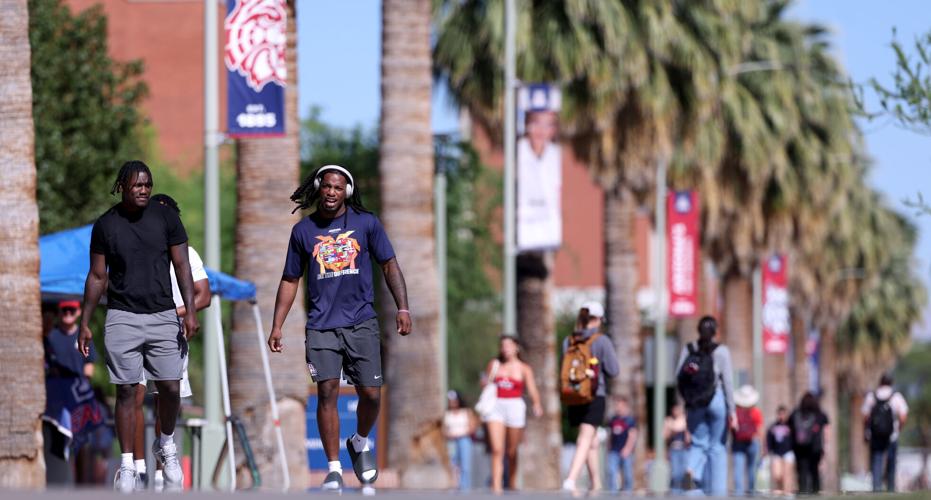
Students on the University of Arizona Mall. Universities have “become heavily reliant on foreign students to be able to survive, to offset the costs of other students’ tuition,” says Tucson immigration attorney Mo Goldman. Because of a new U.S. rule capping international students' stays in the country, he says, “Get ready U.S. citizens to probably pay more for your tuition … because they have to come up with the money somewhere, somehow.”
Reporter Prerana Sannappanavar covers higher education for the Arizona Daily Star and Tucson.com. Contact her at psannappa1@tucson.com or DM her on Twitter.

Prerana Sannappanavar
Higher Education Reporter